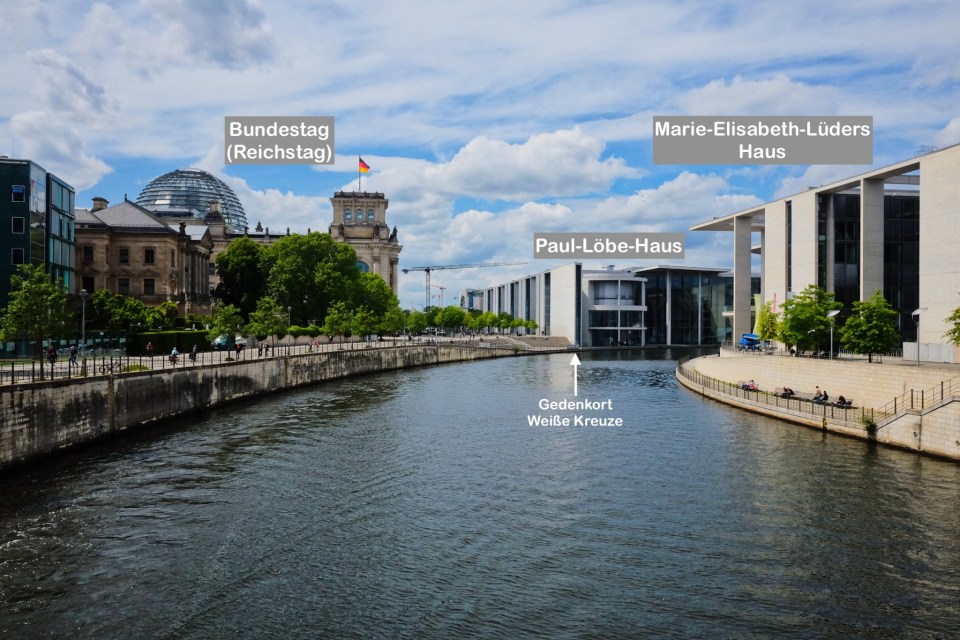
Facing west to the Regierungsviertel (Government district) over the Spree river from the bridge Marschallbrücke, the Reichstag is a symbol of the turbulent and tragic past, and the post-reunification buildings that are the Paul-Löbe-Haus and the Marie-Elisabeth-Lüders Haus are representative of the present and hope for the future.
I made the image above on 27 May 2025 with a Fujifilm X70 fixed-lens prime and these settings: 1/1000-sec, f/13, ISO1000, and 18.5/28mm focal length. This post appears on Fotoeins Fotografie at fotoeins DOT com as https://wp.me/p1BIdT-vHD.
In 1995, I had just moved from Vancouver to Toronto for postgrad studies. I knew little of the world, and even less of the natural world into which I threw myself.
In 1995, Berlin had seen some big changes over the years. Yes, this is a deliberate understatement: 2 World Wars, an economic crash in between, a Cold War complete with partition of the city within the first 60 years. In 1989, the Berlin Wall fell; a year later in 1990, the two Germanys reunified into a single nation.
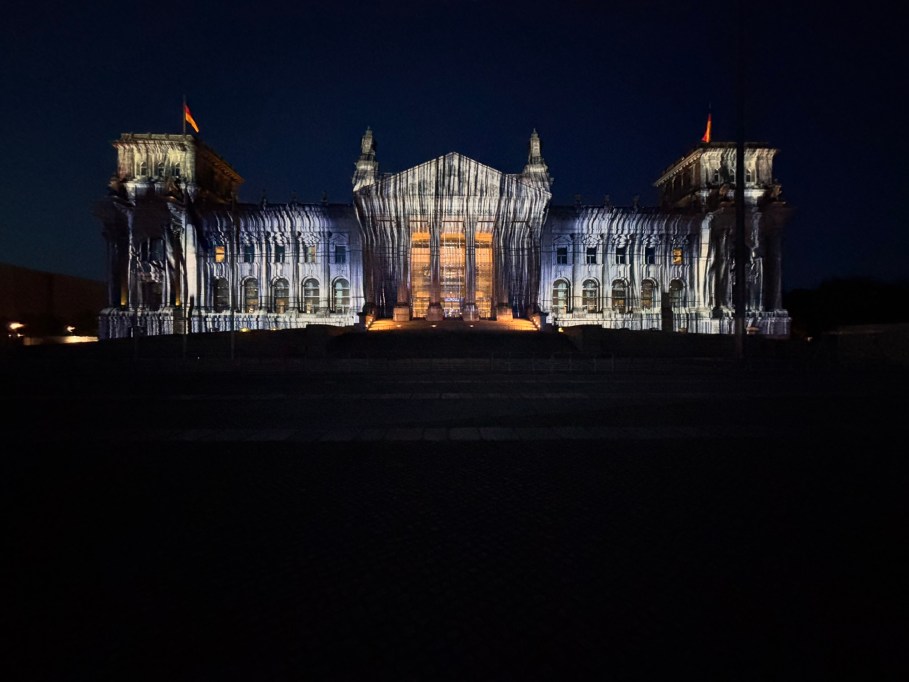
In 1995, the iconic legislature building, the Reichstag, was completely enveloped in white shiny fabric: this was “Wrapped Reichstag” by Christo & Jeanne-Claude. Their enormous artwork set talking heads in both cultural and political arenas on fire in Berlin and around the world.
It’s 2025, and over 14 nights in June, a light-display every evening on the Reichstag building commemorates the 1995 “wrap”. The free show runs every 20-minutes between 930pm and 1am, from 9 June to 20 June inclusive.
Room for the space (sky) above.
0.5x magnification, with room in the plaza below.
Added in 1916, the inscription at the front of the legislature building is “to the German people.” The design and font were made by renowned city architect Peter Behrens; the bronze letters were made from 2 French cannons captured during the Napoleonic Wars of 1813-15.
2.5-minutes: “covering” the Reichstag with light.
1-minute: the “draping” comes down.
I made all media above with an iPhone15 on 16 June 2025. This post composed within Jetpack for iOS appears on Fotoeins Fotografie at fotoeins DOT com.
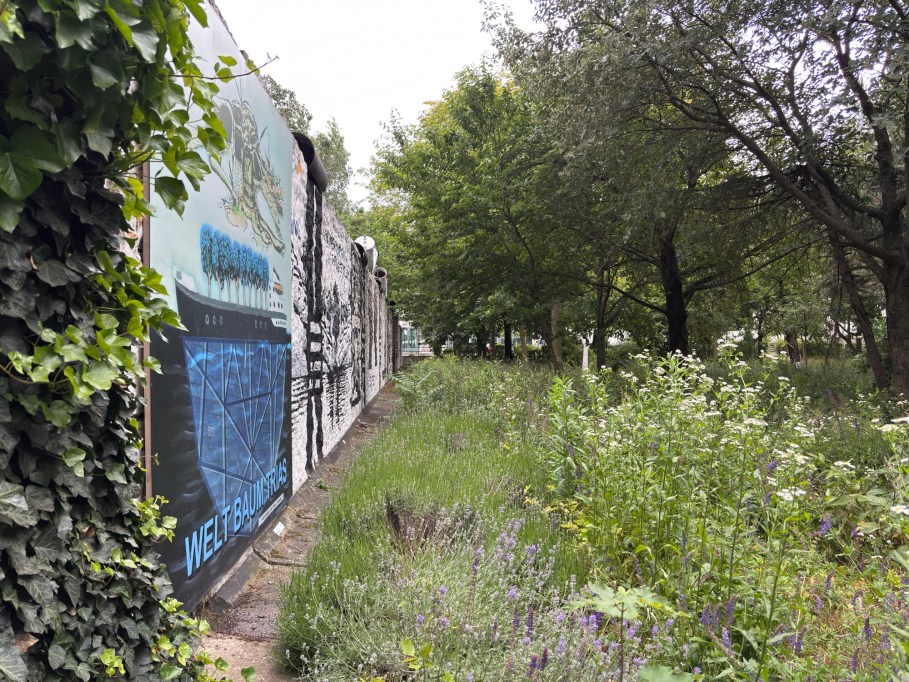
In Berlin’s government district is a patch of ground – a garden, really, with tall trees and a place that’s easy to overlook. The official name is “Parliament of Trees Against War and Violence”, begun by artist Ben Wagin in 1990.
Wagin (1930-2021) began planting trees on land where the former Berlin Wall used to run near the historic Reichstag government building, as authorities began dismantling the physical wall. What remains of Wagin’s experiment is a piece of ground that acts as both memorial to what the Wall represented and fractured, and an aspiration for both modern Germany and Europe.
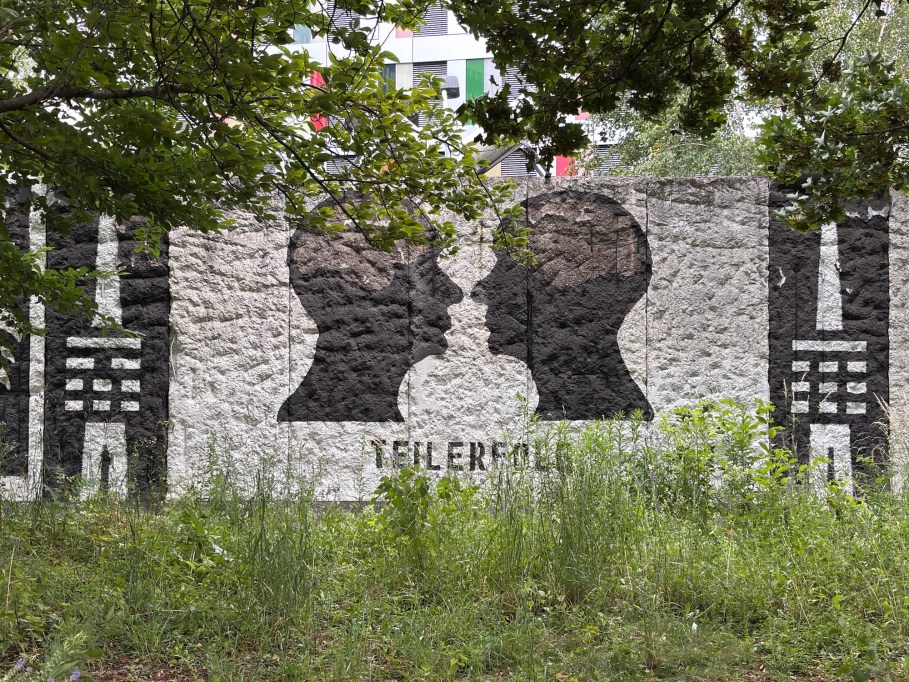
Of the many trees in this space, 16 of them represent the 16 modern federal states of Germany. There are also slabs of granite on which are engraved the names of the victims of the Wall. The “back” wall is painted with murals and messages, and in between are little paths and flower beds. I think Wagin also wants to remind us that in many parts in Berlin and throughout Germany, the former Wall dividing the city and the two former nations, respectively, have been reclaimed by nature.
In 2017, the memorial park was added to the City-State of Berlin’s list of protected monuments. Administered by the Stiftung Berliner Mauer (Berlin Wall Foundation), the Parliament of Trees is free of charge, open Sundays from 12pm to 5pm in the months between April and October inclusive.
1945 End of World War II. 1961 The Berlin Wall goes up. 1989 The Berlin Wall comes down.
“Teilerfolg” (partial success).
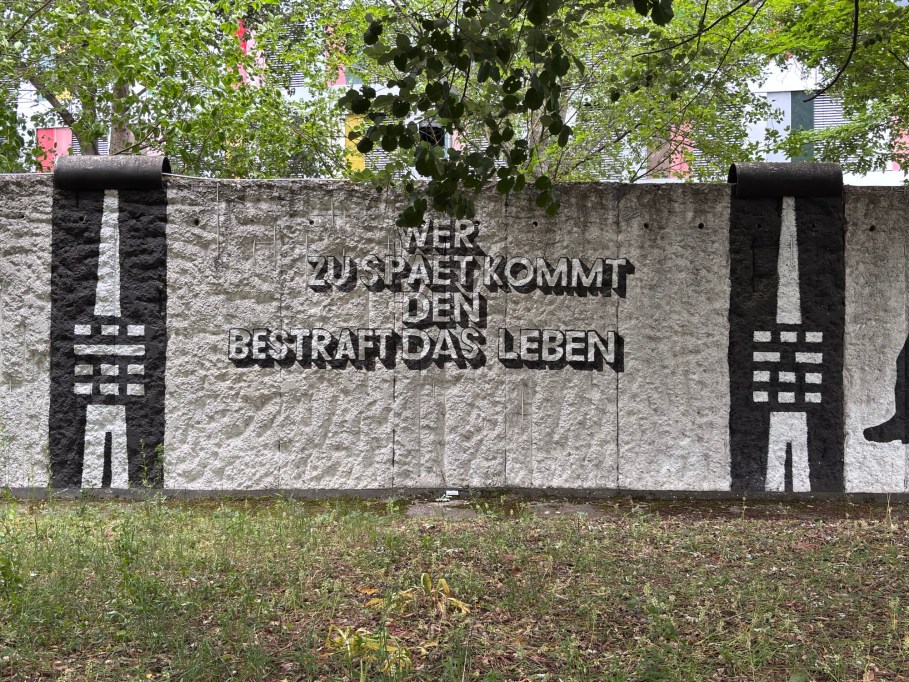
“Wer zu spät kommt, den bestraft das Leben.” (Life punishes those who come too late. -Mikhail Gorbachev, 1989.)
“Das Fundament eines gemeinsamen europäischen Hauses muss eine intake Umwelt sein.” (The foundation of a common European home must be an intact environment.)
Original segment of the Berlin Wall: “Unbekannte Opfer” (unnamed victims).
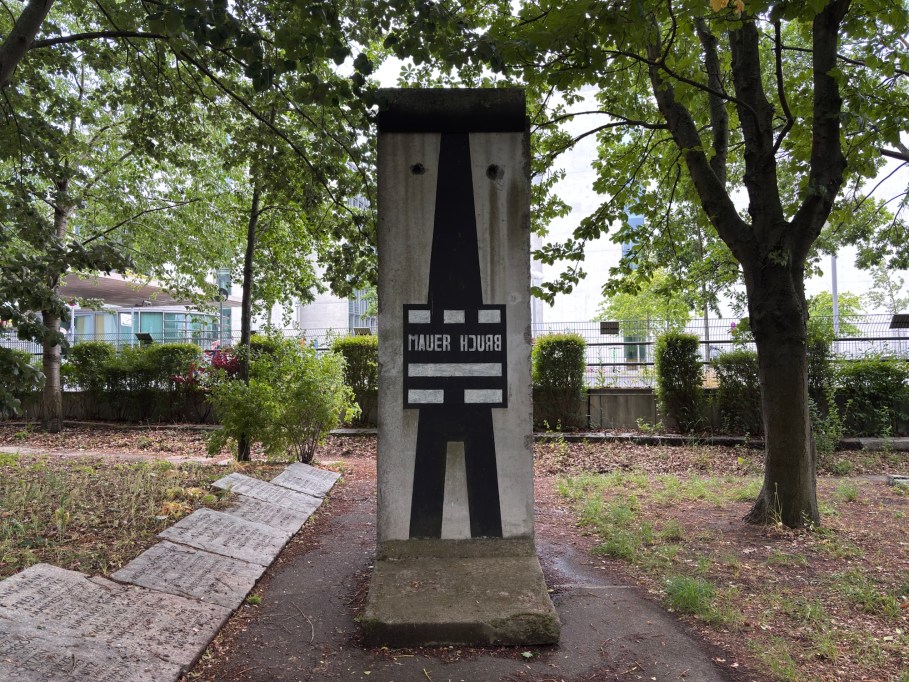
Original segment of the Berlin Wall: “Mauer Bruch” (wall break).
I made all images above with an iPhone15 on 8 June 2025. This post composed within Jetpack for iOS appears on Fotoeins Fotografie at fotoeins DOT com.
My first visit to Berlin took place in 2002, when I lived and worked in Heidelberg. In many returns through the years since, I’ll usually pass by grand Brandenburger Tor, feeling like the first time. But in the last two visits in 2017 and 2021, I didn’t give the Gate or much thought. But this is 2025.
Afternoon light through variable cloud cover. Victoria and the Quadriga on top of the gate are facing away, to the east. The former East Berlin TV tower’s “disco ball” is visible at left.Behind me is…
…”The Crier” (or shouter) by German sculptor Gerhard Marcks, placed here in May 1989 in what was West Berlin. The shouts are directed towards former East Berlin.
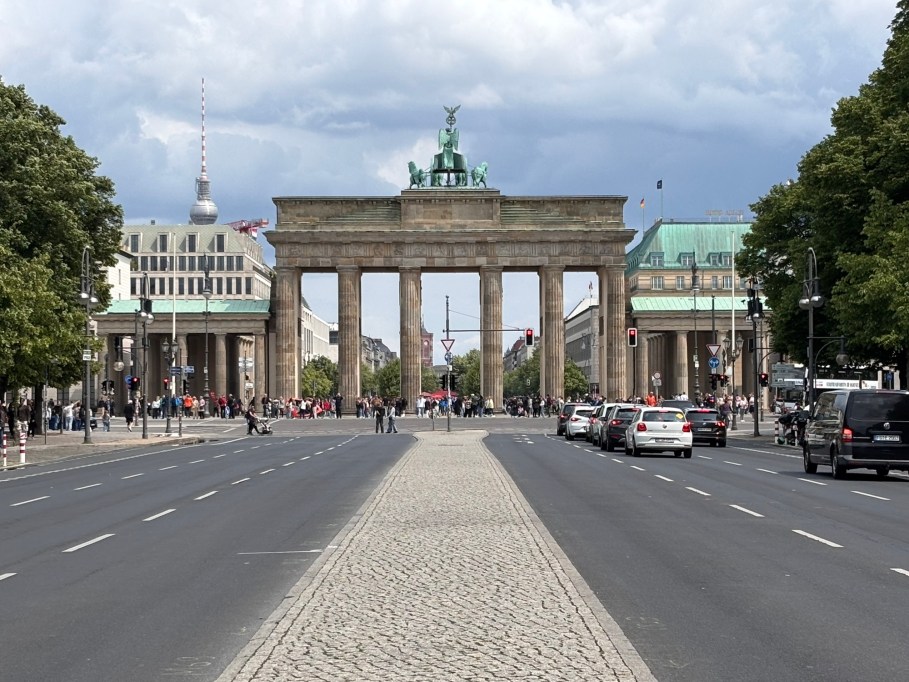
Platz des 18. März (March 18th Plaza), facing east. Through the gate on the other side is…
…Pariser Platz, seen here facing west.
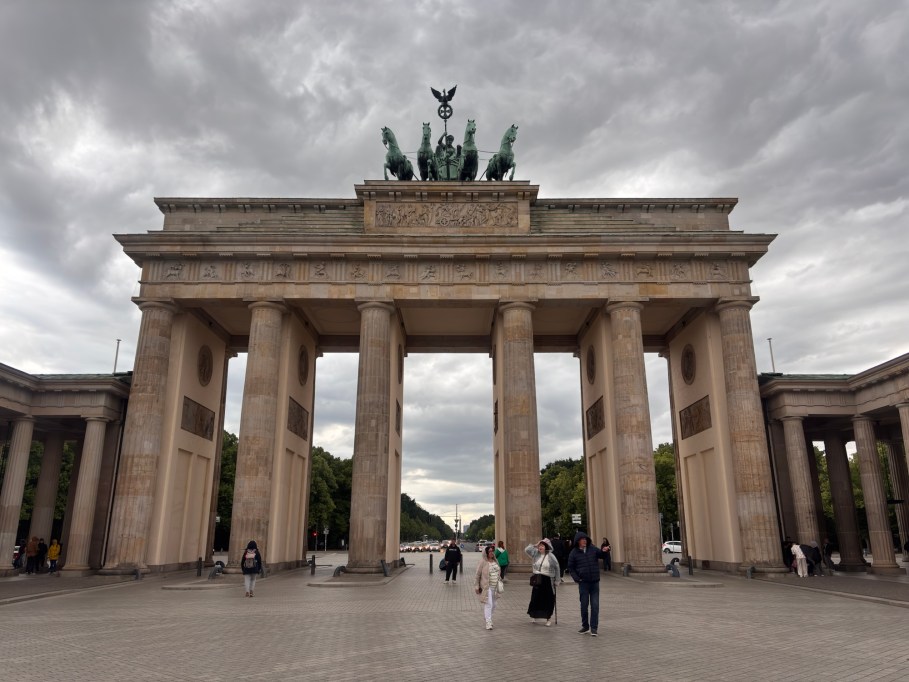
There’s Victoria and the Quadriga, which Napoleon took back with him to France, when the French had one-upped the Prussians. The French lost and eventually left, and the Quadriga returned to Berlin.
Late-spring can bring occasional (thunder-) showers, preceded typically by dark swaths of low menacing clouds. But I also wanted to use this to comment about the alarming rise of the far-right in regional and national politics.
Time to head underground for the trains there.
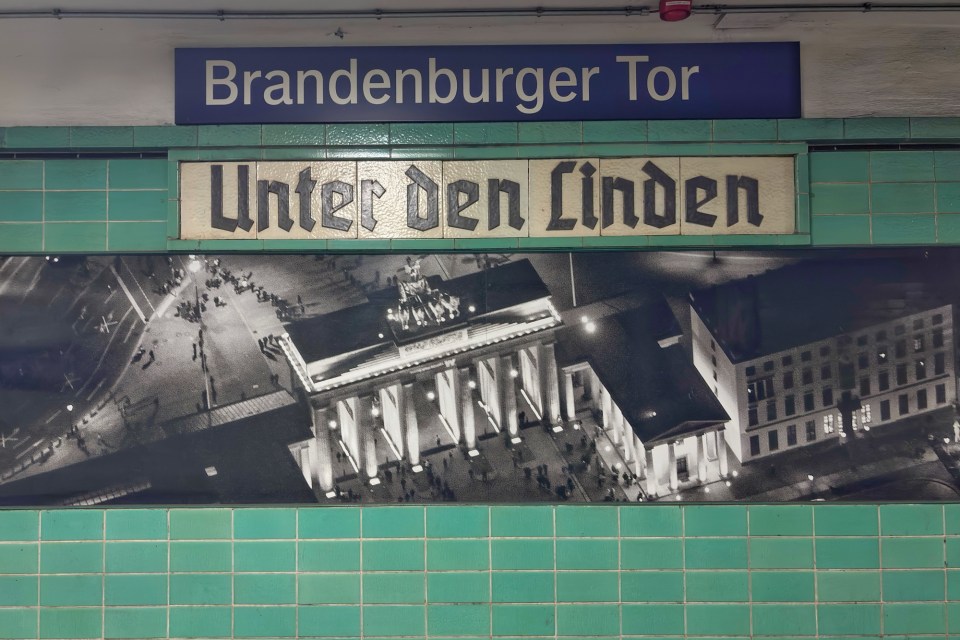
S-Bahn station Brandenburger Tor, for the north-south S-Bahn lines. The name of the station used to be Unter den Linden (in the Fraktur font) which has been reassigned further east to the recently opened U-Bahn station-exchange for lines U5 and U6. Below the “now and then” signageis an aerial nighttime shot of Brandenburg Gate.
I made all images above with an iPhone15 on 8 June 2025. This post composed within Jetpack for iOS appears on Fotoeins Fotografie at fotoeins DOT com.











 Fotoeins Fotografie