Week 1 – no comment
Erste Woche – ohne Kommentar
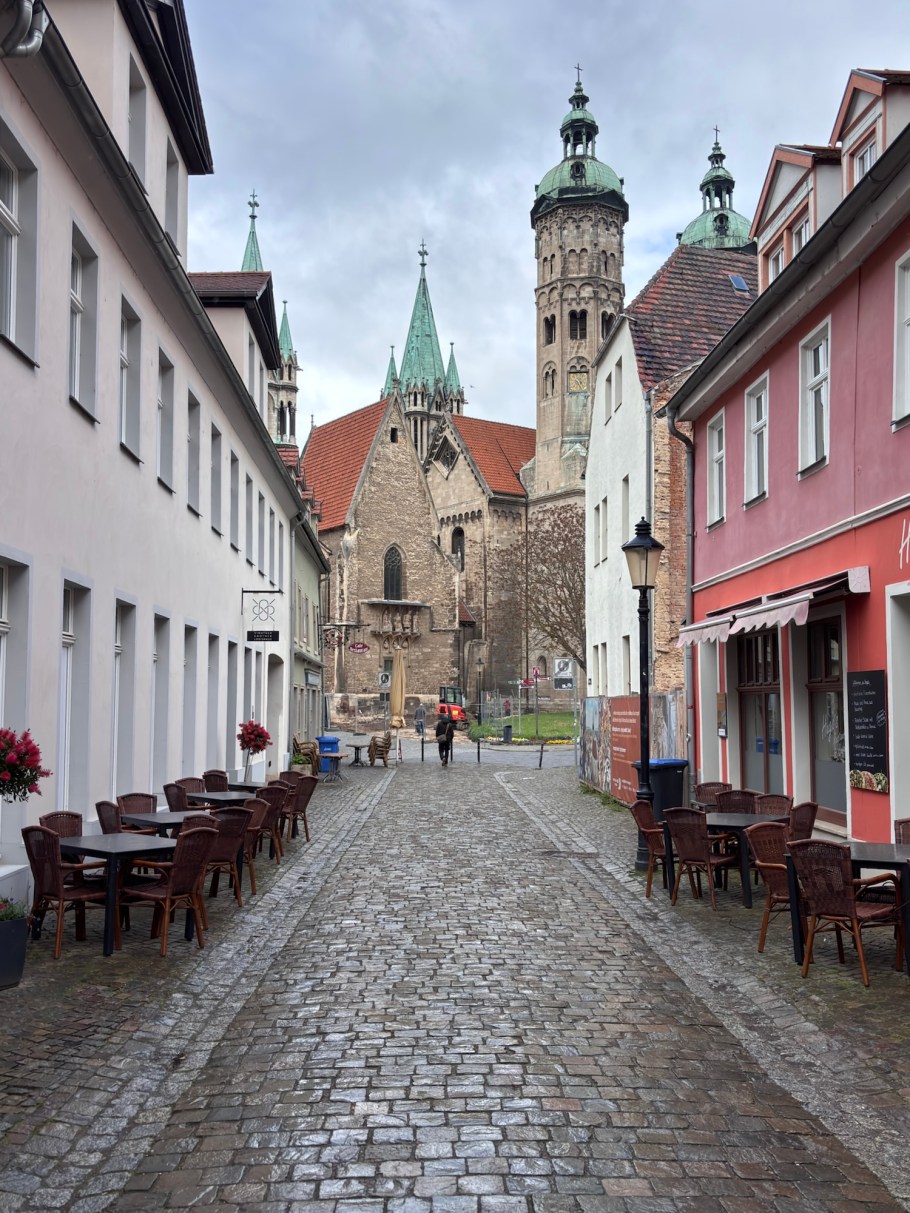
Above/featured: Johannes Kepler memorial at Marktplatz in Weil der Stadt. Photo, 21 Jul 2024 (P15).
I first heard the name “Kepler” way back in high school. I had no idea “Kepler” would embody a winding trail of education, knowledge, a “first life” (career), and a deep lifelong appreciation of science. Thankfully, what’s transformed has been a “second life” opened to another world with more questions, some of which have led to unexpected places. Perhaps, the cost is a solitary quest for answers, but ultimately, my motivation has always been clear: it’s because I need to know.
In the same way Kepler, like many others before and after, looked up at night and asked a simple question: “why do stars and planets appear and move as they do in the sky?”
To the here and now, my questions begin and land on our own planet.
For example, where was Kepler born? Where is this place? Are there any traces in those spaces?
But first, who was Kepler?
Above: “It’s a miracle I’m still alive”, Otto Frank. Photo, 17 Jun 2023 (X70).
Frank Family Centre, Jewish Museum Frankfurt
Frankfurt am Main is a city I’ve visited countless times since 2001, but I hadn’t known until recently that Anne Frank and her sister, Margot, were born in Frankfurt am Main, or that their parents, Otto and Edith, had lived in Frankfurt for almost ten years before moving their family to Amsterdam in early-1934. I’ve put together a list of places and traces the Frank family spent and left in Frankfurt am Main.
Here I cast light on the Frank Family Center (FFC), both memorial and historical record of the European-Jewish Frank family which was added to the permanent collection of the Jewish Museum Frankfurt (JMF) in 2020. Having begun in 2012, the Frank Family Center brings together an extensive collection of material belonging to the Frank-Elias families. The archive includes photographs, official documents, hand-written letters, art, books, household items, and furniture. The items provide a glimpse into the lives of the Frank- and Elias-families across Europe; there’s happy times, catastrophe and loss, and the strength gained in survival. The FFC has been designed for the public to view a part of the archive on permanent display in an open museum setting, as well as for research parties to pursue various avenues of academic inquiry.
Upon entry into the space, the first panel includes the following introductory text which I’ve modified to improve clarity.
The Jewish Museum Frankfurt holds a large number of objects belonging to Anne Frank’s family who had lived in Frankfurt for several generations.Between 1929 and 1933, the entire family departed Frankfurt am Main and established new lives in Basel, Paris, Amsterdam, and London. In 1942 Amsterdam, Otto and Edith Frank, along with their daughters, Margot and Anne, went into hiding to escape imminent deportation. In August 1944, the secret location was revealed to the authorities, and the family was detained, and deported to Auschwitz. Of the four in the family, only Otto Frank survived, who subsequently devoted the rest of his life to acquainting and educating the world with the diary of his murdered daughter, Anne.
In 1933, Anne’s paternal grandmother Alice Frank sold their home in Frankfurt am Main, and moved to Basel to join her daughter, Leni Elias, and her family. Alice was able to take some of the family belongings with her from Frankfurt to Switzerland, including personal photos and documents. Her moving boxes also contained furniture, porcelain, silverware, and paintings. The family’s heritage as documents of their previous lives in Frankfurt was carefully preserved in Basel.
This room of the Frank Family Center provides an introduction to this family heritage and to the history of the Frank and Elias families.
Above: The Frank family in happier times; seen left-to-right are Margot, Otto, Anne, and Edith, respectively. Display at the Frank Family Centre at the Jewish Museum Frankfurt, 17 Jun 2023 (X70).
I hadn’t realized how long an impression would last, decades after having read in high-school the diary of a young girl stuck in hiding for years. Much later down the line and standing in front of a house in a quiet neighbourhood in a German city, I could almost hear the laughter of children in the backyard and the gentle rebuke of a mother to one of her daughters, years before one of the girls ever considered writing her thoughts down into a book.
The story of Anne Frank and her family are well known. Her father and businessman Otto Frank moved his family from Frankfurt am Main to Amsterdam in 1934 to escape increasing Nazi discrimination against Jews. Otto survived capture, deportation, and time in the camps; but his wife and two daughters did not. After liberation in 1945, Otto Frank returned to Amsterdam and wrote letters to relatives in Basel. He learned how the diary written by his daughter Anne had been carefully hidden; reading her daughter’s thoughts would change the remaining course of his life. In the early-1950s, he moved to Basel, Switzerland, to be closer to his sister’s family. He and his extended family spent time and energy for the rest of their lives dedicated to translation efforts and the distribution of Anne’s diary as a document of family memory, world history, and essential education; and to the collection of memories and belongings of lost family members. Otto died in 1980, and is buried in Birsfelden cemetery, just east of Basel proper.
Much of the story has been written about the Frank family’s time in Amsterdam, but I hadn’t been aware of the family roots in Frankfurt am Main, despite my countless times passing through and multiple stays in the city since 2001 when I moved to Heidelberg. I wanted to learn about their time in Frankfurt am Main, before the family left for Aachen and Amsterdam in 1933–1934. What follows below is my examination of some of the places and traces left behind by the Frank family in Frankfurt am Main.
ANNELIES Marie Frank, daughter: b/✵ 12 June 1929, Frankfurt am Main – d/✟ March 1945, Bergen-Belsen.
EDITH Frank (née Holländer), mother: b/✵ 16 January 1900, Aachen – d/✟ 6 January 1945, Auschwitz.
MARGOT Betti Frank, daughter: b/✵ 16 February 1926, Frankfurt am Main – d/✟ March 1945, Bergen-Belsen.
OTTO Heinrich Frank, father: b/✵ 12 May 1889, Frankfurt am Main – d/✟ 19 August 1980, Birsfelden.
Above: A group of skiers gather before their run near the Fellhorn summit.
As a product of the Canadian southwest, I’ve maintained a fascination with mountains. I don’t necessarily need to climb the mountains, but I’ve always been curious about the names of mountains, the reasons for their names, and the people who named them. I’m not always going to get answers, but if there’s a lift to take me to a view, I’m always game.
With an easy bus from Oberstdorf in the southwest corner of Germany, I’m headed 10 km south to Faistenoy for the gondola up to the summit of Fellhorn (2038 metres) among the Allgäu Alps. There’s a lot of snow up top with a depth of about 1.5 metres; skiing and snowboarding conditions look good in the Skigebiet Fellhorn-Kanzelwand (Fellhorn-Kanzelwand Ski Area). But what do I know? I don’t ski or snowboard, but the winter-afternoon light is decent on the smooth snowy landscape. I’m drawn to the information displays to learn more about Fellhorn and the mountains I’m seeing in the near 360-degree panorama. In the distance the flat-topped Hoher Ifen mountain looks like a multiple-layer cream-filled cake. I arrive quickly at a couple of conclusions: one, it’s fun to stand on a border between two countries at altitude, even if an international frontier is set somewhat arbitrarily; and two, I promise to return in the summertime to do a loop: return to Fellhorn, hike along the relatively flat ridge-line west, take the Kanzelwandbahn gondola down into Austria’s Kleinwalsertal valley, have a sip and nosh in one of the alpine towns, and return to Germany’s Oberstdorf on a local bus.

