Fotoeins Fotografie

location bifurcation, place vs. home

Posts tagged ‘Deutschland’

Lübeck, Hansestadt Lübeck, Luebeck, Schleswig-Holstein, Germany, Deutschland, UNESCO, World Heritage, Welterbe, Weltkulturerbe, fotoeins.com

All hail Lübeck: Queen of the Hansa

I’m walking gingerly on the uneven cobblestone, the narrow streets surrounded by tall gabled buildings. The air is full of history, permeating structures and streets, in contrast with modern activities taking place. Much of the architecture falls within the red brick Gothic style uniquely representing the height of an era going back one thousand years.

Slowly, I’m sensing from centuries past the apparitions of people who’ve passed through this place. I tuck into a narrow passageway and stop. If I close my eyes, I hear the ancient sounds as though they’re etched into the grooves between the red brick. Shouting, negotiating, best products from around the world, best stuff money can buy, best deals you can get for miles around.

I’m fascinated by the influence of merchants who cast a massive net across northern Europe. I’m interested in the history of architecture and trade, how a town surrounded by an important river a mere 20 kilometres from the sea became a hub and crossroads for the movement of people and goods.

This special place is the “Hansekönigin”: Queen of the Hanseatic League.

( Click here for more )

Meral's Imbiss, Mainufer, Frankfurt am Main, Germany, fotoeins.com

My Frankfurt: taste of Istanbul on the Main

“This is like being in Istanbul,” my friend says, in between bites of his sandwich.

Ömer, his fiancée, and I are sitting on the south bank of the river Main in Frankfurt, Germany. We’re soaking the late-summer sun. The grassy meadows are full of people: some in animated conversation; some surrounded by a big spread of food, beer, and wine; others kicking the soccer ball back and forth with their children.

There’s a whole lot of happiness here, but there’s a long line of people, waiting to purchase food and drink at the boat parked by the riverbank.

We just left that very same line after waiting for an hour. What we’re eating now made the wait worthwhile.

Over the ten-plus years I’ve known Ömer, he’s never been wrong about food in Germany.

Meral's Imbiss, Mainufer, Frankfurt am Main, Germany, fotoeins.com

Speisekarte | Food menu

Meral's Imbiss, Mainufer, Frankfurt am Main, Germany, fotoeins.com

Hamsi (Sardellen) fried-fish sandwich, “Ominade”

We each have a fried-fish sandwich: lightly fried fish in thin crispy batter, crunchy lettuce, slices of juicy tomato, stuffed in fresh soft Turkish bread. There’s a choice of Sardellen (anchovies), Makrelen (mackerel), or Doradenfilet (gilthead seabream). Ominade, freshly-squeezed lemonade according to Oma’s (Grandmother’s) recipe, is the right amount of sweet-tart, providing cool refreshment for our afternoon snack.

“The guy, the family who runs that boat, they’ve got this right, and I’ve gotta admit this feels like we’re on the Bosporus.”

High praise from Ömer: born in Istanbul, raised in Köln, and who’s gone back to know Istanbul very well in adulthood.

We’re silent over the next few minutes, chewing slowly and contemplating Istanbul. I’m realizing the obvious. If the food is any indication, I’m missing out; I’ve not yet visited Istanbul.

But right now, I’m eyeing that long line: I want another fried-fish sandwich and lemonade. But I don’t want to move; this is summer-like weather on an early-autumn afternoon on the bank of the river Main.


If you’re visiting Frankfurt am Main, make your way to the Main river to the boat called Meral’s Imbissboot (Meral’s Snack Boat). Naturally, they serve Döner, but their fried fish is too good not to try. Subject to weather conditions, the boat is open for service every day from noon to 11pm, between March and October.

Public transport: nearest U-Bahn station Willy-Brandt-Platz or Schweizer Platz.

I made the photos above on 3 October (German Reunification Day) 2011. This post appears on Fotoeins Fotopress at fotoeins.com as http://wp.me/p1BIdT-4n5.

Cafe Gundel, Hauptstrasse (Karlsplatz), Heidelberg, Germany

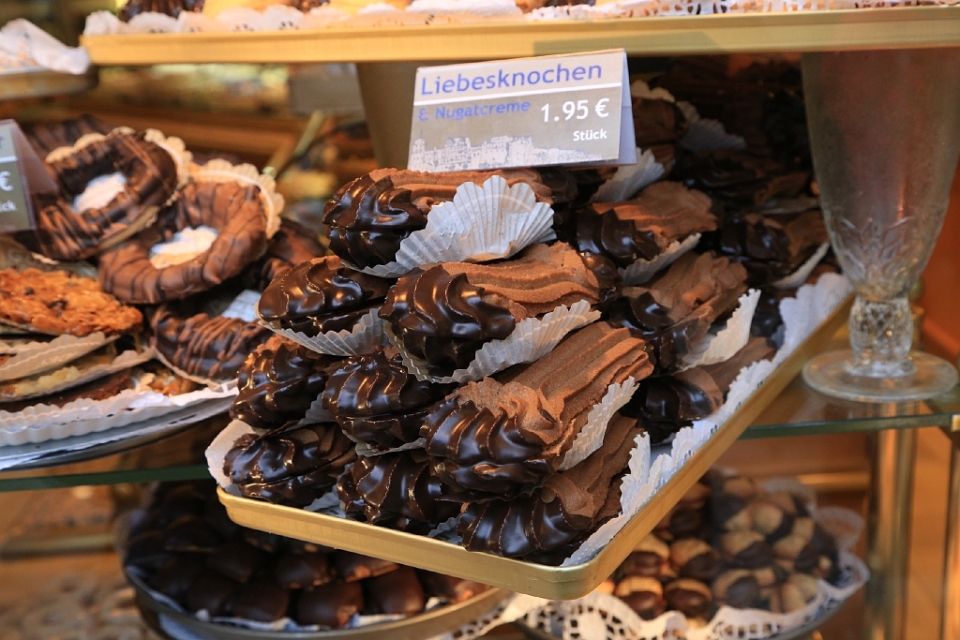
My Heidelberg: 1st sweet taste at Café Gundel

In 2001, I moved across the big Atlantic pond from Canada to Germany. Knowing only “bitte” (please) and “danke” (thank you), I flew sight unseen to Frankfurt am Main, followed by a shuttle-bus to the German university town of Heidelberg. I would live and work in Heidelberg for two years, and I couldn’t have known the experience would change my life.

Heidelberg is a favourite “hometown” which includes many memories of firsts.


( Click here for more )

Berlin Gleisdreieck: winter vs. summer

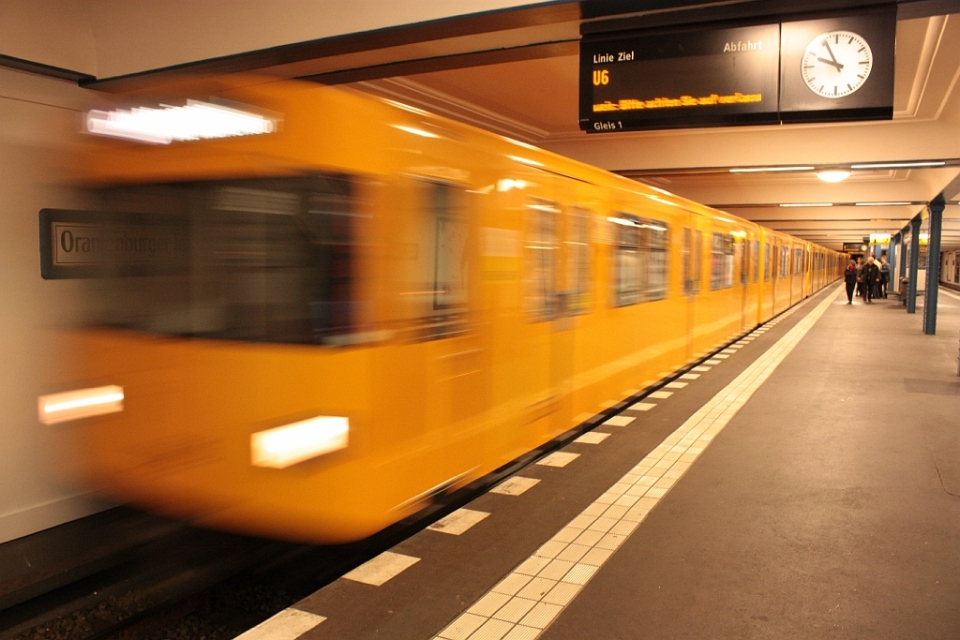
Gleisdreieck (“railway triangle”, “triangular junction”) is a U-Bahn train- and junction-station at the western end of the Kreuzberg district in the German capital city of Berlin.

The station has both upper-level and lower-level platforms serving lines U1 and U2, respectively, although both sets of track are raised above ground. At Gleisdreieck, the U1 line runs west-east, whereas the U2 line runs perpendicularly and temporarily “north-south”.
( Click here for more )

Alter Synagogenplatz, Altstadt, Heidelberg, Baden-Württemberg, Germany, fotoeins.com

My Heidelberg: Synagogue Square and Pogromnacht

It happens every time without fail.

My spirit breaks a little more every time I see a memorial, another example of the depths to which our species have plumbed.

Does feeling this way make me weak? Or am I resembling a human being after all?

I often hear a common chorus:

history is hard, history is boring, why should I care?

I can’t decide what’s worse: the rise of the far-right or blatant willful ignorance.


A Mob of Broken Glass

From the evening of 9 November to the following morning of 10 November 1938, Kristallnacht (“the night of broken glass”) was a “pogrom”, a coordinated series of violent attacks by Nazis against the Jewish people and their property in Germany, Austria, and Czechoslavakia’s Sudetenland. Pogromnacht (or Reichspogromnacht) is a truer description; the “prettier sounding” Kristallnacht hides the brutality of “the night of (broken) crystal” referring to broken shattered glass from windows to synagogues, homes, and stores owned by Jews. Aside from a few who intervened, most stood aside and watched people and property burn.

The word “pogrom” is a late 19th- to early 20th-century Russian word (“погром”), derived from the verb “gromit” (громи́ть) meaning “to destroy with violence.” While “pogrom” is used generally to describe mob violence by one ethnic or religious group on another, the term is used in this post to describe attacks on the Jewish community.

The numbers across the country were appalling: at least 90 dead, hundreds injured, 30000 arrested and detained in concentration camps, up to 2000 synagogues burned, over 7000 Jewish businesses damaged or destroyed. With one more insult, the Jewish community was forced to pay for damage to their own property. The outbreak of coordinated actions against Jewish people marked the beginning of state-sanctioned violence. With the Pogromnacht, the state no longer hid their hate and escalated their savagery as a turning point directly leading to the Holocaust.

( Click here for more )