Fotoeins Fotografie

location bifurcation, place vs. home

Posts tagged ‘3. Bezirk’

25T82 Vienna: colour splash in the Sünnhof

E81, V29.

The sun showed up at the right time, as I entered the 150-metre long passageway through the Sünnhof building in Vienna’s 3rd district. Truth is, at the right time of day, the illumination of the umbrellas suspended over the passageway is sure to light up everyone’s face, regardless of age. I’m confident Mary Poppins would have felt at home.

There’s no admission charge, but people are more than welcome to sit outside with a drink from any of the cafes or restaurants lining the passage.

The Sünnhof is just one example of a Vienna architectural staple: “Durchhaus”, a building through which a path is constructed to allow passage from one side of the building to the other. There are many “Durchhaus” examples in the city, especially in the 1st district.


North end of Sünnhof passage, at Landstraßer Hauptstraße 28.
150-metres later at the south end of Sünnhof passage, at Ungargasse 13.

I made all images above with an iPhone15 on 28 July 2025. This post composed within Jetpack for iOS appears on Fotoeins Fotografie at fotoeins DOT com.

24T63 Vienna: one two three

E62 V29

I’m into my 5th and final week in Vienna. With the return of some summer heat and humidity, I start bright and early, but the pace is slower than usual to account for refreshment and cooling breaks. The title today reflects various dives into the city’s first three districts.


1. Innenstadt

“Bonbons”


2. Leopoldstadt

“No Sleep Till Leopoldstadt”, by Xan Padrón, 2024. Brooklyn x Leopoldstadt collaboration project

“Wollte nie dass du gehst: sorry. Hab immer an uns geglaubt.” / I never wanted you to go: sorry. I always believed in us.” (unrelated graffiti)

3. Landstrasse

“Morse Alphabet” neon sculpture by Brigitte Kowanz, for Österreichische Post, 2017.

A to Z, in Morse code from top to bottom.

I made all photos above with an iPhone15 on 9 Jul 2024. This post composed with Jetpack for iOS appears on Fotoeins Fotografie at fotoeins DOT com.

24T39 Two Vienna traditions: Trześniewski & Trams, Brötchen & Bims

E38 V5

If something has carried on for over one hundred years, surely that’s long enough to count as “tradition.” I can live with that here in Vienna.

Saturday saw the heat return to the capital city with a balmy high of +28C (82F), likely touching low-30s in the Danube valley plains. Hanging out in the 3rd district (Landstrasse) brought me to some munchies at Rochusmarkt and some beautiful old streetcars at a transport museum.


Trześniewski

Since 1902, this Vienna-only chain offers simple delicious open-faced sandwiches. Their “Brötchen” consist of fresh rye bread cut to small rectangular slabs on which thick savory spreads are applied. (“Tschress-nee-ev-ski” is my best attempt.)

It’s 125pm and cozy inside their space at Rochusmarkt.
Rich creamy savory spreads on solid rye; very tempting to buy individual spreads in 100gram-jars for the apartment.

Remise (depot) transport museum

In a former rail maintenance yard, the city’s public transport operator, Wiener Linien, has their own history museum describing how Vienna went from horse-drawn trams in the 1840s to the U- and S-Bahn trains within the metro region today. There’s the visual bonus of many old pretty red trams, a.k.a. streetcars, a.k.a. “Bims”.

Lounge- or trailer-car, no.1504 (1871).
“Rund um Wien” (Around Vienna), no.82 (1912).
With the introduction in 1962 of rapid transit or Schnellbahn, this 1965 logo with the white jagged rune-like ‘S’ on a blue background became a standard sight around Vienna.
“Silberpfeil” (silver arrow), no.2022, 1976 with the introduction of the first U-Bahn line, the U1, in Vienna.
Tracks out from the sheds.

I made all images above with an iPhone15 on 15 Jun 2024. I received neither sponsor nor support from any external organization. This post composed with Jetpack for iOS appears on Fotoeins Fotografie at fotoeins DOT com.

Vienna’s St. Marx Cemetery, Biedermeier style

Above/featured: Morning visit to the city’s Biedermeier cemetery – 20 May 2022.

In Vienna’s 3rd district, the St. Marx cemetery is the only surviving Biedermeier cemetery in the city. A visit now is a jump into the frozen past. The cemetery opened with its first burial in 1784. Closure of the city’s multiple neighbourhood cemeteries began in 1873 with the final burial at St. Marx taking place in 1874. Subsequent funerary functions were transferred to the newly constructed Zentralfriedhof located farther out from the city centre. The very leafy avenues and “leafy gate” are what’s left of the city’s only remaining 18th-century cemetery that is now open to the public as a city-administered park.

Why Biedermeier

Biedermeier in Vienna corresponds to a cultural period during the first half of the 19th-century marked by increased industrialization in rapidly urbanized areas and strict censorship with the elimination of dissenting political voices. Instead of looking outward to change, the artist and design community moved to safer spaces in nature or to their homes. While innovation might have given way to a modest yet graceful and functional style, Biedermeier architecture in its neoclassical spin provided inspiration for subsequent Art Nouveau (Jugendstil) and Secession movements. An important Viennese architect of the period was Josef Kornhäusel who designed many buildings in the city. Important music from this period was composed by, for example, Beethoven, Chopin, Liszt, Schubert, Schumann. One of the largest collections of Viennese Biedermeier art is in the Belvedere’s collection. St. Marx cemetery is a reflection of both city and age from the 19th-century.

St. Marxer Friedhof, St. Marx cemetery, Biedermeier cemetery, 3. Bezirk, Landstrasse, Wien, Vienna, Austria, Österreich, fotoeins.com

Cemetery entrance. Photo, 5 Jun 2023.
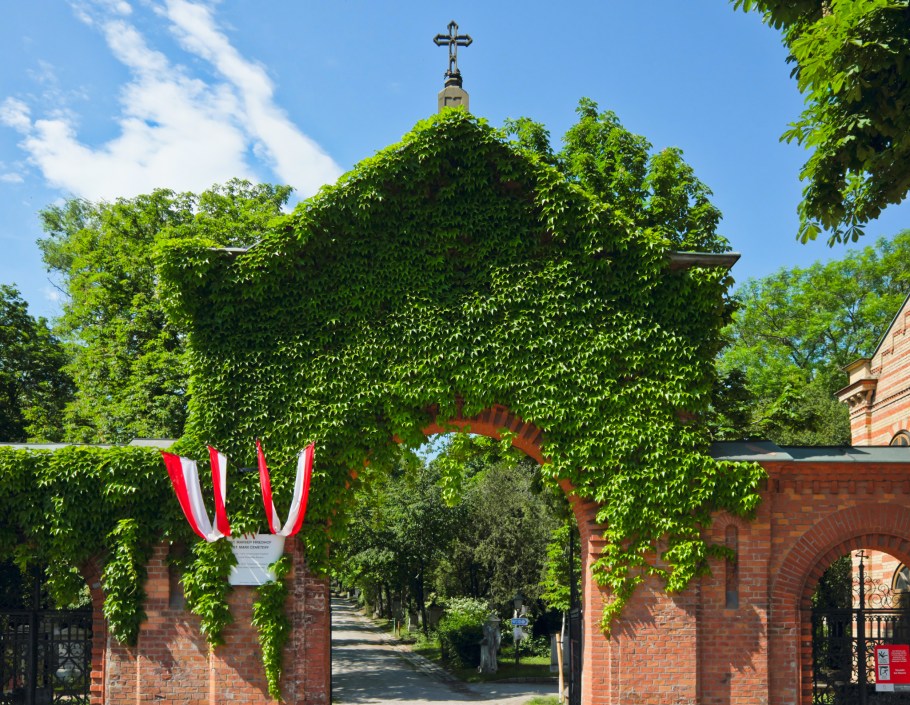
St. Marxer Friedhof, St. Marx cemetery, Biedermeier cemetery, 3. Bezirk, Landstrasse, Wien, Vienna, Austria, Österreich, fotoeins.com

Main gate. Photo, 20 May 2022.

St. Marxer Friedhof, St. Marx cemetery, Biedermeier cemetery, 3. Bezirk, Landstrasse, Wien, Vienna, Austria, Österreich, fotoeins.com

Address: Leberstrasse 6–8. Photo, 20 May 2022.

St. Marxer Friedhof, St. Marx cemetery, Biedermeier cemetery, 3. Bezirk, Landstrasse, Wien, Vienna, Austria, Österreich, fotoeins.com

Information stone with visiting hours by month. Photo, 20 May 2022.


( Click here for images and more )

Vienna: Aspang Station Deportation Memorial

“Well into the 1970s, the area around present-day Leon Zelman Park was the site of the Aspang Railway Station, which was built in 1880–1881 as a terminal for the regional Vienna-Aspang-Pitten rail line. Despite its relatively central location in the city’s 3rd district, the station served only regional rail traffic and was not very busy. These were likely reasons why after the “Anschluss” the Nazis chose this station for deportation transports.

Two transport trains departed in October 1939 with 1584 Jewish men deported to Nisko in the Lublin District of the General Governorate of occupied Poland as a failed attempt to create the Lublin reservation for expelled European Jews. Much larger deportations resumed from February 1941 to October 1942. 45451 Austrian-Jewish men and women were deported on a total of 45 transport trains to ghettos and extermination sites in (what are now) Czechia, Poland, Belarus, Lithuania, and Latvia.

In Vienna, the cynically-named Nazi ‘Zentralstelle für jüdische Auswanderung’ (Central Agency for Jewish Emigration) organized deportation efforts including forced captivity and assembly or collection points. Four internment stations were established in the city’s 2nd district where prisoners were abused and stripped of their possessions. For every transport, about one thousand people were driven to Aspang Station in uncovered trucks, in plain and open sight of the city’s population.

Of the 47035 Jewish men and women deported from Aspang Railway Station, only 1073 (2%) survived, according to the research by Austrian historian Jonny Moser, himself a survivor of the Holocaust/Shoah. In total, more than 65-thousand Austrian Jews fell victim; most of them began their road to their deaths at Aspang Station.”

•   Paraphrased from Kunst im öffentlichen Raum Wien (Art in public spaces Vienna).

After the war and Allied-occupation period, little was done to improve the station and its tracks. The station was closed in 1971 and the station building was demolished by 1977. The turn of the millennium provided momentum to both city and the national rail company for redevelopment of the area, including apartment blocks, green space, and a memorial. Today, the former railway station is Leon Zelman Park, named after Dr. Leon Zelman who established in 1980 the Jewish Welcome Service Vienna and led the organization until his passing in 2007. The inauguration of the deportation memorial occurred on 7 September 2017 with full opening to the public on the following day.


( Click here for images and more )