Fotoeins Fotografie

location bifurcation, place vs. home

Posts from the ‘Summer’ category

Vienna: Stefanie Herkner’s homestyle cuisine

I’ve been thinking a lot about my father who died in 2014.

What he passed onto me are: an appreciation for authentic dining with a minimum of pretence, interests in geography and history, and an enthusiasm for highway drives and road trips. He also loved woodwork, gardening, and tinkering with the family car. By contrast, I like to dabble with memories and the act of memory.

I’ve also been thinking about how he would’ve viewed my experiences in Vienna.

In Vienna’s 4th district, cook and author Stefanie Herkner owns and operates her restaurant, Zur Herknerin, as a living memory of her father, Heinz, and her family’s Slovenian culinary heritage. Much of her story has appeared in a variety of publications: how her dad’s famous restaurant, Zum Herkner, helped spark and redefine contemporary Vienna cuisine; how she went to London to study art-and-culture management; how her parents tried to dissuade her from the restaurant industry; and how she returned home to Vienna and opened her own restaurant in mid-2013.

That’s the kind of story to pique my curiosity.

With a reservation for the opening slot at weeknight service, I arrive 15-minutes early to moderate street-traffic and a set of open doors. The space is light, airy, uncomplicated, and welcoming. A couple of servers and kitchen staff are out and about, preparing for the dinner rush. Captaining the ship is Frau Herkner, her voice a firm, steady, and encouraging guide. I chat briefly with her: I’ve flown over 8000 kilometres across the world to have a meal here, and that my love of diners and small restaurants comes from Dad, who worked many years in many diners as cook and line-cook.

What’s familiar on the dinner table to many in this part of the world is relatively new to me. My order is a delicious introduction to the family’s central European background.

Krautroulade mit Petersilerdäpfel und Rahm (Serbian-style stuffed cabbage roll): ground beef and pork fried with bacon, tomatoes, bell peppers and carrots, diced onions; that extra fat is always the flavour enhancer. The meat-and-rice mixture is stuffed into large cabbage leaves, rolled and gently simmered with garlic and bay leaves. Add perfectly cooked cut-up potatoes served with parsley, and served with a dollop of sour cream.

Almdudler-Radler: cold draft beer mixed with Almdudler, Austria’s national and herbal lemonade. The combination is refreshing on a warm early-summer day, and I think its slight sweet-and-bitter “bite” goes well with the savory Sarma.

Apfel-Strudel: phyllo pastry filled with chunks of regionally-grown apples, with cinnamon and nutmeg; light but substantive; more apple than pastry. The last polish is a Melange for a smooth finish.

To achieve her goal of delivering family favourites to customers, she emphasizes:

“Unsere Zutaten sind biologisch, saisonal, regional oder vom eigenen Hof.”
(Our ingredients come from products that are natural, seasonal, regional, or from our very own farm.)

Before leaving, I catch Frau Herkner’s attention one last time. I tell her how much I enjoy the food, and how my experience feels like an accepted invitation into her family home with, if our faith allows, the spirits of our respective fathers, present in the kitchen and at the table.

Food and ambience.
Nourishing and warmth.
A lot of heart and muscle memory.
A lot of family memory and history.
I think Dad would’ve liked this.

Because I really did; I wanted to believe.


( Click here for images )

Vienna: 9 spots in the 9th district

Above/featured: Votivkirche (Votive church) from Schottentor – 20 May 2023.

Two visits: two months spread over two years.
A thousand kilometres of walking.
Hundreds of historical spots and locations tracked, spotted, and photographed.

It makes sense that out of Vienna’s 23 city districts, I’ll frequent some more than others. The 1st district, or the Innere Stadt, is unavoidable, because that’s where most visitors to the city will congregate. The 2nd (Leopoldstadt) and the 6th (Mariahilf) are districts where I had separate month-long stays. But it’s the 9th district (Alsergrund) into which I wandered through countless times, including tracking my way to the 18th and 19th districts.

Out of many interesting little spots in Alsergrund, I’ve highlighted nine examples from a historical “mĂ©lange” of architecture, Jewish culture, medicine, music, and physics. If you’re wondering about the Votivkirche (Votive Church) in the image above, I’ll have more about the church in future posts about Ringstrasse (Ring Road) architecture as well as the architectural works by Heinrich Ferstel.


( Click here for images and more )

Vienna: Dr. Olga Ehrenhaft-Steindler, trailblazer & women’s advocate

In examining the history of the University of Vienna, I discovered Olga Ehrenhaft-Steindler was the first woman to receive a doctoral degree in physics from the university in 1903. Who was she? How did she become the first? How did society of the time view the education of young women?

I’m starting a series on women who left their mark on Vienna and Austria, and some of the traces they left behind in the Austrian capital city. With educators, inventors, writers, and scientists, my serial includes: Dr. Marietta Blau; Marianne Hainisch; Hedwig Kiesler, a.k.a. Hedy Lamarr; Dr. Lise Meitner; Dr. Gabriele Possanner; Dr. Elise Richter; and Bertha von Suttner.


Who: Dr. Olga Ehrenhaft-Steindler: b/✵ 28 Oct 1879, d/✟ 21 Dec 1933.
PhD: 1st woman with doctoral degree in physics from University of Vienna, 1903.
Educator: Early 20th-century teacher & advocate for better access to education for young women.

In late 19th-century and early 20th-century Austria and Vienna, Olga Steindler was one of countless women who faced difficulties and challenges by young women who wanted to expand their education and improve employment, all of which were viewed by society at the time as undesirable. Feminism or anything similar did not exist.

Born and raised in Vienna, Olga Steindler departed her home for Prague to complete and pass her final high-school examinations in 1899, because young women were not permitted to do so within Austria at the time. She subsequently enrolled at the University of Vienna to study physics and mathematics within the Faculty of Philosophy. Only two years earlier in 1897 had the University of Vienna finally accepted the enrolment of women, although they were initially allowed only into the Faculty of Philosophy. In 1903, Steindler became the first woman to receive a Ph.D. in physics from the University of Vienna after successfully completing her research dissertation.

Completing qualifications for teaching at secondary (high) schools in the same year, she joined the “Athenäum” where she taught young women about experimental physics; she also taught at Vienna’s first girls’ secondary school established by Marianne Hainisch in the city’s 1st district. In 1907, she founded two new schools in Vienna: a girls’ public secondary school in the city’s 2nd district, and a business school for young women in the city’s 8th district. Steindler married her physicist colleague Dr. Felix Ehrenhaft in 1908; she became known as Dr. Olga Ehrenhaft-Steindler. She championed the cause for educating girls and young women, and creating new opportunities in science, business, and society at large. For her dedicated service to the public, Austria awarded her in 1931 the title of “Hofrat” as a new member of the imperial court advisory council, an honour uncommon among Austrian women at the time. At the age of 54, Dr. Olga Ehrenhaft-Steindler died in December 1933 from complications after having contracted pneumonia.


( Click here for images and more )

Vienna’s St. Marx Cemetery, Biedermeier style

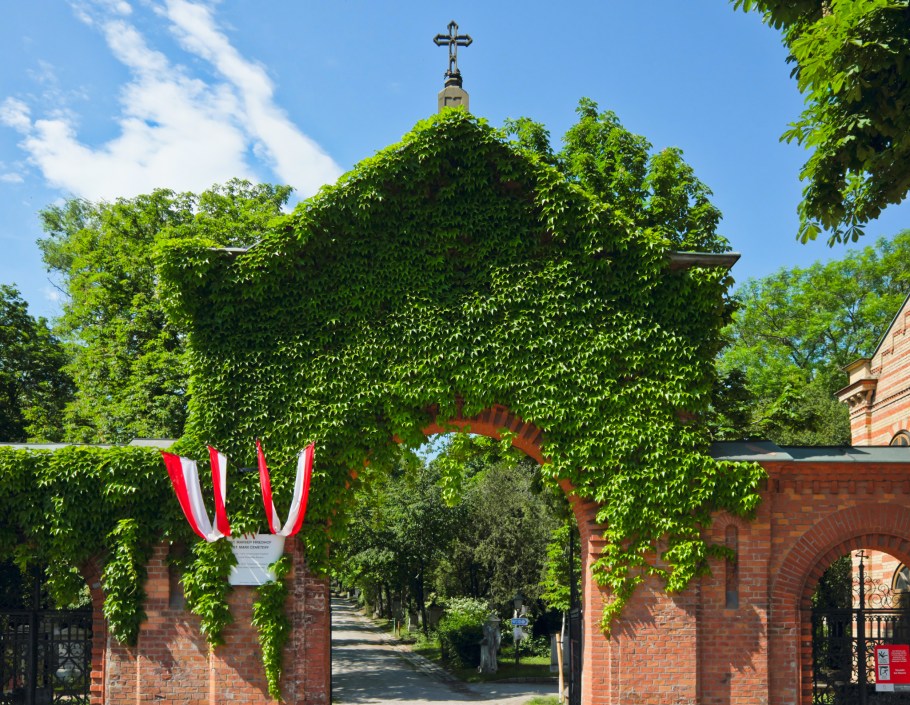
Above/featured: Morning visit to the city’s Biedermeier cemetery – 20 May 2022.

In Vienna’s 3rd district, the St. Marx cemetery is the only surviving Biedermeier cemetery in the city. A visit now is a jump into the frozen past. The cemetery opened with its first burial in 1784. Closure of the city’s multiple neighbourhood cemeteries began in 1873 with the final burial at St. Marx taking place in 1874. Subsequent funerary functions were transferred to the newly constructed Zentralfriedhof located farther out from the city centre. The very leafy avenues and “leafy gate” are what’s left of the city’s only remaining 18th-century cemetery that is now open to the public as a city-administered park.

Why Biedermeier

Biedermeier in Vienna corresponds to a cultural period during the first half of the 19th-century marked by increased industrialization in rapidly urbanized areas and strict censorship with the elimination of dissenting political voices. Instead of looking outward to change, the artist and design community moved to safer spaces in nature or to their homes. While innovation might have given way to a modest yet graceful and functional style, Biedermeier architecture in its neoclassical spin provided inspiration for subsequent Art Nouveau (Jugendstil) and Secession movements. An important Viennese architect of the period was Josef Kornhäusel who designed many buildings in the city. Important music from this period was composed by, for example, Beethoven, Chopin, Liszt, Schubert, Schumann. One of the largest collections of Viennese Biedermeier art is in the Belvedere’s collection. St. Marx cemetery is a reflection of both city and age from the 19th-century.

St. Marxer Friedhof, St. Marx cemetery, Biedermeier cemetery, 3. Bezirk, Landstrasse, Wien, Vienna, Austria, Ă–sterreich, fotoeins.com

Cemetery entrance. Photo, 5 Jun 2023.

St. Marxer Friedhof, St. Marx cemetery, Biedermeier cemetery, 3. Bezirk, Landstrasse, Wien, Vienna, Austria, Ă–sterreich, fotoeins.com

Main gate. Photo, 20 May 2022.

St. Marxer Friedhof, St. Marx cemetery, Biedermeier cemetery, 3. Bezirk, Landstrasse, Wien, Vienna, Austria, Ă–sterreich, fotoeins.com

Address: Leberstrasse 6–8. Photo, 20 May 2022.

St. Marxer Friedhof, St. Marx cemetery, Biedermeier cemetery, 3. Bezirk, Landstrasse, Wien, Vienna, Austria, Ă–sterreich, fotoeins.com

Information stone with visiting hours by month. Photo, 20 May 2022.


( Click here for images and more )

Vienna: Bohemian Prater, Europe’s oldest carousel

I’m on foot in Vienna’s Favoriten (10th district), slowly making my way uphill onto Laaer Berg. I pass apartment blocks and summer garden cottages and plots. After about 10 to 15 minutes, a clearing appears in the forest.

There’s a ferris wheel. There’s another ride with a vertical drop, some flat rides, even a small roller coaster.

The modest fairground is open on this warm late-afternoon in early-June, which means crowds are a little sparse with most kids in school and adults at work. Still, there’s a scatter of families: some with strollers, and others with young children dragging their parents to the nearest ride or closest treat.

There are spots to buy cold pop/soda, ice cream, and grilled sausage. There are also a couple of larger places for beer, wine, and typical Austrian “fare at the fair”.

And somewhere in the midst of a blaring soundtrack of top-40 and classic rock is home to Europe’s oldest carousel or merry-go-round.


( Click here for images and more )