Fotoeins Fotografie

location bifurcation, place vs. home

Posts from the ‘Seasons’ category

Fasching, Maschkera, Oimrausch: pre-Lent shenanigans in Mittenwald

This ain’t no Hallowe’en1.

In southern Germany, this is Fasching, known also as Werdenfelser Fosanacht, to go along with the masks for Maschkera. It’s also about about distinctions and differences by comparison with Karneval on the Rhein.

Festivities take place before Catholic Lent, and the key idea behind the wild colourful costumes and wooden masks is the very pagan origin and ritual of driving out or driving away evil spirits of winter lurking inside people and their homes and welcoming the friendly spirits of spring for a productive growing season.


( Click here for images and more )

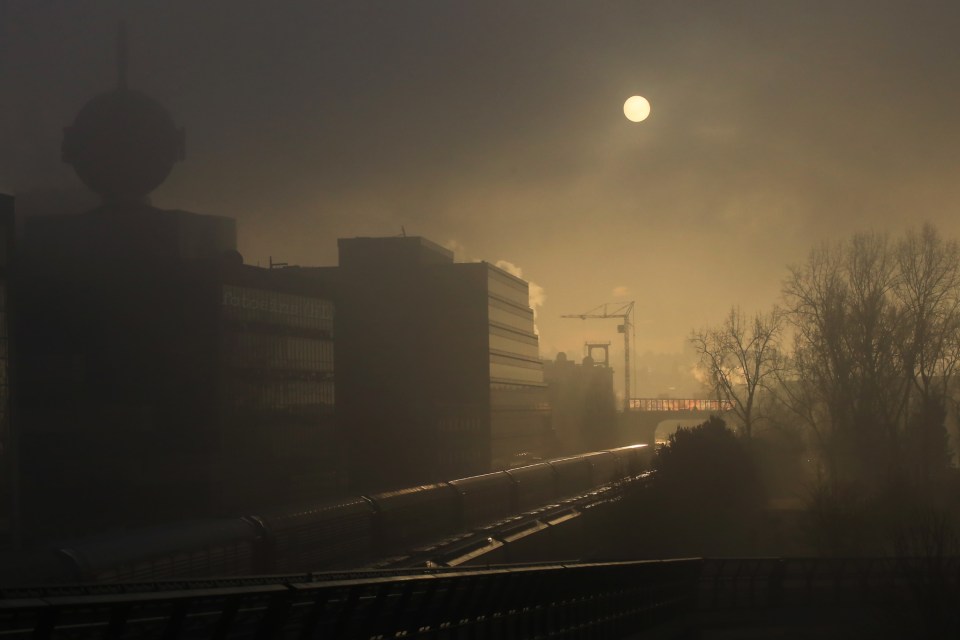
Morning fog, autumn fog, Seattle P-I globe, West Thomas St Overpass, Myrtle Edwards Park, Seattle, WA, USA, fotoeins.com

Seattle: the Sound and the Silence

“Fog”, definition: “a thick cloud of tiny water droplets suspended in the atmosphere at or near the earth’s surface that obscures or restricts visibility (to a greater extent than mist; strictly, reducing visibility to below 1 kilometre).”

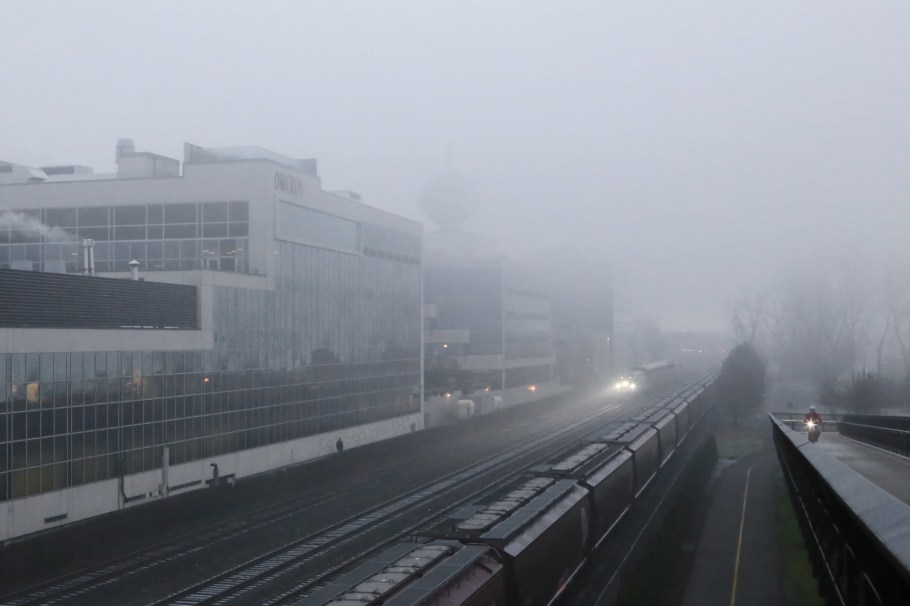
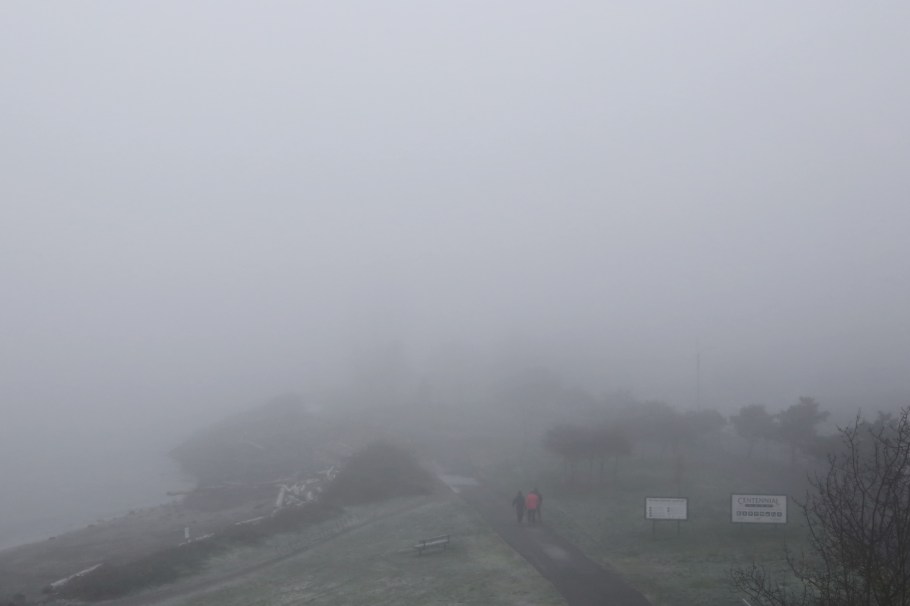
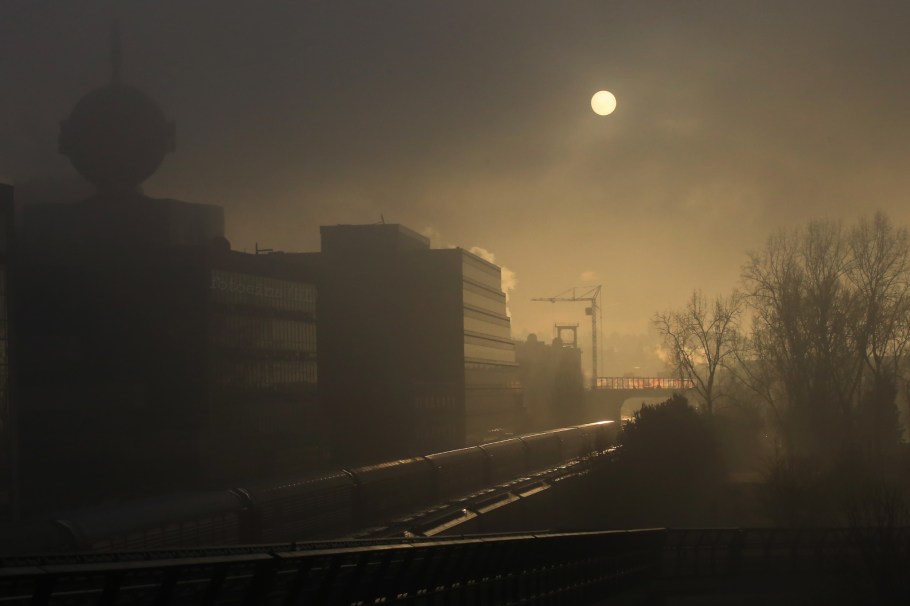
Fog isn’t atypical for autumn or winter in the city of Seattle or in the Puget Sound region. While less effective than snow, the damping by fog on light and sound can still provide a modest visual and auditory sensation of silence. That is, until headlights and foghorns pierce the temporary cloak and illusion.


Morning fog, autumn fog, Seattle P-I globe, West Thomas St Overpass, Myrtle Edwards Park, Seattle, WA, USA, fotoeins.com

740am, West Thomas Street Overpass (20171211).

Morning fog, autumn fog, Seattle P-I globe, West Thomas St Overpass, Myrtle Edwards Park, Seattle, WA, USA, fotoeins.com

751am, West Thomas Street Overpass (20171211).

Morning fog, autumn fog, Seattle P-I globe, West Thomas St Overpass, Myrtle Edwards Park, Seattle, WA, USA, fotoeins.com

830am northwest, into Sound fog (20171211).

Morning fog, autumn fog, Seattle P-I globe, West Thomas St Overpass, Myrtle Edwards Park, Seattle, WA, USA, fotoeins.com

840am southeast, as the sun burns through (20171211).


I made the photos above on 6 January 2015 on board the WSDOT Ferry MV Kaleetan from Bremerton to Seattle, and on 11 December 2017 near Myrtle Edwards Park. This post appears on Fotoeins Fotopress at fotoeins.com as https://wp.me/p1BIdT-aYc.

Zugspitze: spotting the Alps across 5 nations

“If I’m at the highest point in Germany, can I see Italy?”

Over the years, I’ve seen at various times the claim made about seeing Italy from the tallest mountain in Germany.

I’m startled by the winter morning sun, streaming through the window into my hotel room in Garmisch-Partenkirchen. I rise slowly from the bed, barely able to keep my eyes open. I shuffle across the room, and pull the small linen drapes aside. It’s blue everywhere, and there isn’t a cloud in the sky. My eyes are now wide open, heart pumping with excitement, because I know skies are gonna be clear up top. Later I learn forecast conditions for the Zugspitze summit are excellent: mostly sunny, visibility out to 160 kilometres (100 miles) with a high temperature of -8C/+18F. Cold, but very doable. It’s also why I have with me 70-300 glass for the long zooms.

Below I show photographs with sightlines and their corresponding average azimuths*: east-southeast (107 degrees), southeast (138 degrees), south (175 degrees), southwest (210 degrees), west-southwest (250 degrees). I label specific mountain peaks of interest in addition to the flag of the country where the mountain is located. In a few cases, mountains lie along the border between two nations in which case I provide two country flags. For the labeled peaks, I’ve also provided further information about mountain heights and sightline distances in the map below.

Spoiler alert: not only am I able to spot mountains in Italy, but also other peaks in Austria, Switzerland, and Liechtenstein.

* Azimuths are measured with north at 0 degrees, east at 90, south at 180, and west at 270 degrees.


( Click here for images and more )

The place where I died

With these pictures, I explored the perspective of witnessing a parent’s unstoppable decline to the end. I didn’t include pictures of my father in this set, but I gave voice to growing distress at his final journey in orbit around a downward spiral. My gaze drifted externally to the space and form of the hospital and to the surroundings outside.

On 19 July 2014, Dad was taken to Vancouver’s St. Paul’s Hospital after he had a minor fall down the stairs at home. No bones were broken, which was remarkable considering his worsening health in the final stages of cancer. He would never return to the house in which he and Mum had bought and lived since 1976.

By the 2nd week, he had been moved from to the Palliative Care Unit (PCU) on the 10th floor. The wonderful hospital staff took great care of him and other patients in the unit. Dad charmed the PCU staff by chatting with them in broken English; it was his way of exerting some measure of control. I also witnessed the inevitable “shuffle”. One day, a patient slept quietly in one of the other beds, surrounded by members of his family. The following day, the bed was cleared, cleaned, and prepared for a new patient.

Into week 3, his mind and spirit departed, and he became completely unresponsive to external prompts. Over the following days, his body remained, accompanied by sounds of breathing, often shallow and laboured. He was at peace, and thanks to the meds, in diminished pain. I’d been with Dad a part of every day for 21 consecutive days. Friday came and went, and so did the passing of the sun. As I’d done every evening, I leaned down and whispered: “good night, I’ll see you tomorrow.” The following morning, I awoke to a phone call. The nurse’s voice was calm and gentle. Somewhere in the universe, I heard faint echoes of the death rattle. I said to the nurse: “thank you for your phone call. We’ll be at the hospital in a few hours.”

I ended the call and looked down at my watch: 613am. The date was August 9. He had celebrated his 82nd birthday only a few weeks earlier.

Northern summers, especially July and August, mean something entirely different.


( Click here for images and more )

Tulips alight, Skagit Valley Tulip Festival (2017)

I was skeptical of a visit to tulip gardens.

“They’re just flowers after all.”

When I lived in Heidelberg, Germany, my friends wanted to travel to the Netherlands before pregnancy kicked into full swing. They wanted to visit Keukenhof and Amsterdam. I was excited about Amsterdam; I was unsure about Keukenhof.

But one step inside the tulip gardens in Keukenhof was enough to turn my head and my opinion about tulip fields spun completely around.

That was 2002, and this is 2017. I’m highway-bound along I-5 into western Washington State to see tulips.

During the annual tulip festival in April, the Skagit river valley is populated by fields of daffodils and tulips, in eye-popping yellow, red, orange, purple, and white. The overcast skies with diffuse grey light provides ideal light conditions with no strong shadows. The explosion of colour should surely melt hearts and convince minds, if the change to my once obstinate stance is any indication.

( Click here for images and more )