Fotoeins Fotografie

location bifurcation, place vs. home

Posts from the ‘Photography’ category

Palacio de Cibeles, Fuente de Cibeles, Plaza de Cibeles, Paseo del Prado, Madrid, Spain, España, fotoeins.com

Madrid: Paseo del Prado, new UNESCO WHS

Congratulations to Madrid and Spain!

In the Spanish capital city, the Paseo del Prado and the adjacent Parque del Retiro were inscribed together as a new UNESCO World Heritage Site on 25 July 2021. The Paseo del Prado is a wide tree-lined boulevard populated with big fountains, beautiful architecture, and buildings dedicated to scientific research and to collections of world-class art. As prototype to the Hispanic “alameda” found throughout Latin America towns and cities, Paseo del Prado is an display of vision and desire for an idyllic society within the (former) Spanish Empire.


Palacio de Cibeles, Fuente de Cibeles, Plaza de Cibeles, Paseo del Prado, Madrid, Spain, España, fotoeins.com

Plaza de Cibeles: Palacio de Cibeles (palace 1919); Fuente de Cibeles (fountain 1780, moved 1895).

Banco de España, Plaza de Cibeles, Paseo del Prado, Madrid, Spain, España, fotoeins.com

Plaza de Cibeles: Banco de España (1891).

Palacio de Linares, Casa América, Plaza de Cibeles, Paseo del Prado, Madrid, Spain, España, fotoeins.com

Plaza de Cibeles: Palacio de Linares (1877), host to Casa América.

Museo Nacional del Prado, Diego de Velázquez, Aniceto Marinas, Paseo del Prado, Madrid, Spain, España, fotoeins.com

Diego de Velázquez statue (1899) by sculptor Aniceto Marinas, in front of the Prado Museum (1819).


I made all images above on 9 May 2009 with a Canon EOS450D (Rebel XSi). This post appears on Fotoeins Fotografie at fotoeins DOT com as https://wp.me/p1BIdT-lhx.

My Fuji X70: Kodachrome64 (XTrans2 recipe)

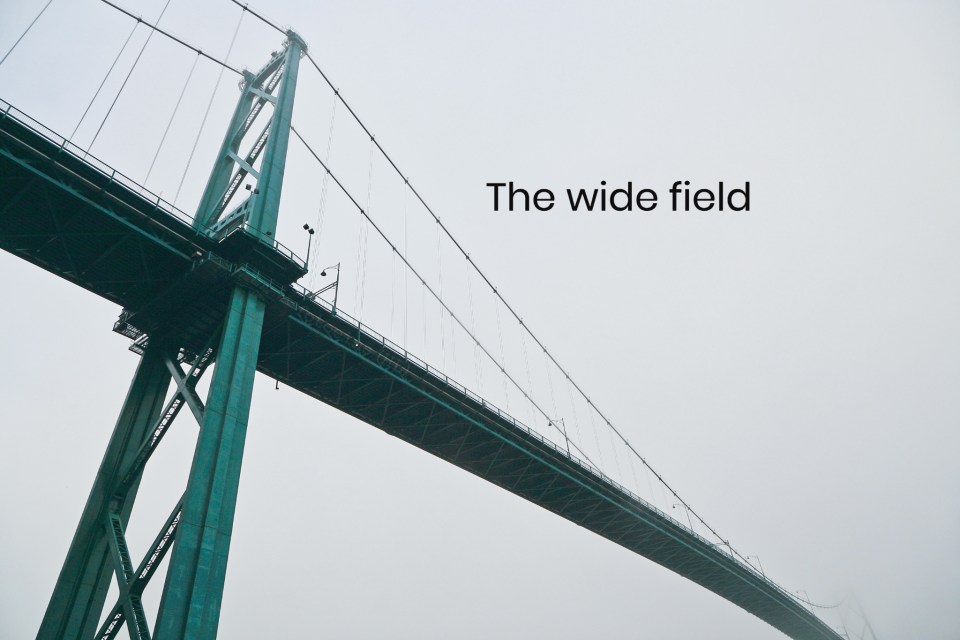
Above/featured: South portal, Lions Gate Bridge – 25 Jun 2021.

I wrote about how the Fujifilm X70 fixed-lens prime has been great for my photography. Fujifim prides itself on good to faithful reproductions of film simulations (film-sims). For the most part, I’ve used the default or “Standard” setting, equivalent to the “Provia” film-sim which is one of 11 film-sims built into the X70.

I learned about other film-sims, particularly those applicable to the older X-Trans II sensor that’s in my X70 camera. I’ve been interested in digital reproductions of “old” colour slide film, and seeing how images over a variety of subject matter appear with a film-sim that looks a little more like “old school film”. Ritchie Roesch describes in Fuji X Weekly the differences between the Kodachrome II and Kodachrome 64 film-sims; the former resembling the look of Kodak film from the 1960s to the mid-1970s and the latter echoing the final version of the film-type from the mid-1970s to 2009. Roesch provides additional historical context to the development of Kodachrome film here.

Here I’ve used the Kodachrome 64 film-sim recipe with the following settings:

  • ‘Classic Chrome’ built-in film-sim
  • Dynamic Range: DR400
  • Highlight: +2 (High)
  • Shadow: +1 (Medium-High)
  • Color: 0 (Medium)
  • Sharpness: 0 (Medium)
  • Noise Reduction: -2 (Low)
  • White Balance: Daylight; 0 Red, -3 Blue
  • ISO: Auto up to 3200 (or fixed to 1000)

All recipes sorted by specific sensor are found here.


( Click here for images )

Memorial for the Kamloops Residential School, Robson Square, Vancouver, BC, Canada, fotoeins.com

Vancouver: Memorial for the Kamloops Residential School

In late-May 2021, the Tk’emlúps te Secwépemc First Nation announced the discovery of 215 children buried in a mass grave at a former residential school near Kamloops, British Columbia; ground-penetrating radar was used to locate the remains.

During a period of 160 years, the Government of Canada in concert with churches constructed residential schools in a state-sponsored process of “aggressive assimilation” to make children of Indigenous people “less aboriginal and more white” with instruction in English and Christianity in order to erase the children’s traditions and cultural ties.

More than 150-thousand children were sent to some 130 residential schools across Canada between 1830s and the 1990s. Forcibly removed from their homes and parents, children of Indigenous peoples were forced into the schools where they faced neglect and physical and sexual abuse. Physical records indicate a total of over 4000 children deaths; the actual number is very likely much higher. Many children were not buried properly, parents were not notified about what happened to their children: many children who were forced into residential schools never returned home. For years, survivors have told their stories about what happened inside those schools: there is every expectation more mass graves and more children will be found.

The systematic removal of indigenous children from their families disrupted, divided, and destroyed living generations of indigenous families, robbing people of their respective culture and language and the wealth of lived experiences shared between generations. According to the terms and definitions laid out in the 1948 United Nations’ Convention, Canada committed genocide against their Indigenous Peoples. The destructive effects of white colonialism upon Indigenous Peoples in the country is not only historical but continues today with inequity, intransigence, obstruction and obfuscation, and injustice.

A makeshift memorial was quickly created at the steps of the Vancouver Art Gallery at Robson Square. It’s worth noting the Art Gallery is presently housed in the former provincial court house which opened in 1911 and would have served as a “legal” instrument of white- and settler-colonialism. That this National Historic Site is the location of an improvised tribute to the loss of life and dignity caused by state-sponsored acts of genocide is an enormous juxtaposition.

June is National Indigenous History Month in Canada.


Memorial for the Kamloops Residential School, Robson Square, Vancouver, BC, Canada, fotoeins.com Memorial for the Kamloops Residential School, Robson Square, Vancouver, BC, Canada, fotoeins.com
Memorial for the Kamloops Residential School, Robson Square, Vancouver, BC, Canada, fotoeins.com

“Are we human?”

Memorial for the Kamloops Residential School, Robson Square, Vancouver, BC, Canada, fotoeins.com

“Bring our children home.”

Memorial for the Kamloops Residential School, Robson Square, Vancouver, BC, Canada, fotoeins.com

As a resident of Vancouver, I’m a guest on unceded traditional territory and land of the Coast Salish First Nations: Sḵwx̱wĂş7mesh (Squamish), StĂł:lĹŤ and SÉ™l̓ílwÉ™taĘ”/Selilwitulh (Tsleil-Waututh), and xĘ·məθkĘ·É™y̓əm (Musqueam). I made all images above on 1 June 2021 with a Fujifilm X70 fixed-lens prime. This post appears on Fotoeins Fotografie at fotoeins DOT com as https://wp.me/p1BIdT-l2C.

YVR, Vancouver International Airport, Vancouver, Richmond, BC, Canada, fotoeins.com

Taking flight

Above/featured: Departures information in English, French, and Chinese: YVR Vancouver airport – 1 Jul 2014 (6D1).

Once upon a time when I lived and worked on distant continents, I flew on many international transcontinental overnight flights to the accumulation of over 1 million miles in the air. A worldwide pandemic has forced not only air travel to a crawl, but also a rethinking about what long-haul travel in the context of climate change might look like in the future. For the time being, I consider here what it once meant to “take flight” with various images of planes as some time spent as occasional planespotter and images within airports as previous frequent-flyer.


( Click here for images and more )

Spring light over Seattle and the Salish Sea

Above/featured: “Aurora and Mercer” – 4 Mar 2020 (X70).

A favourite place is Seattle, an American city in Washington state, only 2 to 3 hours by car from Vancouver, Canada. For two metropolitan regions close by proximity, their respective evolutions have created very different cities over time. I present below 12 places around Seattle in spring. In this part of the world, there’s every chance for overcast skies and showers, but I assure you of one thing: the light is very good when the sun is out. And when there’s abundant light, I’m all about the superposition of light, shadow, construction, and person.


( Click here for images and more )