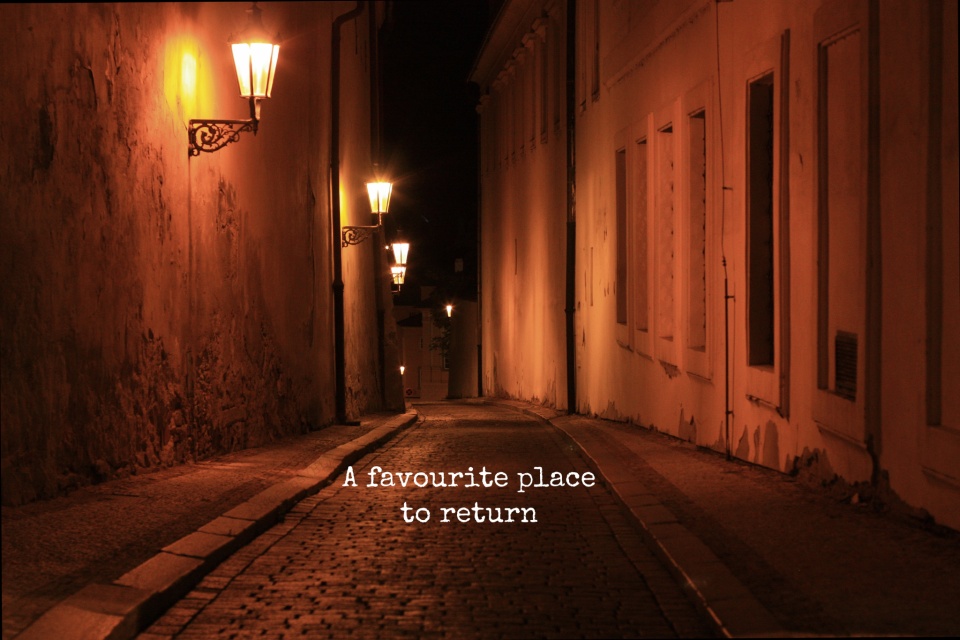
Above/featured: U Kasáren from Loretánská, Hradčany – 30 July 2016 (HL).
On a personal level, the impact of this city can’t be gauged, measured, or quantified. What I know is I’ve roamed this place over countless little cobblestones. The sum of all strides led me to jumping continents and traversing nations with steps as large as my imagination could entertain and overcome.
And so, after the twelfth, fifteenth, or twentieth visit (I’ve lost count), I look at these images and ask why I surrender to the pull, why I return, and why the Czech capital city feels familiar. It’s about the old and the new, a colourful combination replacing what I’ve lost and amplifying what I’ve gained.
Above: (A) The Spheres, northeast from 6th Avenue and Lenora Street (HL).
Glowing glass forms appear around the corner as if they’ve risen suddenly from the ground, eliciting odd looks and interested inquiries from passersby.
On Amazon’s urban campus at the feet of towers Day One and Doppler, The Spheres are located in downtown Seattle on Lenora Street between 6th Avenue and 7th Avenue. The futuristic structures provide a highly visible centre of attention for the electronic-commerce and -computing company. Three intersecting glass and steel half-spheres will contain a botanic garden to include exotic plants, waterfalls, and treehouses, and workspaces to further cultivate creativity by and collaboration among Amazon employees. The grand opening is scheduled for 18 January 2018.
The construction development projects are part of the joint efforts by NBBJ and Amazon to regenerate the Denny Regrade area with ample office space for the world headquarters of Amazon, and additional space for retail and public facilities.
(B) The Spheres, northwest from 7th and Lenora (HL).
Denny Hill was regraded and removed in multiple phases between 1898 and 1931. In the 1930 picture above (C), the 2017 Spheres in image (B) would be located to the right of the utility pole between the two cars in the foreground and the digging excavator in the background.
I made photos (A) and (B) above on 10 December 2017. This post appears on Fotoeins Fotografie at fotoeins.com as https://wp.me/p1BIdT-aVe.
When I lived in Germany, I remembered the ads for Radeberger Pilsner, and I wondered about some of the venues shown. I realized the buildings were in the famous city of Dresden on the Elbe river in southeast Germany, and the city of Radeberg was only 15 kilometres from Dresden. Images of the Dresden’s landmarks have been an important part of Radeberger brewery’s advertising campaign to show the beer’s exceptional quality and to associate that very same quality by (physical) proximity with the symbolism of Dresden’s historic landmarks.
Dresdner Wahrzeichen (Dresden Landmark)
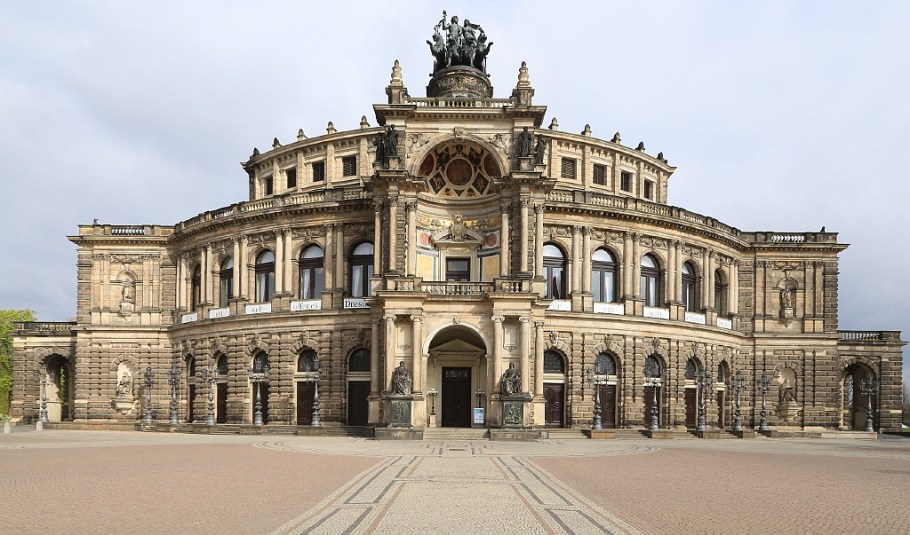
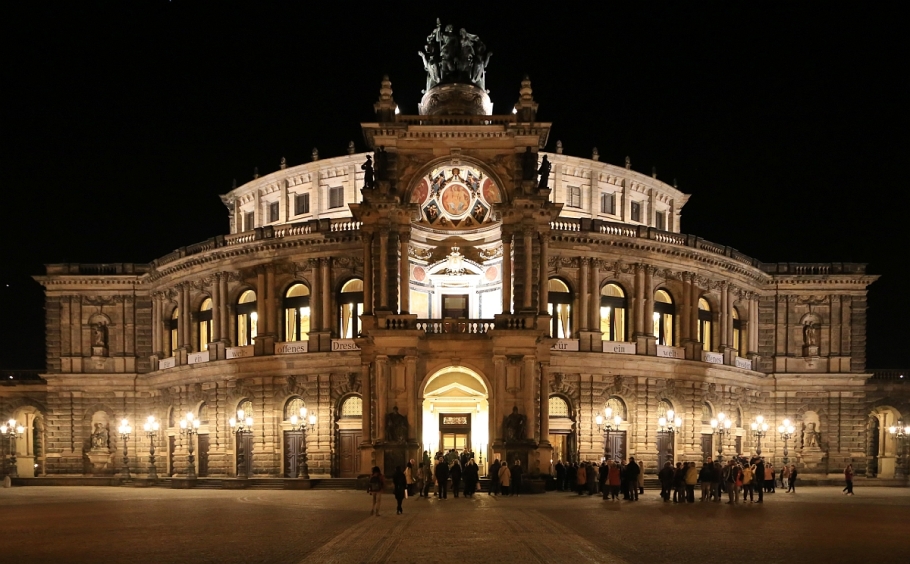
As one of the city’s most well-known landmarks, the Semperoper (Semper Opera House) appears in countless images representing Dresden. The Semperoper is the showpiece structure at Theaterplatz (Theater Square) looking over the river Elbe in the city’s Altstadt (Old Town). The first version of the building opened in 1841 with the design provided by Gottfried Semper. After destruction by fire in 1869, the second version of the building, also to Semper’s design, was completed in 1878. Only the Semperoper’s outer facade remained in 1945 during the final stages of the Second World War. Built once again to Semper’s original designs, the third and present version of the Semperoper opened to great acclaim on 13 February 1985. The interiors were reconstructed according to original plans and designs, whereas stage machinery and technical and engineering requirements are all updated to the best standards in audio quality.
With the leading title “Sächsische Staatstheater-Staatsoper und Staatsschauspiel Dresden”, the opera house is home to the Saxon State Opera, the Saxon State Theatre, the Semperoper Ballet, and one of the world’s oldest orchestras, the Staatskapelle Dresden, founded by Prince Elector Moritz von Sachsen in 1548.
The Semper Oper is a natural part of any walking tour of Dresden, as Theaterplatz is minutes from the Zwinger, Residenzschloss, and the Frauenkirche. I’m awed by the night tour, a chance to see up close the building’s Baroque style exterior and the classic ornate interior. Everybody speaks in calm hushed voices, the unspoken agreement to be mindful and respectful of this venue. Despite the presence of other people in other tour groups, it feels like I have the Opera House to myself at 11pm.
Classic shot of the front by day
Classic shot of the front at night; also featured on the “night watch”
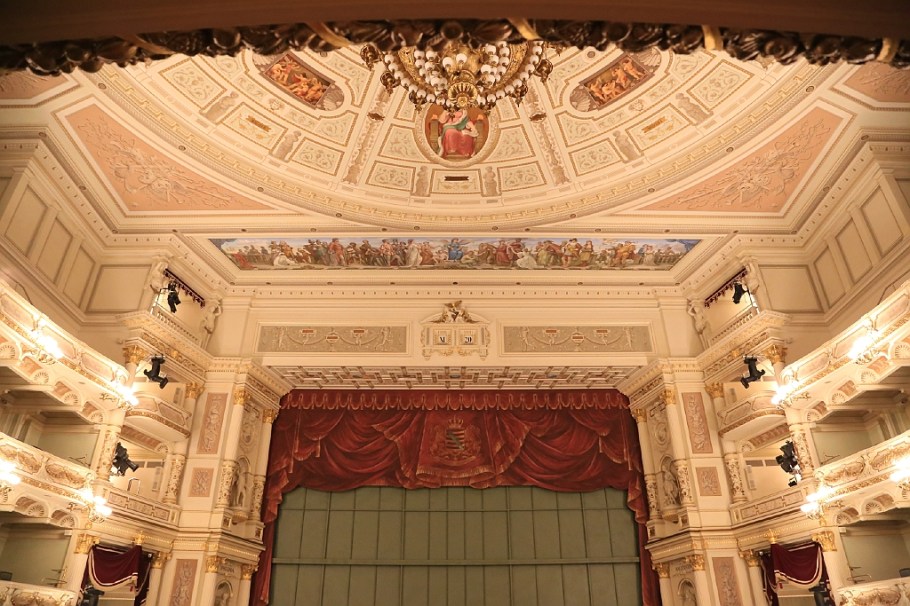
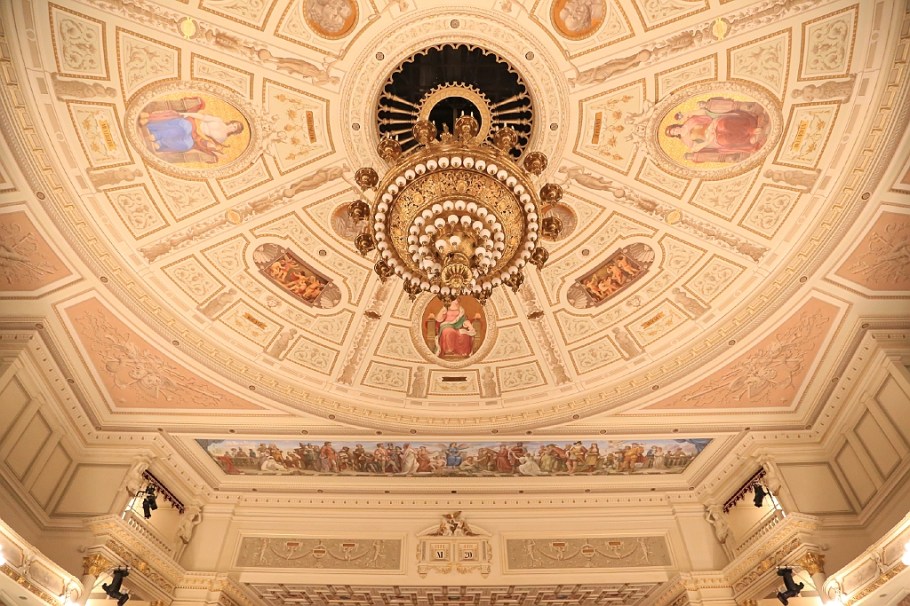
Ceiling mural
Some columns real marble (cool to touch); some faux-marble plaster (warm to touch). Full replacements were too expensive for the GDR/DDR at the time
S. Kurpiers, one of the stage managers and our guide for the evening
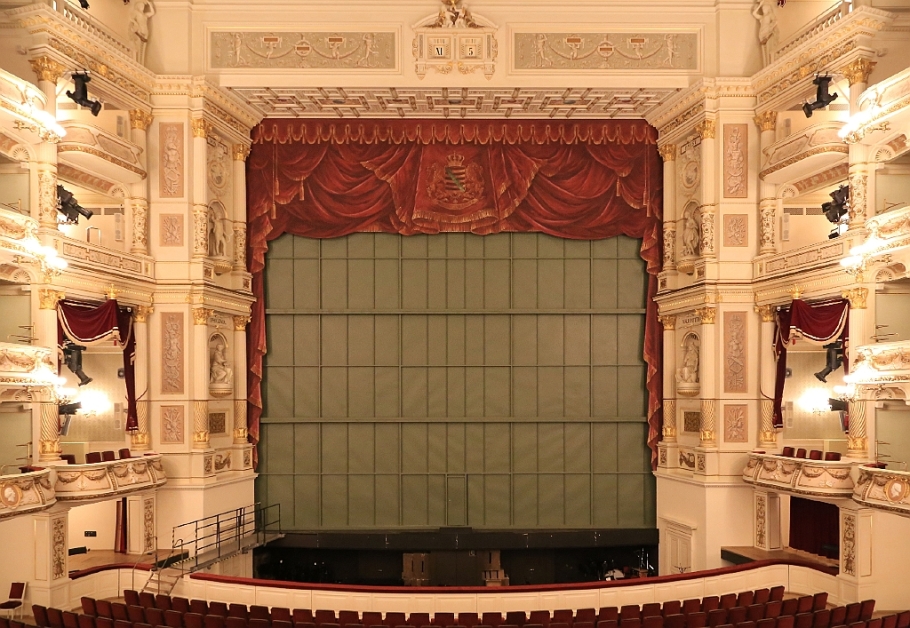
Main stage & orchestra, from central box section in the 1st balcony (Loge, 1. Rang). Clock at top-centre reads “XI 5”, or 1105pm
“Box” seats normally reserved for representatives and guests of the German federal state of Saxony
Separate guided tour to our left; there are 4 balconies
Another tour to the right
Looking up; lip of the 2nd balcony appears at top
Massive central chandelier light-fixture overhead; clock reads “XI 20” (1120pm)
Thanks to Semperoper for opening their facility to the public at night, and thanks to S. Kurpiers who kindly guided our tour of the venue. Thanks also to Germany Tourism, Saxony Tourism, and Dresden Tourism for their support and hospitality. I made all of the photos above on 22 April 2015 with the Canon EOS6D. This post appears on Fotoeins Fotopress at fotoeins.com as http://wp.me/p1BIdT-7sx.
The following is an advertisement for Radeberger brewery from 2014. The advert for their Pilsener ends with an image of Dresden’s Semper Oper at night and the slogan “schon immer besonders” (always special).
Many visitors to Rothenburg ob der Tauber are here for the day, and when day turns to night, you can have the place to yourself for the opportunity to view and photograph. And judging by these photographs, you may well ask yourself: where did everybody go?
A good place to start to get your bearings straight is the Marktplatz (Market Square; photo above and map below). While you wait for Hans Baumgartner to begin his Nightwatchman nightly walking tours (in English or German), you can look up the Ratstrinkstube (Councillors’ Tavern) for a modest retelling of the Meistertrunk legend. The following 90-second video shows how the figures for Mayor Nusch and General Tilly greet curious onlookers at the square at 8pm.
After identifying a number of places to view Prague at night, Dresden is equally worthy to photograph after sundown. With its nickname “Florence on the Elbe” (Elbflorenz, Florenz an der Elbe) leading the way, I highlight these four places to photograph the city at night.







 Fotoeins Fotografie