Fotoeins Fotografie

location bifurcation, place vs. home

Posts from the ‘Europe’ category

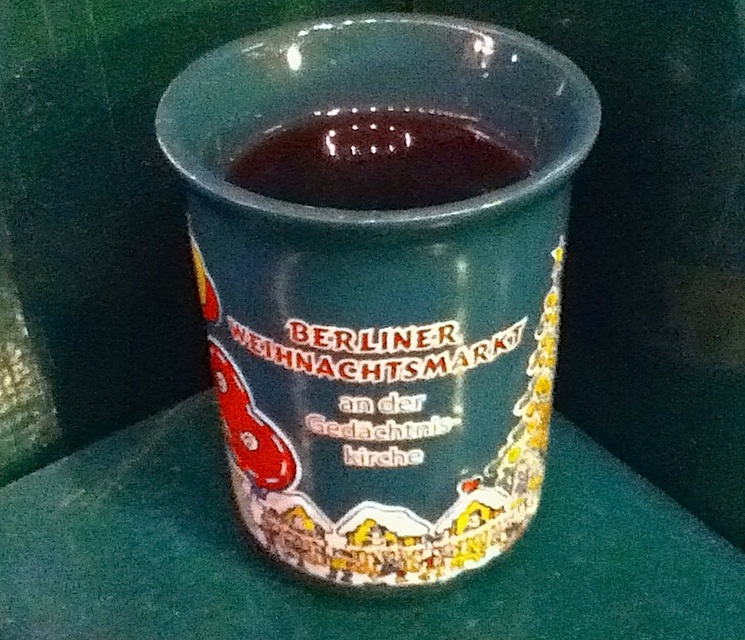
Berliner Weihnachtsmarkt an der Gedächtniskirche, Berlin, Germany

Christmas markets: Glühwein smarts

Above/featured: Christmas market at Berlin’s memorial church – 6 Dec 2012 (450D).

It’s easy to underestimate how much “punch” is delivered in a single Glühwein drink at a Christmas market. If I’m not careful and drink Glühwein too quickly and without food to soften the blow, I’ll encounter the very repeatable experience of “mind-body separation”.

What is this magically mysterious Christmas concoction called “Glühwein”?


( Click here for more )

Alter Synagogenplatz, Altstadt, Heidelberg, Baden-Württemberg, Germany, fotoeins.com

My Heidelberg: Synagogue Square and Pogromnacht

It happens every time without fail.

My spirit breaks a little more every time I see a memorial, another example of the depths to which our species have plumbed.

Does feeling this way make me weak? Or am I resembling a human being after all?

I often hear a common chorus:

history is hard, history is boring, why should I care?

I can’t decide what’s worse: the rise of the far-right or blatant willful ignorance.


A Mob of Broken Glass

From the evening of 9 November to the following morning of 10 November 1938, Kristallnacht (“the night of broken glass”) was a “pogrom”, a coordinated series of violent attacks by Nazis against the Jewish people and their property in Germany, Austria, and Czechoslavakia’s Sudetenland. Pogromnacht (or Reichspogromnacht) is a truer description; the “prettier sounding” Kristallnacht hides the brutality of “the night of (broken) crystal” referring to broken shattered glass from windows to synagogues, homes, and stores owned by Jews. Aside from a few who intervened, most stood aside and watched people and property burn.

The word “pogrom” is a late 19th- to early 20th-century Russian word (“погром”), derived from the verb “gromit” (громи́ть) meaning “to destroy with violence.” While “pogrom” is used generally to describe mob violence by one ethnic or religious group on another, the term is used in this post to describe attacks on the Jewish community.

The numbers across the country were appalling: at least 90 dead, hundreds injured, 30000 arrested and detained in concentration camps, up to 2000 synagogues burned, over 7000 Jewish businesses damaged or destroyed. With one more insult, the Jewish community was forced to pay for damage to their own property. The outbreak of coordinated actions against Jewish people marked the beginning of state-sanctioned violence. With the Pogromnacht, the state no longer hid their hate and escalated their savagery as a turning point directly leading to the Holocaust.

( Click here for more )

Main Train Station, Kutna Hora, Czech Republic - 3 Aug 2013

Daytrip with Czech Rail from Praha to Kutná Hora (2013)

Visitors to the Czech Republic will often travel from the capital city of Prague on a daytrip to Kutnä Hora. About 73 kilometres to the southeast from Prague, Kutnä Hora is best known for the two churches which have given the city UNESCO World Heritage Site status, as well as the famous kostnice or “Bone Church” (Ossuary).

In this post, I’ll illustrate some details of our return-trip by train from Prague to Kutnä Hora.

( Click here for more )

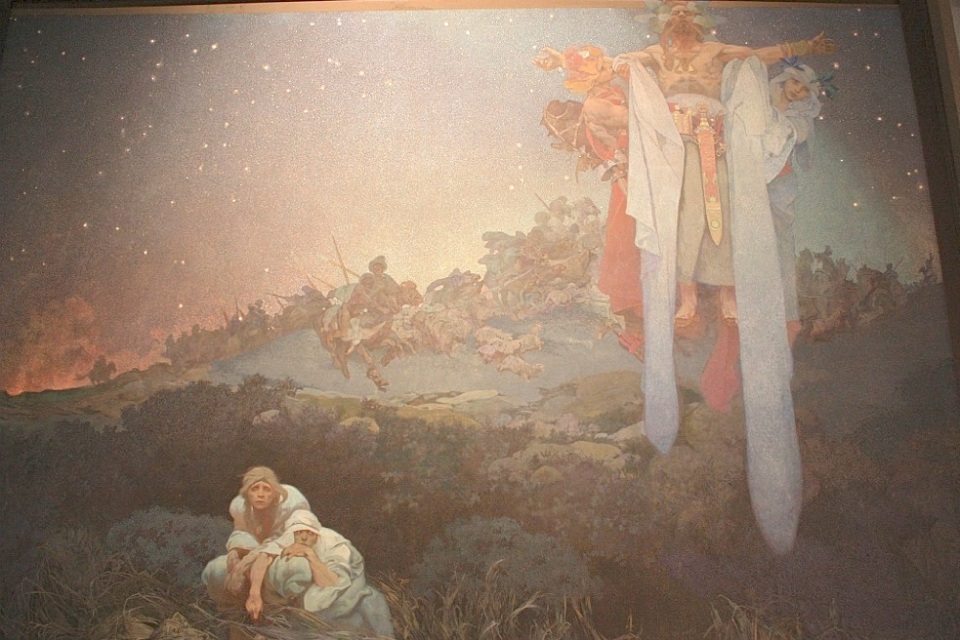
The Slav Epic, Alfons Mucha, Narodni galerie, National Gallery, Veletrzni Palac, Prague, Praha, Czech Republic, fotoeins.com

My Prague: “The Slav Epic”, Mucha’s Masterpiece

One of the greatest and most important works of Czech art from the early 20th-century was on display in the Trade Fair Palace (Veletržní Palac) in Prague until 2021.

All 20 paintings of “The Slav Epic” (Slovanská epopej) by Alfons Mucha can be viewed in the Czech capital city for the first time in over 80 years. For admirers of Mucha, Art Nouveau and history, the work is easier to reach than ever before and should not be missed.

Mucha’s The Slav Epic is a series of paintings on large canvas, which he completed in 1926. The paintings tell the story and mythology of the Slav peoples, with Mucha imagining the entire work as a commemorative piece to the Czech nation. Each painting spans several metres in both height and width, and stands tall even in a spacious exhibition hall. In every painting, grand scenes and landscapes are shown in a mixture of restrained colours, important figures, and careful details.

From 2021 to 2026, “The Slav Epic” makes its home in Moravia’s Moravsky Krumlov. Beyond 2026, the paintings are supposed to return to Prague for a longer 25-year stay.

( Click here for images and more )

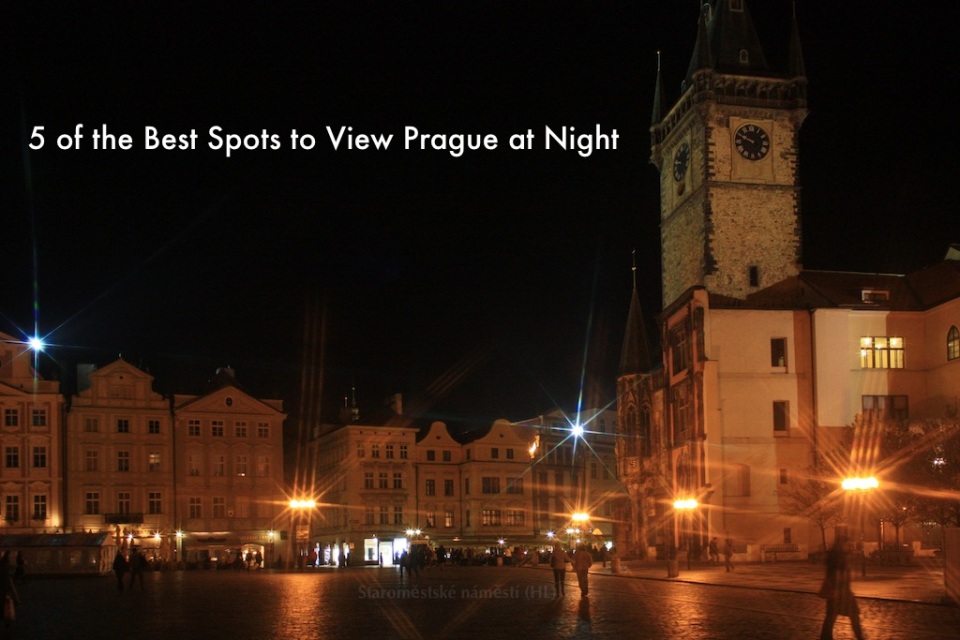
Staroměstské náměstí, Old Town Square, Praha, Prague, Czech Republic, fotoeins.com

My Prague: 5 Spots for Night Photos

(last edited: 19 Jul 2019.)

Prague is very attractive by day, but the Czech capital city is also beautiful at night.

By day, visitors are out and about, moving from one attraction to another. At night, sounds from pub crawls and pre-wedding parties seem to fill the air.

A closer look reveals a romantic side to the city with silent streets and half-empty plazas. A yellow glow settles like a warm and welcoming halo, softening the sharp lines of centuries-old architecture, and smoothing over cobbled stones embedded in old neighbourhood streets.

It’s easy to forget a significant part of central Prague is a UNESCO World Heritage Site, but the following five locations to view the city at night provide great reminders. Don’t ignore the illuminated city after dark, which is still very safe, and don’t forget to bring your camera when journeying out at night.


( Click here for images and more )