Fotoeins Fotografie

location bifurcation, place vs. home

Posts from the ‘Arts’ category

Vienna: Lichtzeichen testament to Jewish presence

Above/featured: Lichtzeichen number 10 (Stumperschul) in the city’s 6th district. Photo, 28 May 2022.

From a distance, the light seems suspended in mid-air.

Closing the distance widens my realization: it’s an illuminated sculpture that has a curved warped shape on top. That’s also when understanding narrows into sharp focus when I stand directly underneath: the shape “straightens” out, revealing itself as a Star of David.

Lichtzeichen Wien (LZ) consists of 26 structures in the Vienna region, marking former locations of synagogues, schools, temples, and prayer rooms destroyed by the Nazis in the pogrom of November 1938. During the night of 9–10 November 1938, the Nazi regime organized and carried out a systematic attack against the Jewish population in Germany and Austria. The rampage in Vienna continued for several days; most of the city’s synagogues, temples, and prayer-halls were destroyed.

Launched by the Jewish Museum Vienna and Austrian artist Brigitte Kowanz, an urban memorial project by joint collaboration of the Jewish Museum Vienna and the University of Applied Arts Vienna consists of identical columns, designed by artist Lukas Kaufmann. The commemorative project is called “Ot” (אות), which means “symbol” in Hebrew. Each “light column” sculpture stands about 5-metres high with a star of David, and includes the name of the former Jewish structure and an accompanying QR-code. Official unveiling of the memorial project occurred in 2018 on the 80th anniversary of the 1938 pogrom.

I visited and photographed all 26 Lichtzeichen locations in Vienna over a period of three summers in 2022, 2023, and 2024.


( Click here for images and more )

Schottentor, Votivkirche, 9. Bezirk, Alsergrund, Wien, Vienna, Austria, Österreich, fotoeins.com

Vienna: 9 spots in the 9th district

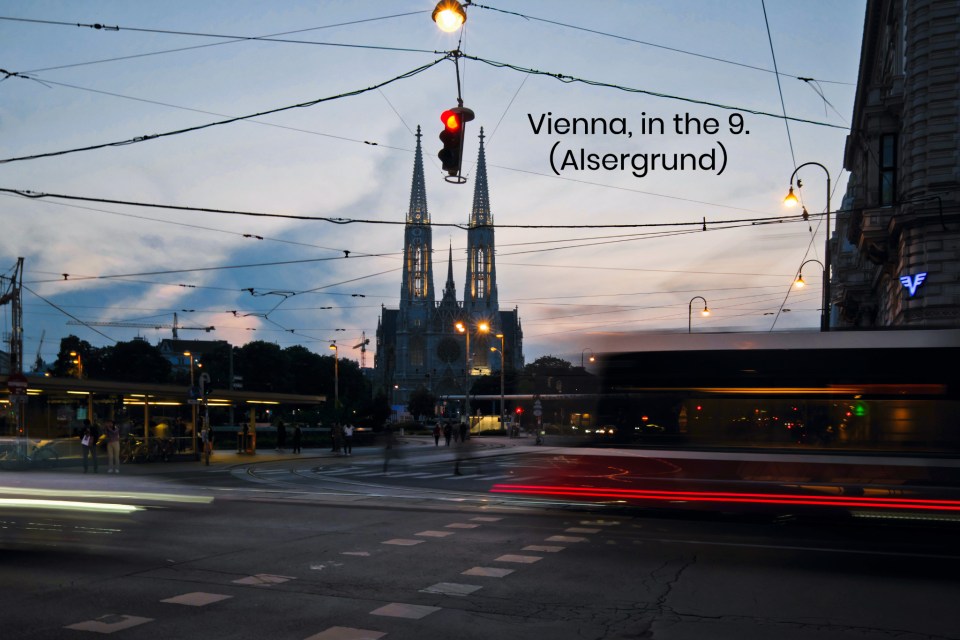
Above/featured: Votivkirche (Votive church) from Schottentor. Photo, 20 May 2023.

Two visits: two months spread over two years.
A thousand kilometres of walking.
Hundreds of historical spots and locations tracked, spotted, and photographed.

It makes sense that out of Vienna’s 23 city districts, I’ll frequent some more than others. The 1st district, or the Innere Stadt, is unavoidable, because that’s where most visitors to the city will congregate. The 2nd (Leopoldstadt) and the 6th (Mariahilf) are districts where I had separate month-long stays. But it’s the 9th district (Alsergrund) into which I wandered through countless times, including tracking my way to the 18th and 19th districts.

Out of many interesting little spots in Alsergrund, I’ve highlighted nine examples from a historical “mélange” of architecture, Jewish culture, medicine, music, and physics. If you’re wondering about the Votivkirche (Votive Church) in the image above, I’ll have more about the church in future posts about Ringstrasse (Ring Road) architecture as well as the architectural works by Heinrich Ferstel.

( Click here for images and more )

Vienna’s St. Marx Cemetery, Biedermeier style

Above/featured: Morning visit to the city’s Biedermeier cemetery – 20 May 2022.

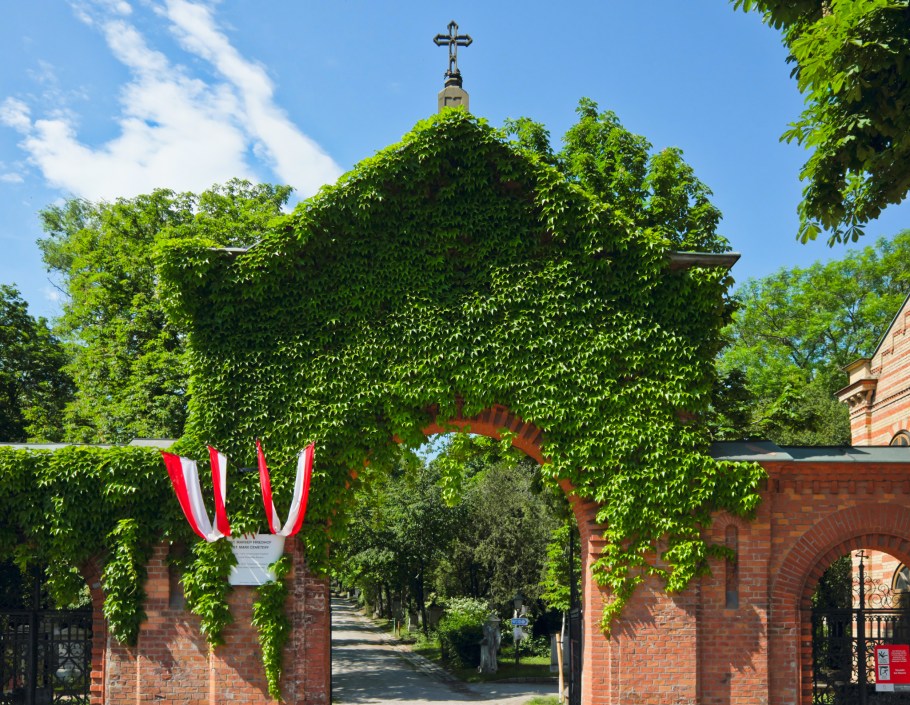
In Vienna’s 3rd district, the St. Marx cemetery is the only surviving Biedermeier cemetery in the city. A visit now is a jump into the frozen past. The cemetery opened with its first burial in 1784. Closure of the city’s multiple neighbourhood cemeteries began in 1873 with the final burial at St. Marx taking place in 1874. Subsequent funerary functions were transferred to the newly constructed Zentralfriedhof located farther out from the city centre. The very leafy avenues and “leafy gate” are what’s left of the city’s only remaining 18th-century cemetery that is now open to the public as a city-administered park.

Why Biedermeier

Biedermeier in Vienna corresponds to a cultural period during the first half of the 19th-century marked by increased industrialization in rapidly urbanized areas and strict censorship with the elimination of dissenting political voices. Instead of looking outward to change, the artist and design community moved to safer spaces in nature or to their homes. While innovation might have given way to a modest yet graceful and functional style, Biedermeier architecture in its neoclassical spin provided inspiration for subsequent Art Nouveau (Jugendstil) and Secession movements. An important Viennese architect of the period was Josef Kornhäusel who designed many buildings in the city. Important music from this period was composed by, for example, Beethoven, Chopin, Liszt, Schubert, Schumann. One of the largest collections of Viennese Biedermeier art is in the Belvedere’s collection. St. Marx cemetery is a reflection of both city and age from the 19th-century.

St. Marxer Friedhof, St. Marx cemetery, Biedermeier cemetery, 3. Bezirk, Landstrasse, Wien, Vienna, Austria, Österreich, fotoeins.com

Cemetery entrance. Photo, 5 Jun 2023.

St. Marxer Friedhof, St. Marx cemetery, Biedermeier cemetery, 3. Bezirk, Landstrasse, Wien, Vienna, Austria, Österreich, fotoeins.com

Main gate. Photo, 20 May 2022.

St. Marxer Friedhof, St. Marx cemetery, Biedermeier cemetery, 3. Bezirk, Landstrasse, Wien, Vienna, Austria, Österreich, fotoeins.com

Address: Leberstrasse 6–8. Photo, 20 May 2022.

St. Marxer Friedhof, St. Marx cemetery, Biedermeier cemetery, 3. Bezirk, Landstrasse, Wien, Vienna, Austria, Österreich, fotoeins.com

Information stone with visiting hours by month. Photo, 20 May 2022.


( Click here for images and more )

Vienna: snow globes since 1900

Above/featured:“Greetings from Vienna.” Vienna-themed snow globes, 25- and 45mm sizes.

The five-year old boy sat transfixed, flipping the paperweight one way and back over, watching the “snow” slowly float and settle. My fascination with snow globes didn’t wane, long decades after that first memory.

In the Austrian capital city of Vienna, I’m visiting a small shop and accompanying museum to learn about the production of the “original snow globe” whose story begins with Erwin Perzy in 1900.

Perzy who produced surgical instruments was tasked to improve the output from the recently invented electric light bulb and further brighten hospital surgery rooms. He realized that a water-filled glass sphere containing loose reflective bits could provide a solution, except that the materials kept sinking. Flakes of white semolina tended to stay afloat longer; this experiment reminded him of light snowfall. After registering an official patent for the “Schneekugel” (snow globe), Erwin and his brother Ludwig created a shop to produce and sell small snow globes whose early designs included churches. Today, the 3rd generation of the Perzy continues to produce snow globes of various sizes; what material the “snow” is and how it continues to “float” remain secret.


( Click here for images and more )

Vienna Judenplatz: centuries & memories of the Jewish community

Above/featured: Judenplatz at night. The Holocaust memorial is in the foreground at centre. In the background are “To the little trinity” at centre and Misrachi House (Museum Judenplatz) at right. Photo, 10 Jun 2022.

At Judenplatz are clear visual reminders of the city’s first Jewish community in medieval times.

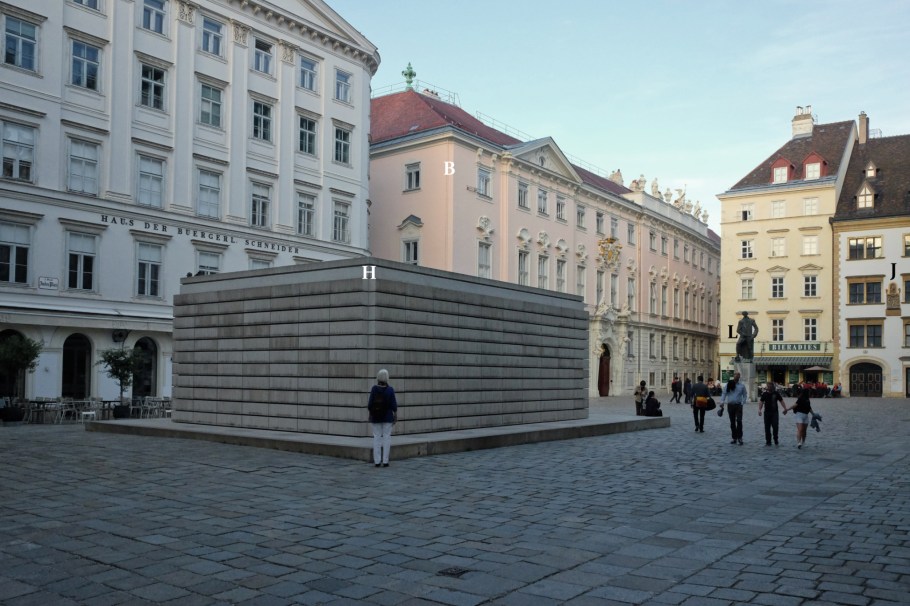
The first Jewish community in Vienna settled around present-day Judenplatz in the Middle Ages with mention in written documents dated mid- to late-13th century AD/CE. Daily Jewish life thrived around the Or-Sarua Synagogue, the Jewish School, and the Mikveh ritual bath. The community along with the surrounding Jewish neighbourhood came to an end with the Pogrom of 1421. Catholic Habsburg Duke Albrecht II rolled out a decree (Wiener Geserah, Vienna Gesera) which legitimatized the expulsion, incarceration, torture, and murder of some 800 Jewish residents; accompanied by destruction and forced takeover of buildings and property.

Below I highlight remnants and traces to the medieval Jewish community at this square in central Vienna.

Judenplatz, Vienna, Wien, Oesterreich, Austria, fotoeins.com

Facing northwest: B, Bohemian Chancellery; H, Holocaust Memorial; L, Lessing monument; M, Misrachi House; T, To the little Trinity. Photo, 20 May 2018.

Judenplatz, Vienna, Wien, Oesterreich, Austria, fotoeins.com

Facing southeast: B, Bohemian Chancellery; J, Jordan House; H, Holocaust memorial; L, Lessing monument. Photo, 20 May 2018.


( Click here for images and more )