Fotoeins Fotografie

location bifurcation, place vs. home

25T71 Vienna’s city museum: permanent collection

E70, V18.

The Wien Museum at Karlsplatz extends its opening hours on Thursdays to 9pm, which gives everyone a better appreciation for its permanent collection in the examination of the city’s history that spans almost 8 centuries. The museum’s permanent collection is free of charge, but there is a charge to view the museum’s temporary exhibitions. The collection includes paintings, sculptures, posters, photographs, metalwork, various kinds of mementos and documents, and other forms of human keepsakes.


“The city of Vienna’s historical museum”
“Young Mother”, by Egon Schiele (1914). Schiele was a key figure in the early 20th-century Vienna Modernism cultural movement.
“Emilie Flöge”, by Gustav Klimt (1902). Klimt was another key figure in the early 20th-century Vienna Modernism cultural movement.
From 1904 to 1938, the three Flöge sisters operated their fashion and clothing shop in the Casa Piccola building on Mariahilfer Straße.
“Lady in Yellow”, Max Kurzweil (1899). The bright blue dot is a reflection of floor lighting.
The model for the painting was the painter’s wife Martha Kurzweil.
Poster: “A cry for help: read Bettauer’s weekly newsletter”. Writer Hugo Bettauer (1872-1925) fought against Article 144 of the Criminal Code which at the time made termination of pregnancy punishable with jail time of up to 5 years. He also fought against anti-Semitism and for the decriminalizing of same-sex couples.
Poster for the classic movie “Der Dritte Man” (The Third Man) which was filmed in post-war Vienna. I saw this movie in a small room at Vienna’s Burg Kino cinema house in 2022.
The people: they come, they work, and no surprise, they want to stay. (Re. post-war labour requirements to boost productivity and the economy.)
In 2000, the City of Vienna officially unveiled its memorial to Jewish victims of the Holocaust with a sculpture by British artist Rachel Whiteread. Situated at Judenplatz, the memorial takes on the form of an “inverted library” whose books are placed spine facing inwards. The image shows a “row of books” in detail (1996) as a model for the memorial.
“Closing time … take me home.”

I made all images above with an iPhone15 on 17 July 2025. This post composed within Jetpack for iOS appears on Fotoeins Fotografie at fotoeins DOT com.

25T70 Vienna: chasing marks in the 15., 10., & 5.

E69, V17.

By chance, the math happened to work out very well today. I wandered into three city districts for some “list clearing” activity. Here’s what I found, even with me ending up in the inner city.


15. Rudolfsheim-Fünfhaus

As a boy, Friedrich Stowasser lived in the area with his Jewish mother, Elsa. In 1938, they were forcibly moved out to a relative’s apartment in the 2nd district, where they survived until war’s end. That boy became the artist known as Friedensreich Hundertwasser (1928-2000), whose influence is visible as an “onion dome” on top of the advertising column in the background. The City of Vienna inaugurated the small plaza in his name in 2007.
Onion dome. Hundertwasser.

5. Margareten

On the outside wall of the building at the corner of Leitgebgasse and Stöbergasse are three panels each protected by transparent plexiglass. Each panel is a visual record of what was required of residents during Allied air-raids in World War II.
The arrow shows the direction residents could go for additional shelter, pointing southeast towards Margaretengürtel (Margareten belt road).
The two arrows point to “NA” for Notausstieg, or emergency entry to an air-raid shelter below ground during World War II.

10. Favoriten

Ceramic mosaic of architect Eduard van der Nüll (1812-1868), by Fritz Rocca-Humpoletz (1894-1971). Van der Nüll and Sicardsburg designed Vienna’s Opera House whose public unveiling brought reviews so poor, they drove van der Nüll to despair and suicide.
Giant wall mural (2021), by Viennese artist nychos, at tram stop Knöllgasse. I saw this in June 2024, but to see this again in-person is neither chore nor burden at all.

1. Innere Stadt

Inside the Frauenhuber café.
“Yellow Fog”, by artist Olafur Eliasson for Verbund whose headquarters are located at Am Hof. The dynamic sculpture is active only at dusk.

I made all images above with an iPhone15 on 16 July 2025. This post composed within Jetpack for iOS appears on Fotoeins Fotografie at fotoeins DOT com.

25T69 Vienna: Schottentor station has eyes

E68, V16.

Vienna’s Schottentor station serves the city’s U-Bahn U2 line, located close to the University of Vienna’s main building and the Votive Church. Next to the escalators from the University side of the station down to the train platforms are two “eyes” staring and blinking at each other.

Austrian artist Hofstetter Kurt installed “Einen Augenblick Zeit” (Just A Moment) in Vienna’s old Südbahnhof from 1994 to 2009. Towards the end of 2024, the sculpture got its new home in Schottentor station.

It’s a little unnerving to see a couple of metal eyes to and from the U2, but I’ve come to anticipate seeing at least 1 eye at Schottentor.


11-seconds on the up: 1258pm, 15 Jul 2025.
11-seconds on the down: 131pm, 15 Jul 2025.

I made the stationary image on 7 July 2025 and videos on 15 July 2025. This post composed within Jetpack for iOS appears on Fotoeins Fotografie at fotoeins DOT com.

25T68 Strauss family at Vienna’s central cemetery

E67, V15.

For the entire 2025 year, various events and exhibitions around Vienna celebrate the 200th birthday for “The Waltz King” Johann Strauss II (JS2). Born in Vienna, he is best known for composing the waltz “An der schönen blauen Donau” (On The Blue Danube).

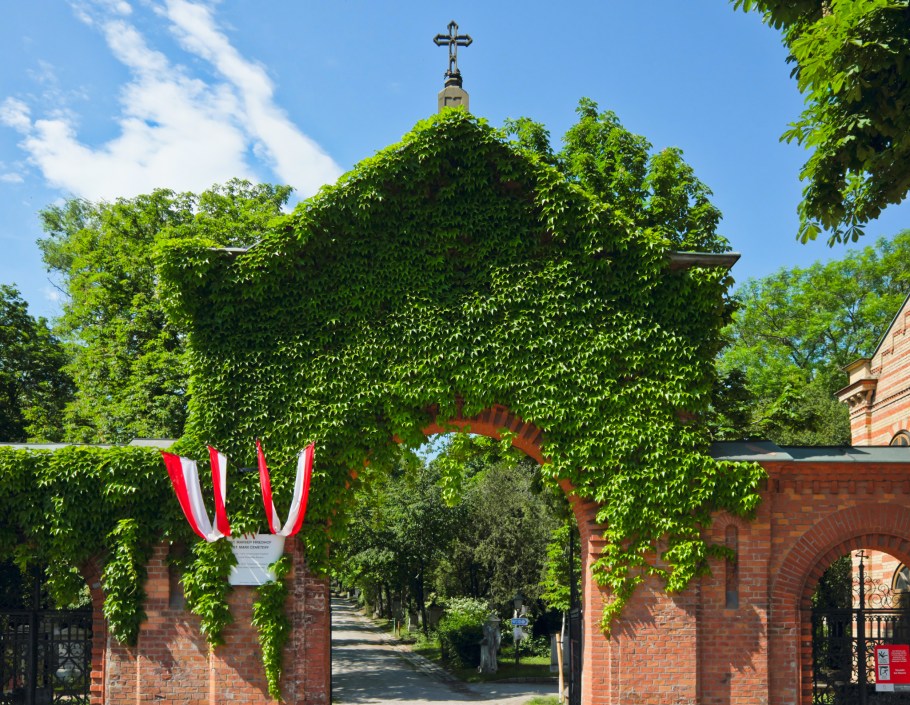
At one corner of group 32A in the city’s central cemetery is this “portrait” view of 5 members of the Strauss family. The two daughters Anna and Theresia aren’t here, but along with JS2’s 1st wife Jetty Treffz, these three women are located at a single grave in Hietzing cemetery.

Number 1: Johann Strauss II, oldest brother.

Number 2. Johann Strauss I, father.

Number 3: Eduard Strauss, youngest brother.

Number 4: Josef Strauss, middle brother; Anna Strauss (née Streim), mother.


The Strauss family: 5 of 7 members. Two daughters are buried at Hietzing cemetery. Numbers 1 to 4 correspond to the graves shown below.
Number 1: Johann Strauss II, oldest brother (32A – 27).
Number 2: Johann Strauss I, father (32A – 15).
Number 3: Eduard Strauss, youngest brother (32A – 42).
Number 4: Josef Strauss, middle brother; Anna Strauss (née Streim), mother (32A – 44).

I made all images above with an iPhone15 on 14 July 2025. This post composed within Jetpack for iOS appears on Fotoeins Fotografie at fotoeins DOT com.

25T67 Vienna: a sunny summer Sunday

E66, V14.

After a couple of cool cloudy and drizzly days, the sun came back, along with solid summer temperatures reaching +30°C. I had a few goals in mind, from the 1. to the 19., with the 9th district in between.


Ringturm tower (1.): 2025 wall mural titled “Verbindende Geschichten” (Stories and connections), created by Polish artist Marcin Maciejowski.
“The best”, 2nd district (2.)
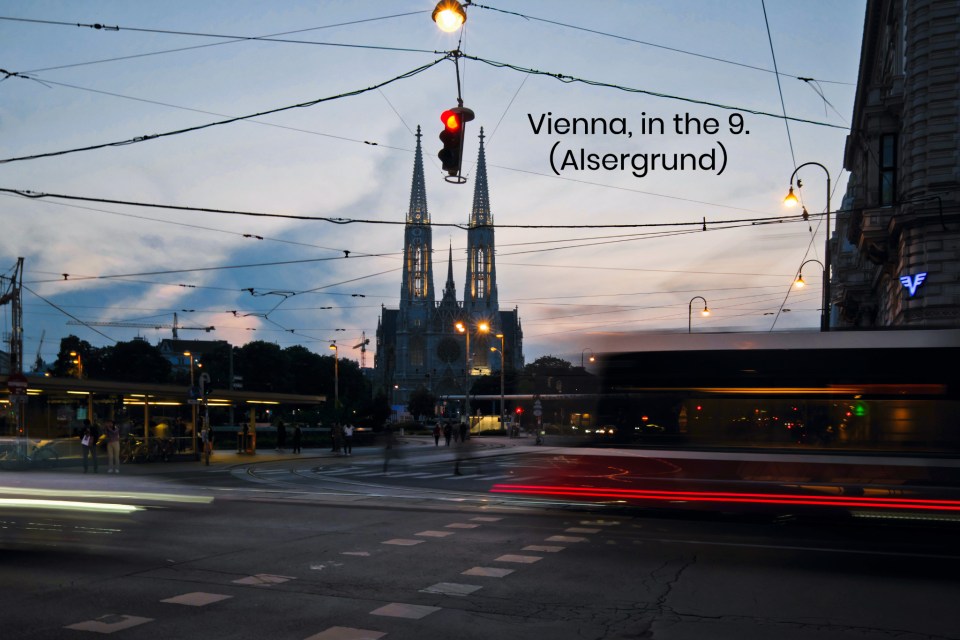
Next to the Ring Road this Neo-Gothic Votive Church (9.)
Shop locally-sourced produce (19.)
Hohe Warte neighborhood (19.)
Hohe Warte, served by tram number 37.
Casino Zögernitz (19.), heavy with the presence of both Johann Strauss I & II in the present-day House of Strauss.
Rail bridge for today’s U-Bahn U6 line, near Nussdorfer Straße station (18.)
Arboreal intervention into local architecture, originally in 1981 by Friedensreich Hundertwasser (9.)
South tower, St. Stephen’s Cathedral (1.); somewhere in this image is an embedded cannonball from the 1683 siege of the city by the Ottoman Empire.

I made all images above with an iPhone15 on 13 July 2025. This post composed within Jetpack for iOS appears on Fotoeins Fotografie at fotoeins DOT com.