The last time took place in La Serena, Chile at the end of 2011. Not only was it goodbye to Gemini South and Chile after 5 years, I said farewell to astronomy after almost 20 years.
But time is a tricky thing, and the moment had arrived: I had another promise to keep.
Fast forward to 2024, and I’m in the Bay Area. After reaching out a number of weeks ago, it’s wonderful to see them again after many years. They’ve kindly invited me to the SETI Institute where they work. I split from day-to-day science, but science never left, because I’m nerding out in a big way at the home of a big scientific effort: the Search for Extra-Terrestrial Intelligence.
Guest in Mountain View.
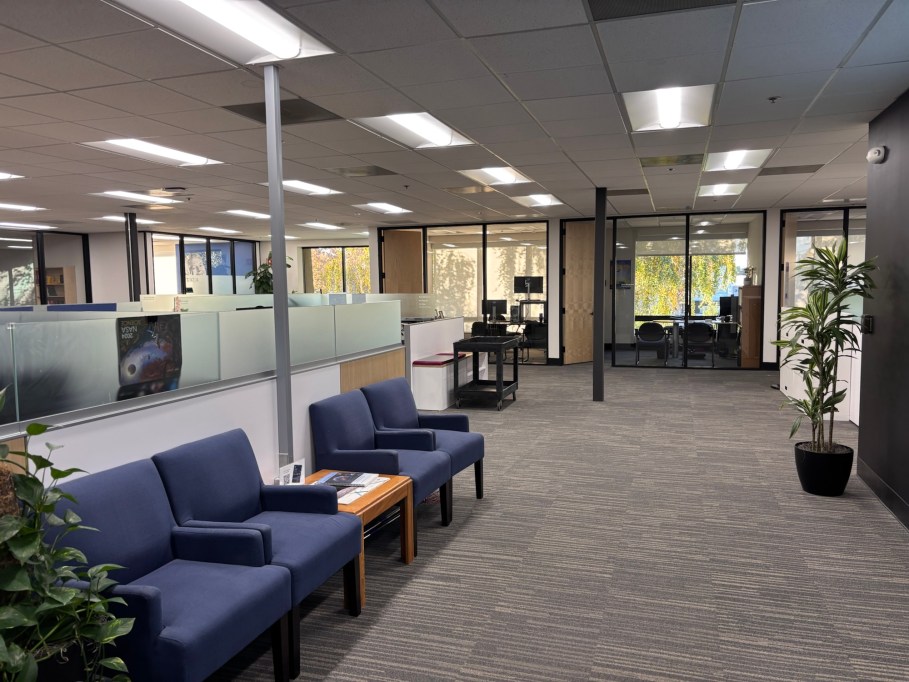
Cozy wide-open space, to house a number of multidisciplinary scientists to explore and study SETI themes.
Studio for SETI-hosted podcasts.
J&J, whom I met at Gemini, moved onto SOFIA: Stratospheric Observatory For Infrared Astronomy, fitted into a modified Boeing 747SP.
Dr. Jill Tarter: co-founder of SETI.
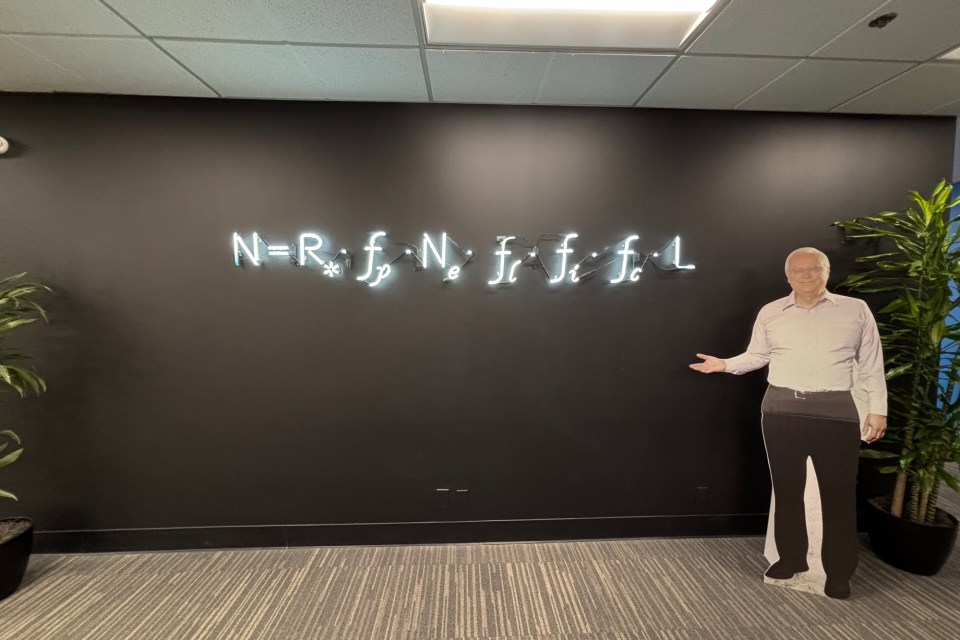
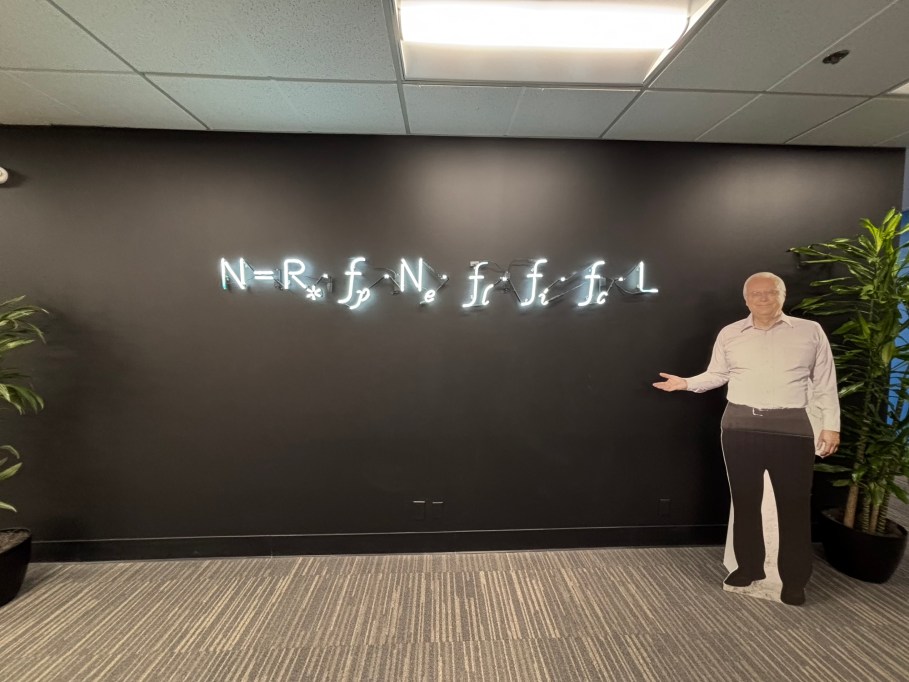
Dr. Frank Drake: 1st pres., SETI trustees board.
I’m nerding out in a big way: Leonhard Euler, and the famous Euler identity: e^(i•pi) = -1.
1593: Giordano Bruno suggests possibility of life on other planets; tried & executed for heresy. 1610: Galileo Galilei discovers 4 moons orbiting Jupiter, evidence against geocentric universe; convicted of heresy & sentenced to house arrest.
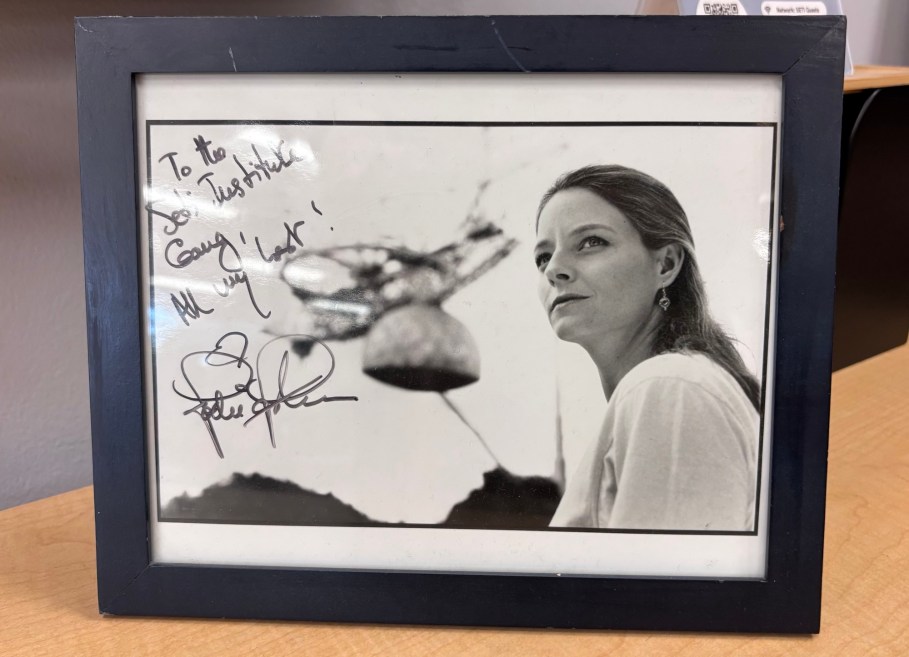
I have fond memories of seeing this on the big screen. 1997: the movie “Contact” is released with Jodie Foster in the lead role as Dr. Ellie Arroway, based loosely on SETI Institute co-founder Dr. Jill Tarter.
“To the SETI Institute gang, all my best! Jodie Foster.” (Arecibo)
“To the SETI Institute: live long and prosper! Leonard Nimoy.” (Celebrating 40 Years of the Drake Equation)
2020: COSMIC SETI installed at the VLA in New Mexico. 2022: 🇨🇦 CHIME in operation at SETI Institute’s HCRO in northern California.
Model of a segment for the 6.5-metre (21.3-foot) primary mirror of the JWST (James Webb Space Telescope).
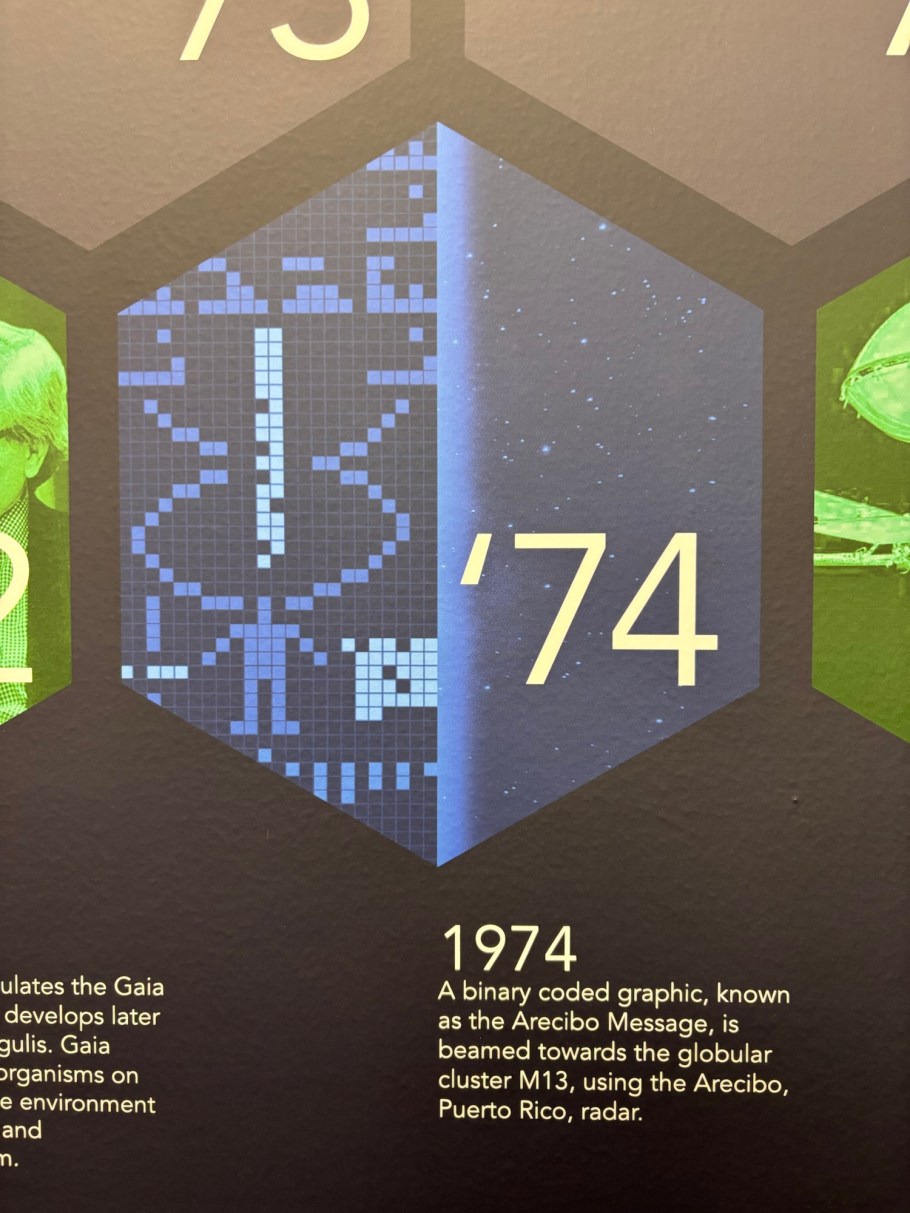
Meeting room with SETI timeline on the wall.
Dr. Frank Drake and his equation to estimate the number of civilizations in our Galaxy.
Astronomers: 2 active, 1 lapsed.
I made all photos above with an iPhone15 on 8 Nov 2024 (travel day 11 in the Bay Area). This post composed with Jetpack for iOS appears on Fotoeins Fotografie at fotoeins DOT com.
In south-central Alberta, a leisurely 1.5 to 2 hour drive northeast from Calgary takes me past trucks, farm equipment, drilling rigs; through undulating hills and open fields of grain.
Population at a touch under 9-thousand, the city straddles the gentle flow of the Red Deer River. I’m led here by the notable attractions, and integrated over a couple of days here, they do not disappoint.
“Welcome to Drumheller”: sign and pullout next to highway AB-9, on approach into town from the south. Photo, 25 Sep 2024.
The last time I saw my aunt J in person was in Vancouver for Dad’s funeral ten years ago. The last time I set foot inside aunt J’s home in Calgary was in 1976, which by now is a mere hop for a 50-year anniversary.
My mum’s big sister is celebrating her 100th birthday this month, and many members of the extended family from across North America are gathering in Alberta’s most populous city for a momentous celebration.
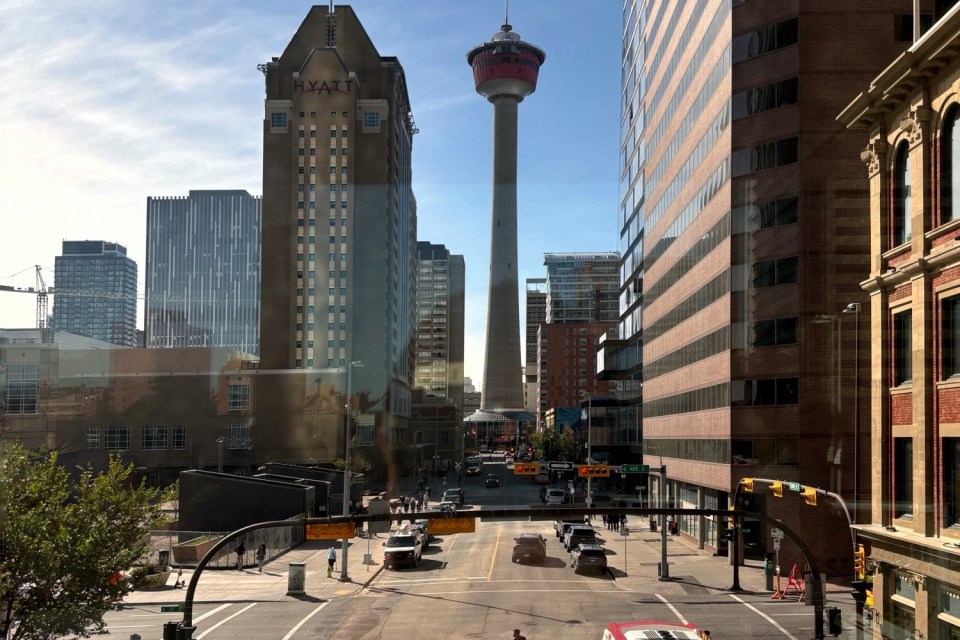
My photographic traces of a late-summer morning and afternoon wandering the city centre is on display, “outlined” by various pieces of art and architecture.
I’m in Stuttgart for a few days, and I rediscover photographer Gerda Taro was born in the city. I’d already read some history of photography, including the Spanish Civil War and Gerda Taro as the first woman to photograph and publish images about open conflict. I’ve gone looking for some traces in the city of her birth, as a quick and spontaneous mini-project in the midst of 90 consecutive days in Europe.
Memorial, near Olgaeck
Near the bus and tram stop Olgaeck is Gerda Taro Plaza, in memory of the young woman photographer who was born “Gerta Pohorylle” in Stuttgart and who once lived with her family in the area. At the plaza is a 2014 memorial dedicated to Taro; the text on all nine panels is entirely in German.
Named for photographer Gerda Taro (1910-1937), the plaza was unveiled by the city in 2008, and redesigned in 2014 with the installation of the memorial.
“O”. Gerda Taro, a pioneer in war photography.
“R”. The 1920s: Jazz, Theater, and the Stuttgart Kickers.
“A”. Leipzig: distributing leaflets against Hitler.
“T”. Exile in Paris: meeting André Friedmann, and the creation of Gerda Taro and Robert Capa. There is no Capa without Taro.
“A”. The Spanish Civil War, 1936-1939.
“D”. Barricades, armed women, equitable distribution of land.
“R”. The camera as witness: misery and terror from bombs.
“E”. Getting up close, for the world at large.
“G”. The first woman war-photographer killed on location. Documenting Spain’s civil war with her camera, Gerda Taro was accidentally run over by a tank and died from her injuries in a hospital near Madrid on 26 July 1937. She was buried in a marked grave in Paris’ Cimetière du Père-Lachaise.
Republican militia women training on the beach outside Barcelona, Spain: photo by Gerda Taro, August 1936. Provided by Ur Cameras on Flickr via Creative Commons.
Family home
Not far from Gerda-Taro-Plaza, I found the Pohorylle family’s former home, based on this poignant essay. I didn’t see any Gedenktafel (memorial plaque) or any Stolpersteine (stumbling stones) in the pavement, at or in front of either building 170 or 170A. In 1929, when Gerta was 19 years old, the Pohorylle family moved from Stuttgart to Leipzig.
Obstructed view of the former Pohorylle family house (in light orange), as seen from passage off Cottastrasse.
Gate to path access for building address Alexanderstrasse 170A.
Former Pohorylle family house, at Alexanderstrasse 170A.
Taro, short bio
Born Gerta Pohorylle, 1910 in Stuttgart, Germany; died 1937 in El Escorial, Spain.
“… Studied in Leipzig starting in 1929. Emigrated to Paris in 1933. In 1935 began working with the photographer André Friedmann, later known as Robert Capa. In 1935-1936 worked for the Alliance Photo Agency. Shortly after the outbreak of the Spanish Civil War in the summer of 1936, she and Capa went to Spain; other photography assignments in Spain followed in early 1937. She was fatally wounded at the Brunete front in July 1937 and was the first female war correspondent killed in action.”
Source: “Women War Photographers: from Lee Miller to Anja Niedringhaus” (Munich: Prestel, 2019), p. 218.
I made all photos above with an iPhone15 on 22 Jul 2024. I received no support from an external organization. This post composed with Jetpack for iOS appears on Fotoeins Fotografie at fotoeins DOT com.














 Fotoeins Fotografie