Astronomer Johannes Kepler: birth town Weil der Stadt
Above/featured: Johannes Kepler memorial at Marktplatz in Weil der Stadt. Photo, 21 Jul 2024 (P15).
I first heard the name “Kepler” way back in high school. I had no idea “Kepler” would embody a winding trail of education, knowledge, a “first life” (career), and a deep lifelong appreciation of science. Thankfully, what’s transformed has been a “second life” opened to another world with more questions, some of which have led to unexpected places. Perhaps, the cost is a solitary quest for answers, but ultimately, my motivation has always been clear: it’s because I need to know.
In the same way Kepler, like many others before and after, looked up into the night sky and asked a simple question: “why do stars and planets appear and move as they do in the night sky?”
To the here and now, my questions begin and land on our own planet.
For example, where was Kepler born? Where is this place? Are there any traces in those spaces?
First, who was Kepler?
Johannes Kepler
• German astronomer, mathematician, court astrologer.
• born/✵ 27 December 1571, Weil der Stadt — died/✟ 15 November 1630, Regensburg.
• Oldest of 4 siblings: brother Heinrich, sister Margaretha, brother Christoph.
• Educated in Leonberg, Adelberg, Maulbronn, and Tübingen.
• Lived and worked in Graz 1594–1600, Prague 1600–1612, Linz 1612–1628, Żagań (Sagan) 1628–1630.
• Empirically deduced three laws of planetary motion, based on painstaking naked-eye night-sky observations of planets by Tycho Brahe and Kepler (before the first telescope was patented in 1608).
• Defended and saved his mother from execution after she was unfairly accused of witchcraft.
• By the end of the Thirty Years War in 1648, the cemetery in Regensburg where he was buried was destroyed.
• Over 50 years after Kepler’s death, English mathematician Isaac Newton publishes in 1687 “Philosophiæ Naturalis Principia Mathematica” including his work on gravity. Kepler’s 3 Laws of Planetary Motion are a natural result of Newtonian gravity: (a), (b), (c), (d)
Weil der Stadt
This is the town where Heinrich Kepler and Katharina Kepler (née Guldemann) brought their first child, Johannes, into the world in 1571. The present-day town of Weil der Stadt with population about 20-thousand lies within the district of Böblingen in the German federal state of Baden-Württemberg, about 20 km to the west-southwest of the state capital city of Stuttgart. Proximity to Stuttgart provides an easy afternoon in Weil der Stadt.
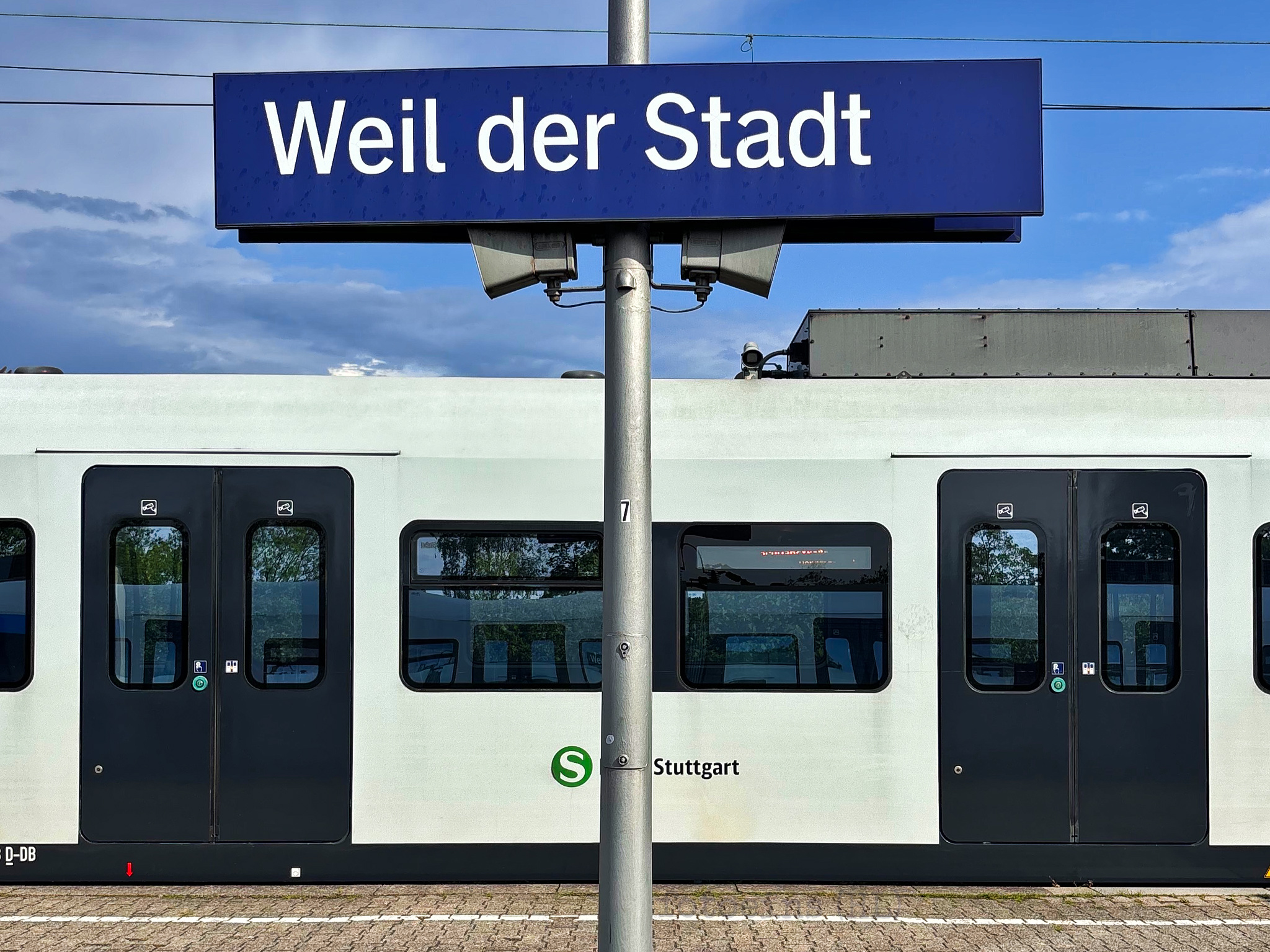
Weil der Stadt train station (P15)
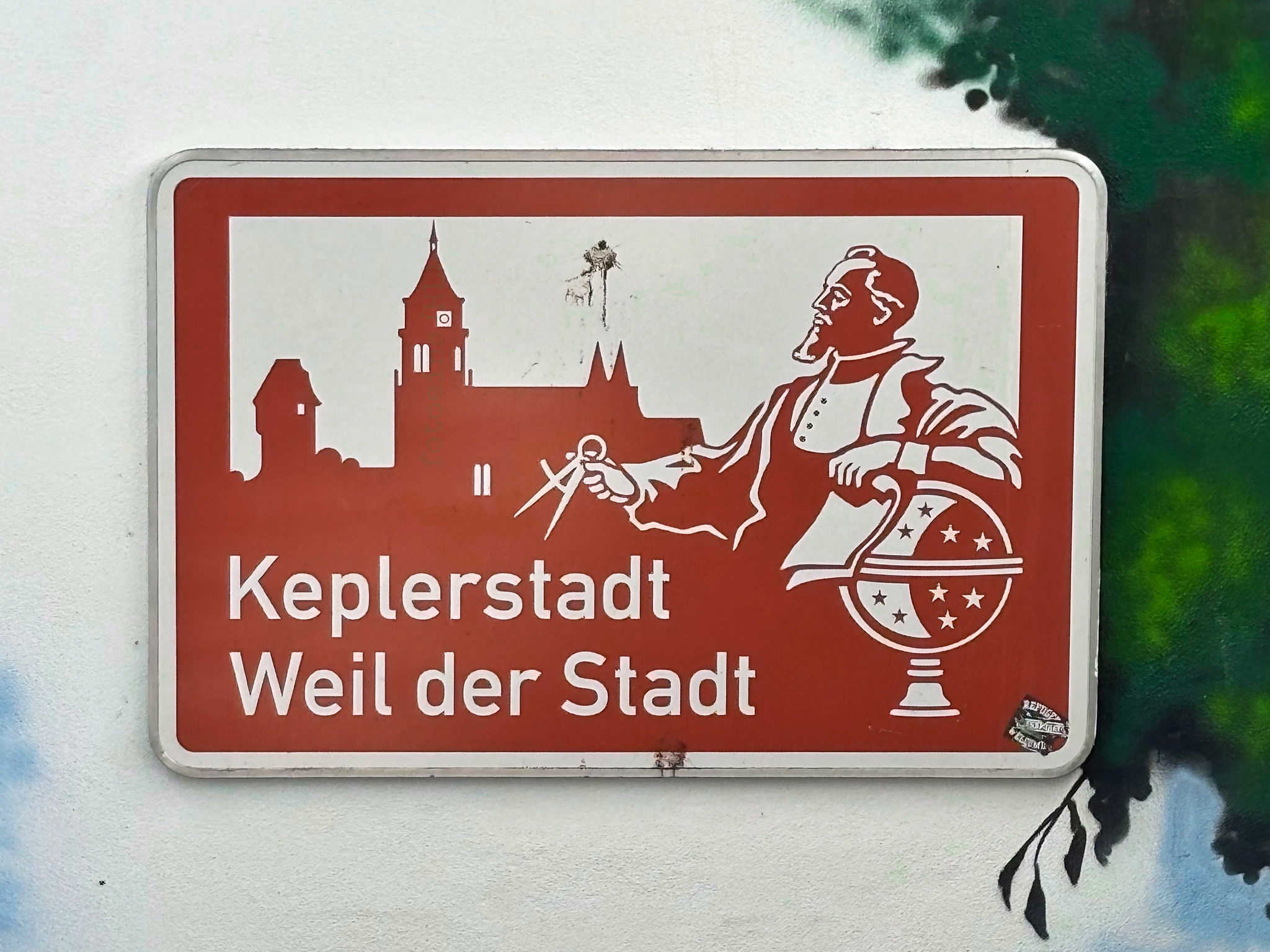
“City of Kepler, Weil der Stadt” signage in train station (P15)
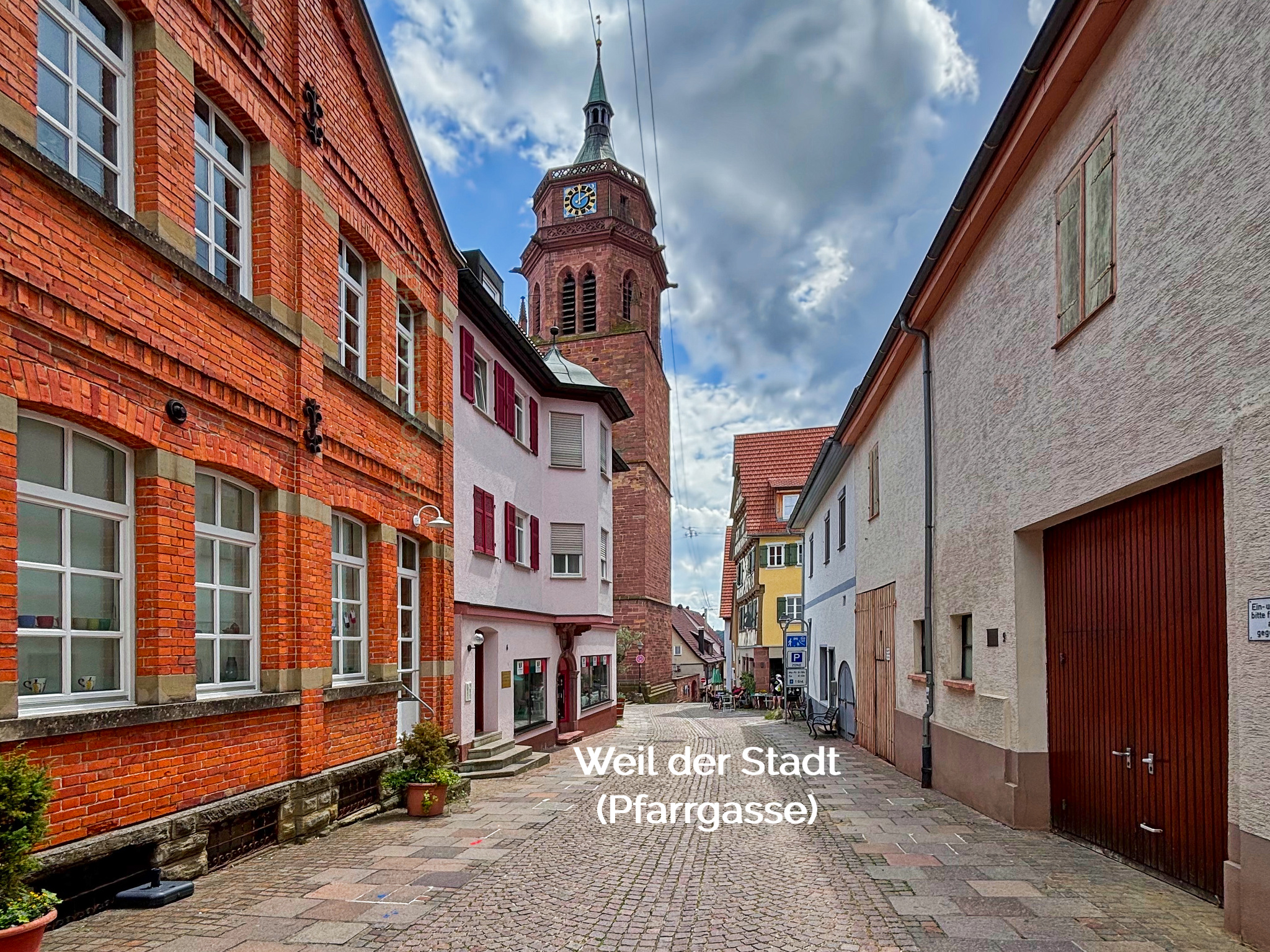
Pfarrgasse, facing south towards the Church of St. Paul and Peter, on approach to Marktplatz (P15)
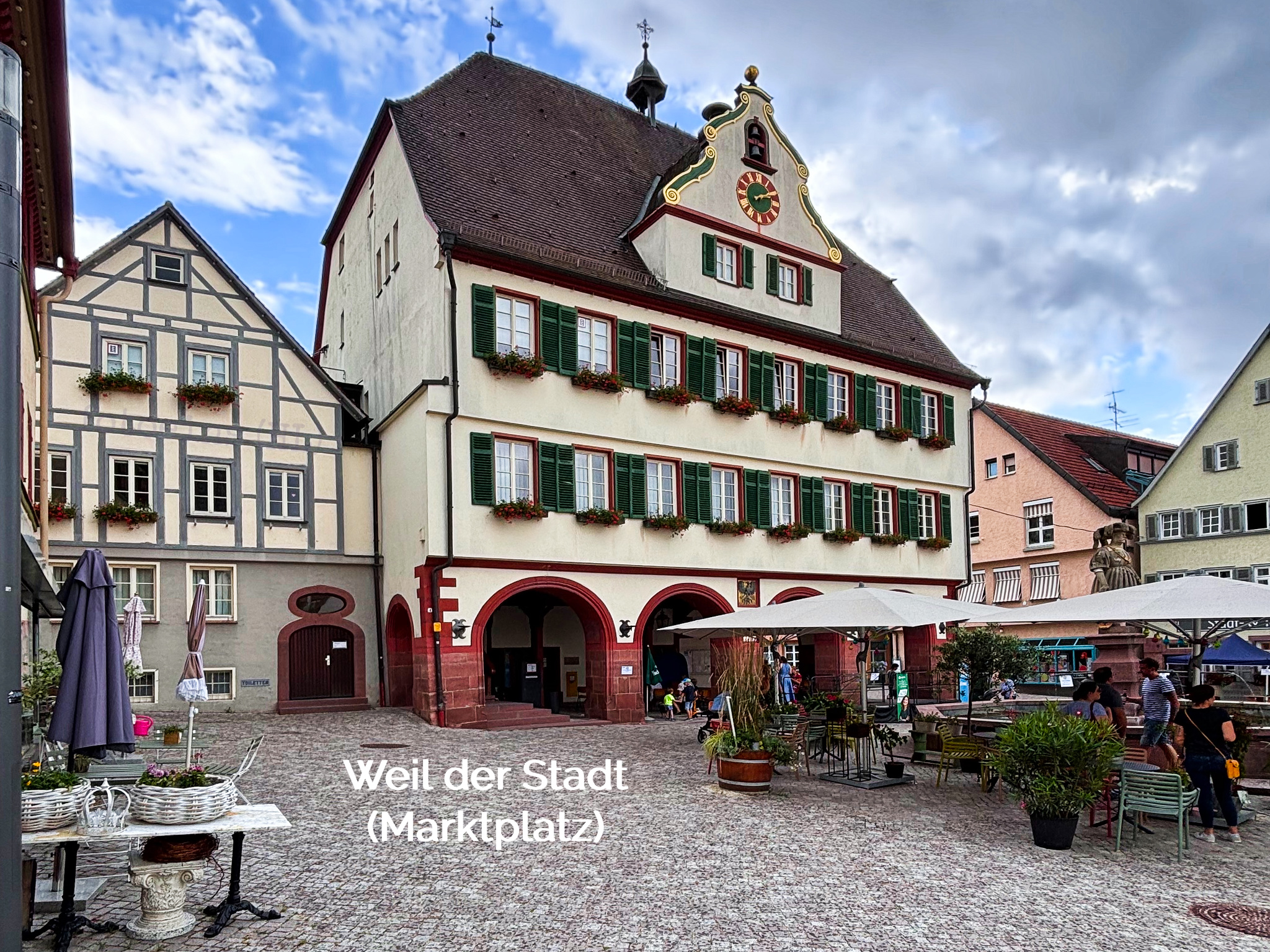
Marktplatz with the town hall at centre. The Kepler Museum is out of frame to the left, and the Kepler Memorial is behind me and out of frame to the right (P15)
Kepler memorial
Two town committees had been established since 1851 to consider construction of a new monument to Johannes Kepler. A call went around Europe, and a large part of initial and financial support arrived from Bavaria and Austria. In 1863, the town chose the design by Nuremberg sculptor August von Freling and Marktplatz as the location for the memorial. With a bronze statue of Kepler seated on top of a sandstone base, inauguration of the memorial occurred on 24 June 1870.
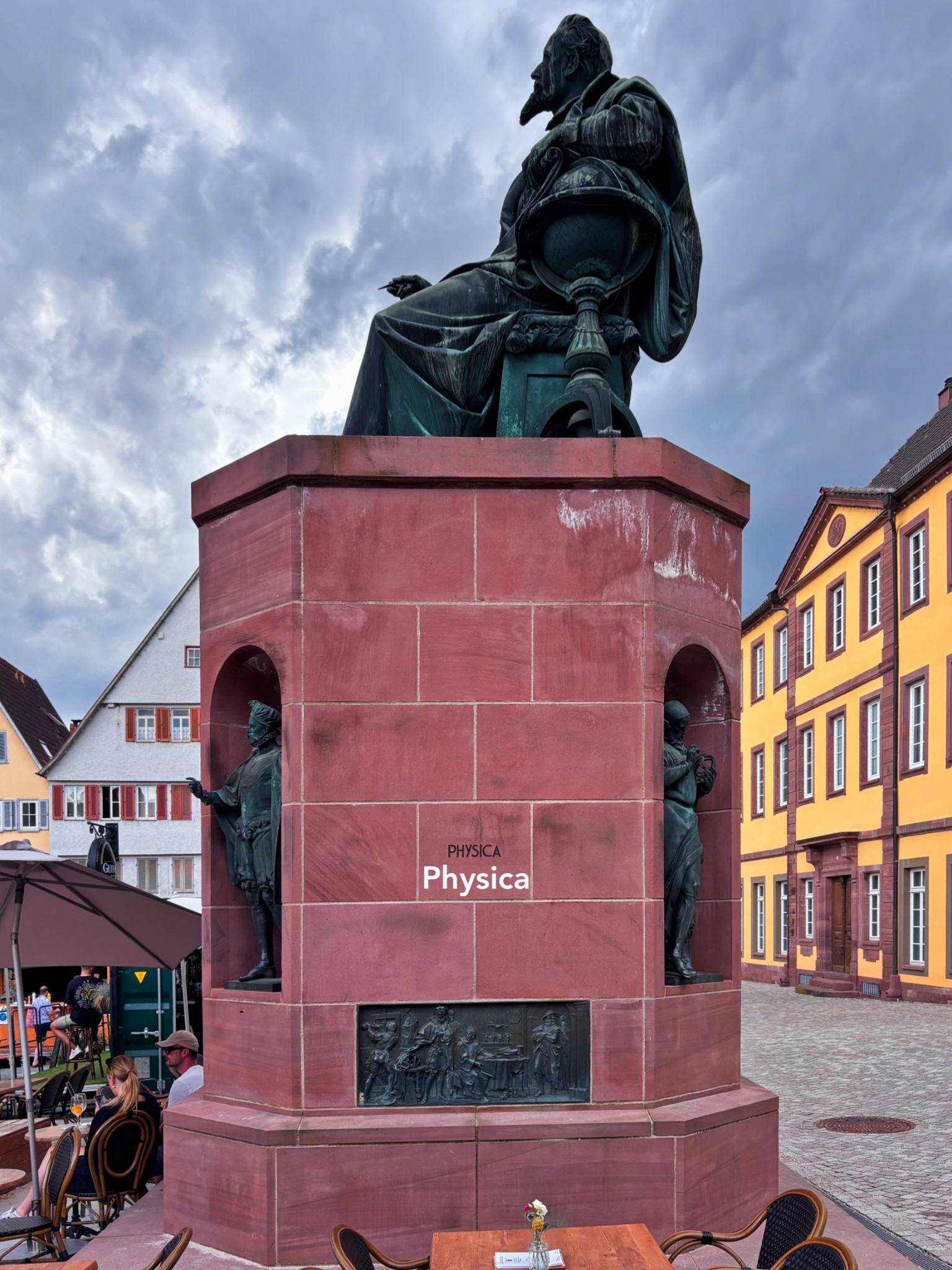
Marktplatz market square: Johannes-Kepler-Denkmal, 1870: bronze statue on sandstone base, by German sculptor August von Kreling (P15)
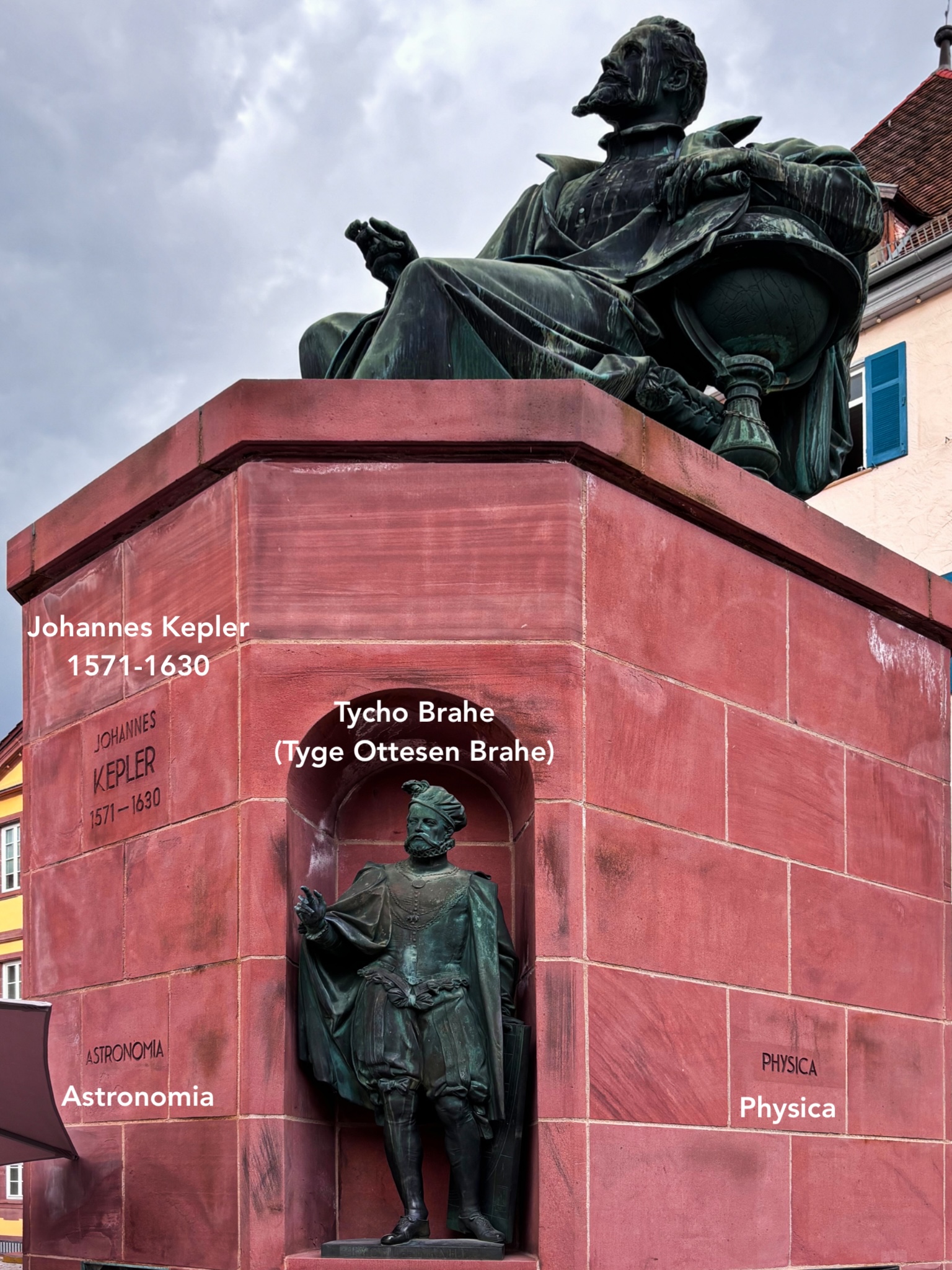
Kepler memorial, with Tycho Brahe (1546–1601) for company (P15)
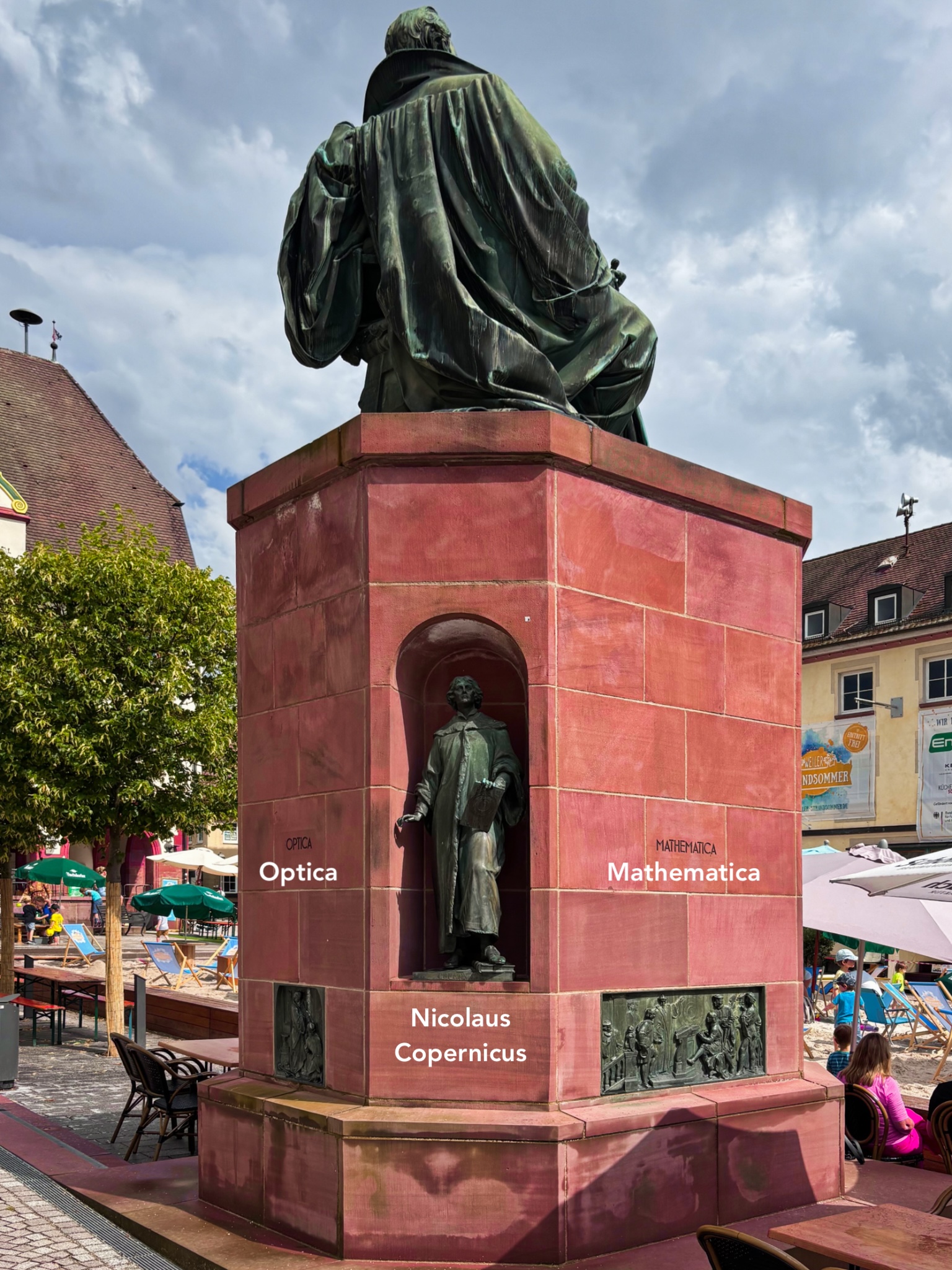
The back of the Kepler memorial, with Nicolaus Copernicus (P15)
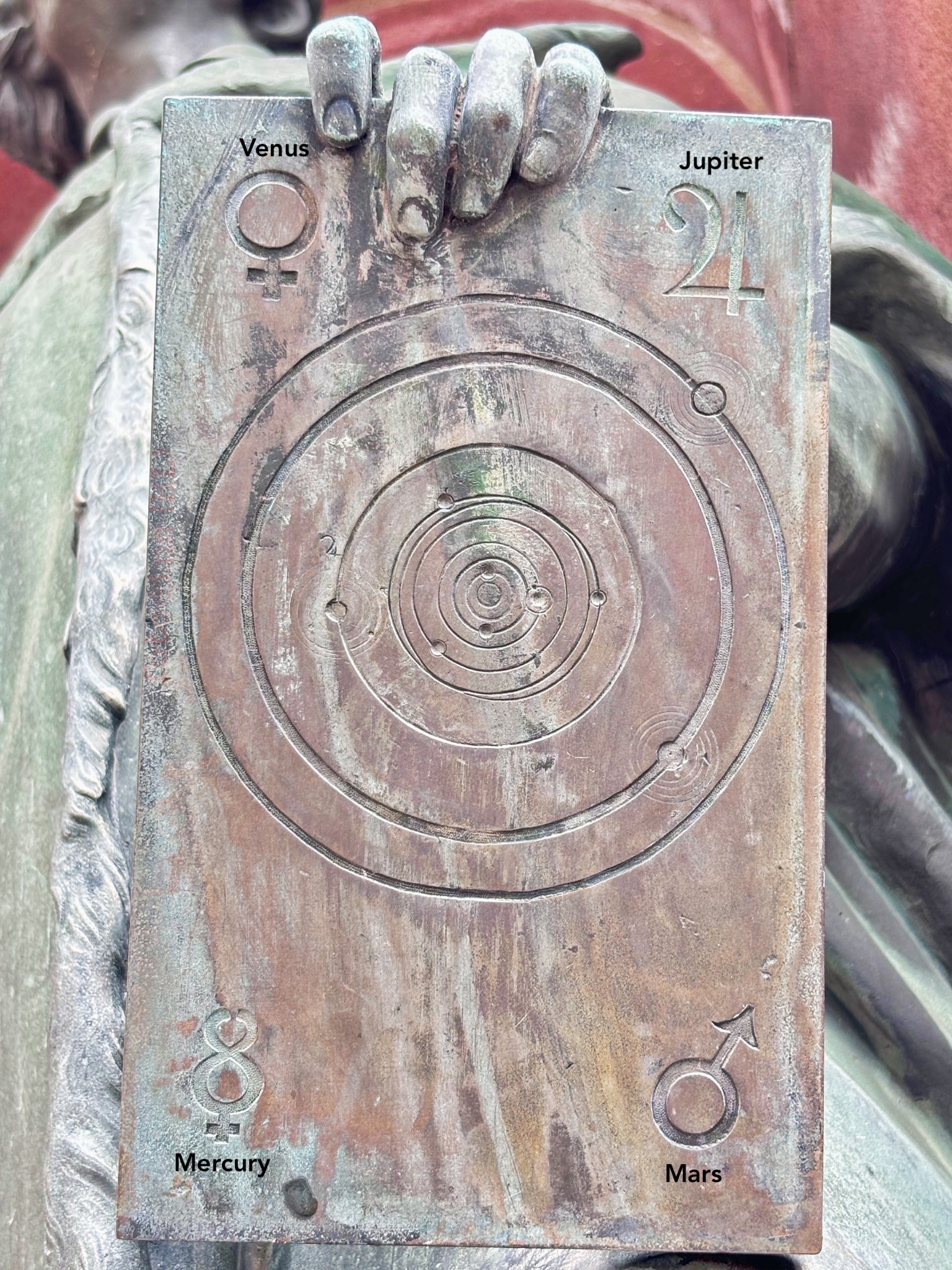
Copernicus (1473–1543) is holding in his left hand a tablet showing a sun-centred or heliocentric model of the solar system with symbols for Mercury, Venus, Mars, and Jupiter. In the Copernican model of the solar system, Earth and its Moon is the third planet from the sun. At the time, this idea was both heretical and revolutionary, going against the accepted and church-approved geocentric or Earth-centred system of the universe (P15)
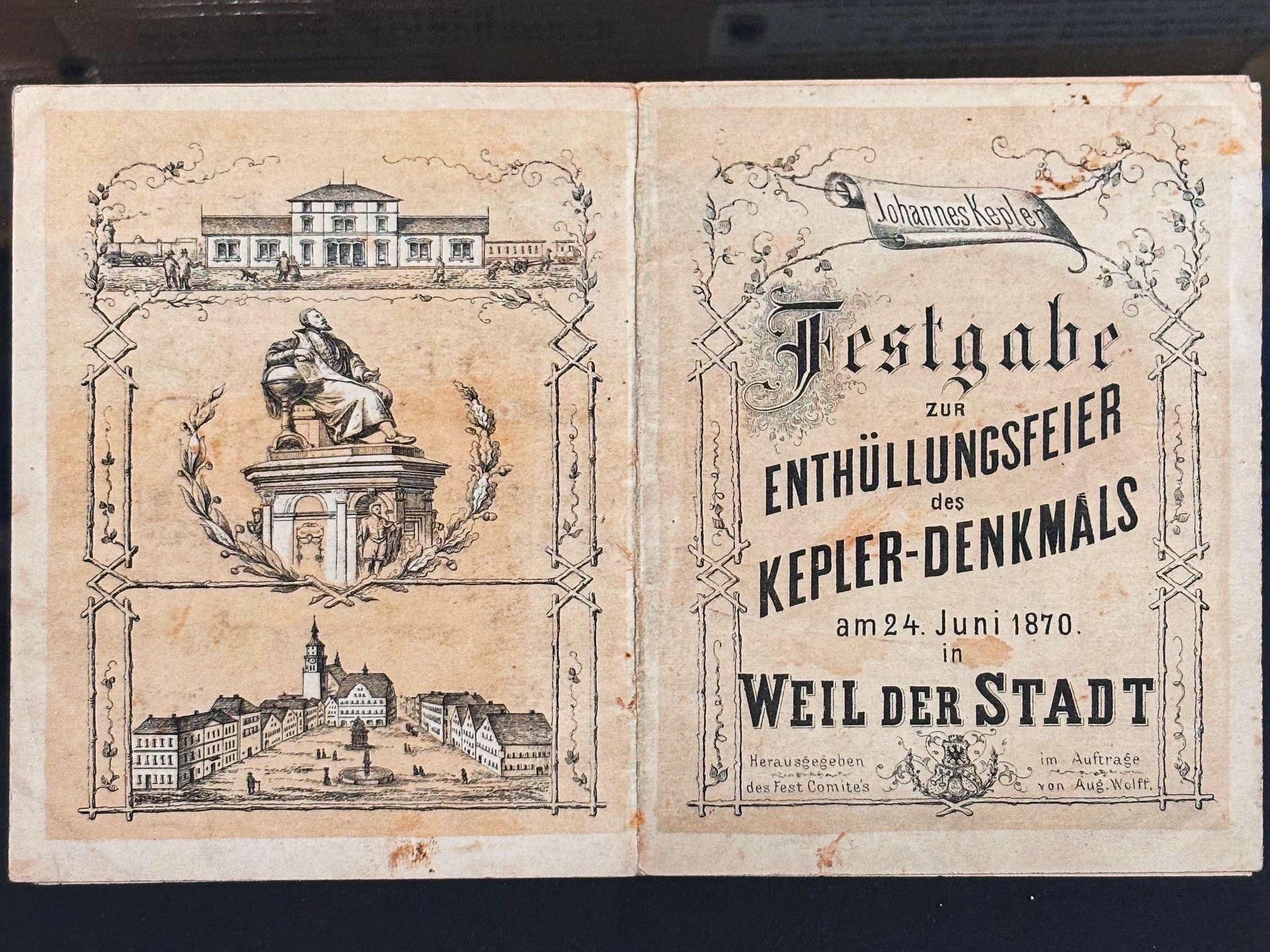
Stadtmuseum collection: leaflet for the public inauguration of the Kepler memorial on 24 June 1870 (P15)
Kepler house
Johannes Kepler was born in this house on the afternoon of 27 December 1571. Although the original builder and construction date of the house are unknown, Sebald Kepler, Johannes’ grandfather and town mayor in his day, leased the house for his eldest son and Johannes’ father Heinrich. The Kepler family moved to the nearby town of Leonberg in 1576. In 1648, this house suffered damage during the last stages of the Thirty Years War. Reconstruction led to the building’s use as bakery and café. By 1938, an association was established to purchase and renovate the house as a museum which opened in 1940; the association became the Kepler Society of Weil der Stadt, responsible for the museum’s collection and management. On 10 August 1999, the newly renovated building and museum reopened to the public.
The scope of the Kepler museum is both historical and scientific. Unsurprisingly, nothing original within that house remains to this day. But the modest space is used to describe everyday life, education, knowledge in the early to the middle of the 17th-century, as well as Kepler’s lifelong ruminations, examination, and observations of the universe.
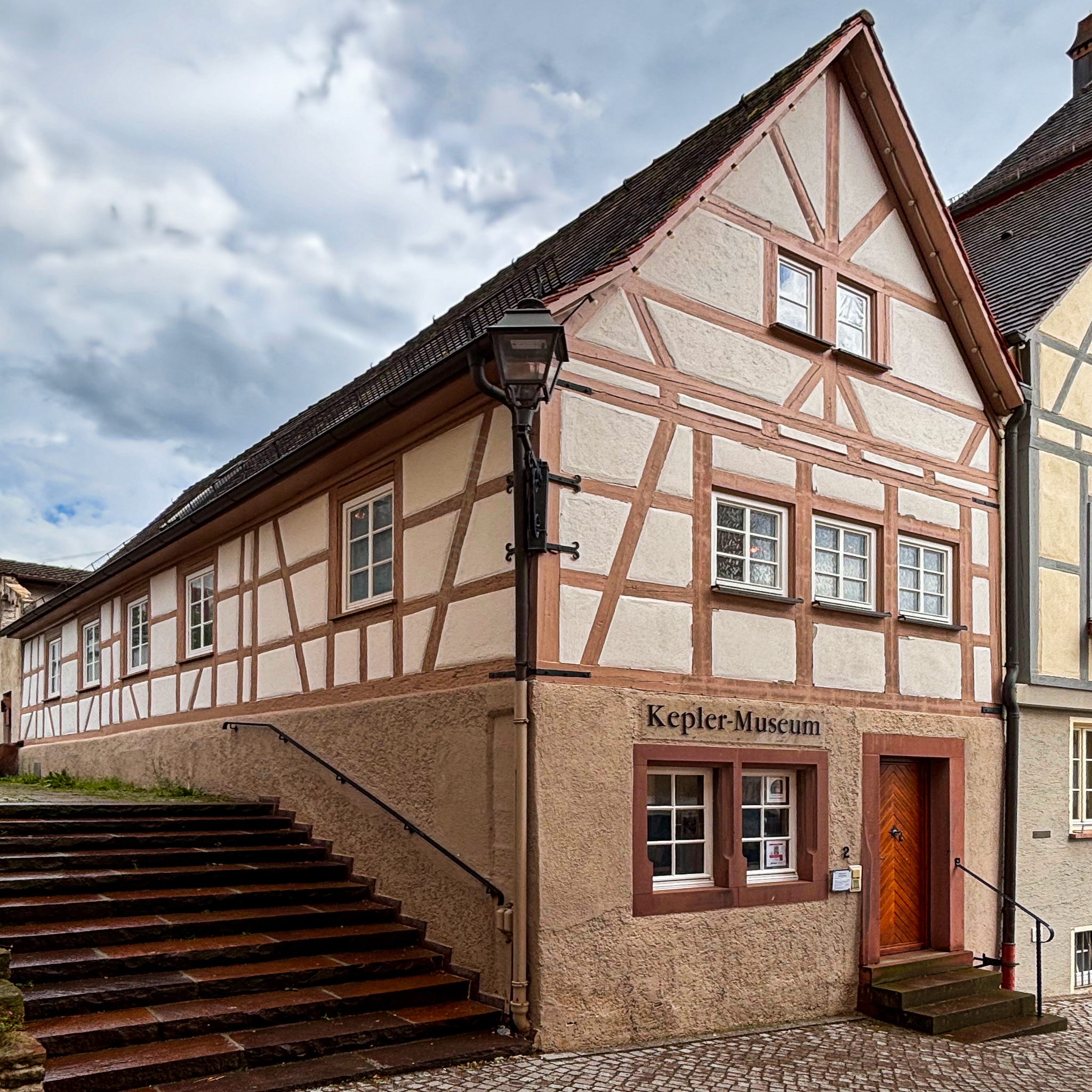
Kepler Museum, in the house where Kepler was born (P15).
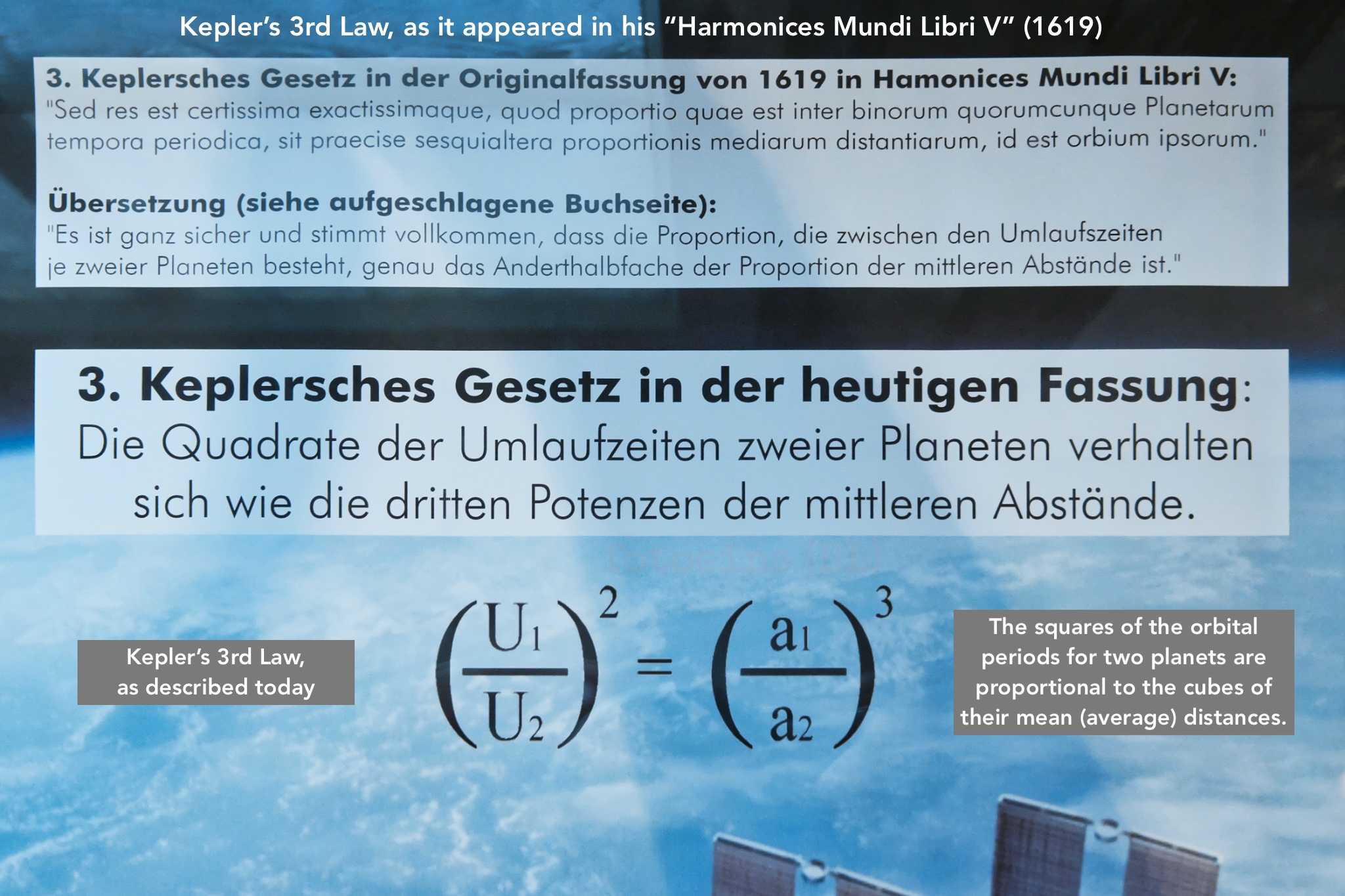
Display in Kepler Museum: Kepler’s 3rd Law appears for the first time in his 1619 treatise “Harmonices Mundi” (X70).
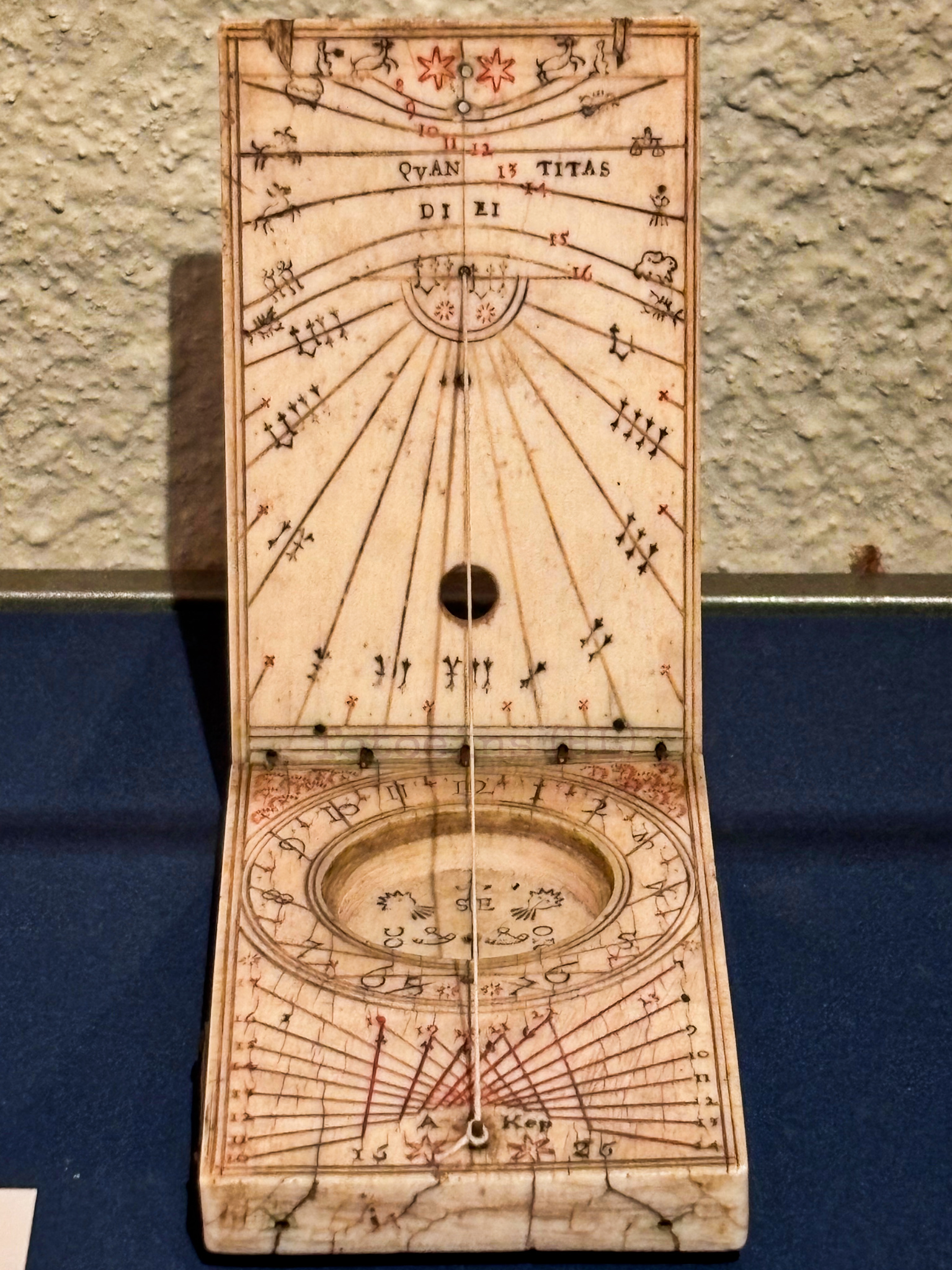
Display in Kepler Museum: “Klappsonnenuhr aus Elfenbein” / portable handheld foldable sundial made from ivory, c. 1625 likely made in Nuremberg (P15)..
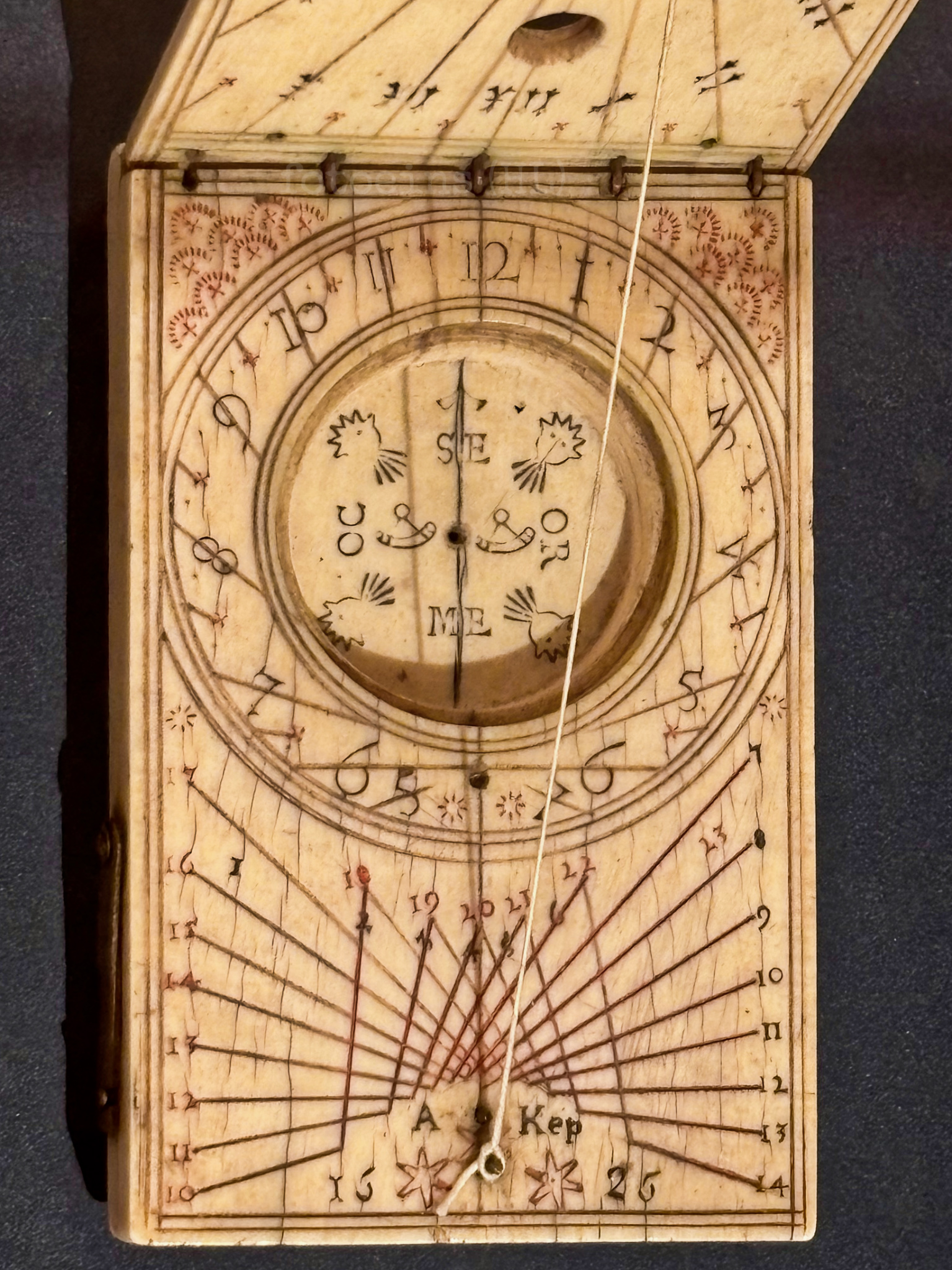
Display in Kepler Museum: portable sundial, bottom panel which is marked “A. Kep. 1626”.
In the autumn of 1604, a “nova” (“new star”) appeared in the stellar-constellation Ophiuchus (Greek for “serpent-handler”). Although the “new star” had been observed and first noted (in Europe) by Italian Lodovico delle Colombe on 9 October 1604, what Kepler was most interested at the time was an alignment with multiple planets appearing in the same part of the night-sky: a great “conjunction” of the planets Jupiter, Saturn, and Mars. 32-year-old Kepler working as imperial mathematician for the Habsburg emperor began his naked-eye observations in Prague on 17 October. In subsequent writings “De Stella Nova in pede serpentarii” (About a new star at the foot of the serpent-handler), Kepler confirmed Brahe’s opinion that these “novae” must be occurrences originating from the fixed stars in the background.
More about “Kepler’s supernova” at Astronomy magazine (2024) and NASA (2024).
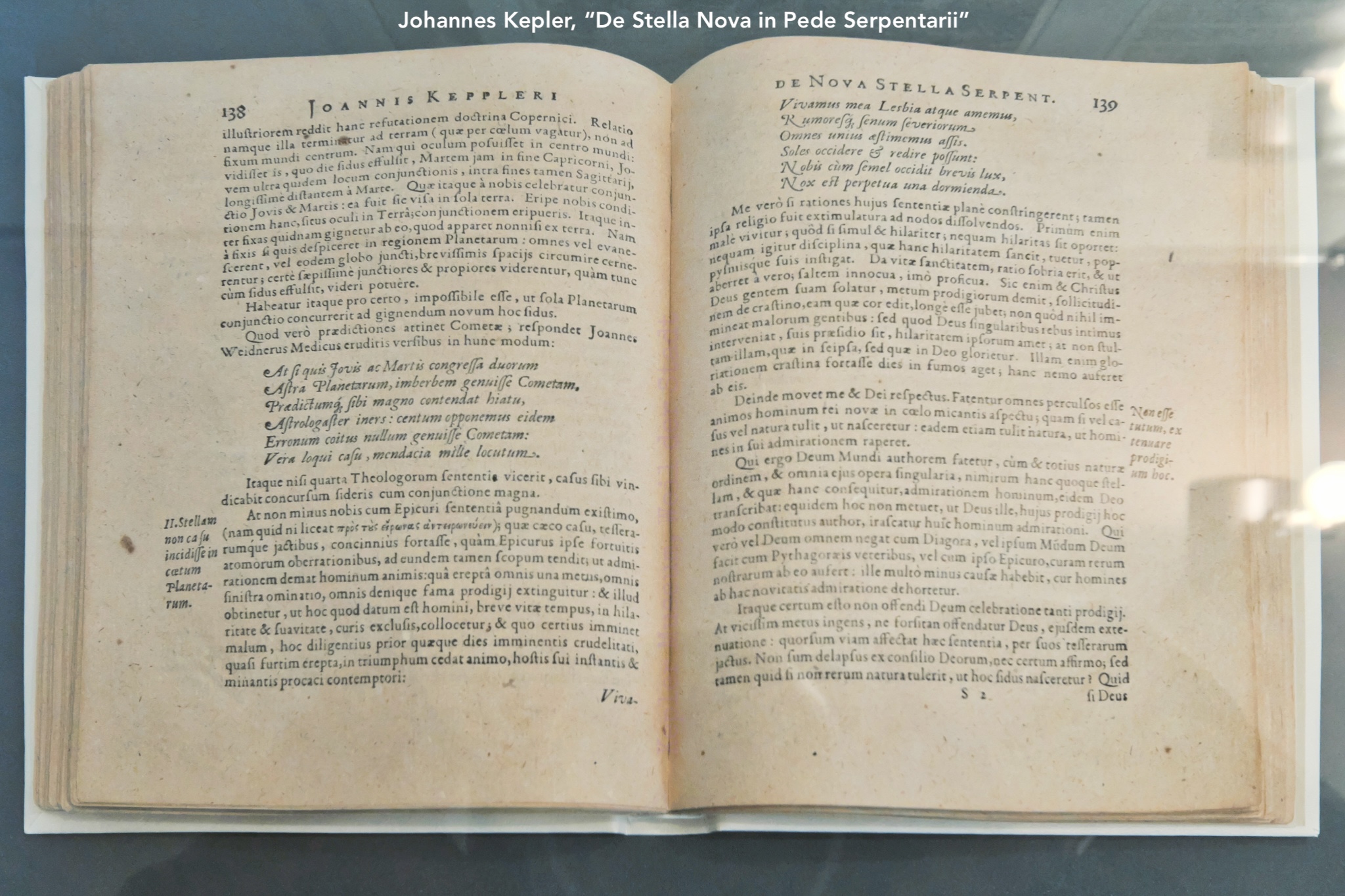
Display in Kepler Museum: pages 138 and 139 (book notation) from Kepler’s “De Stella Nova in pede serpentarii” (X70).
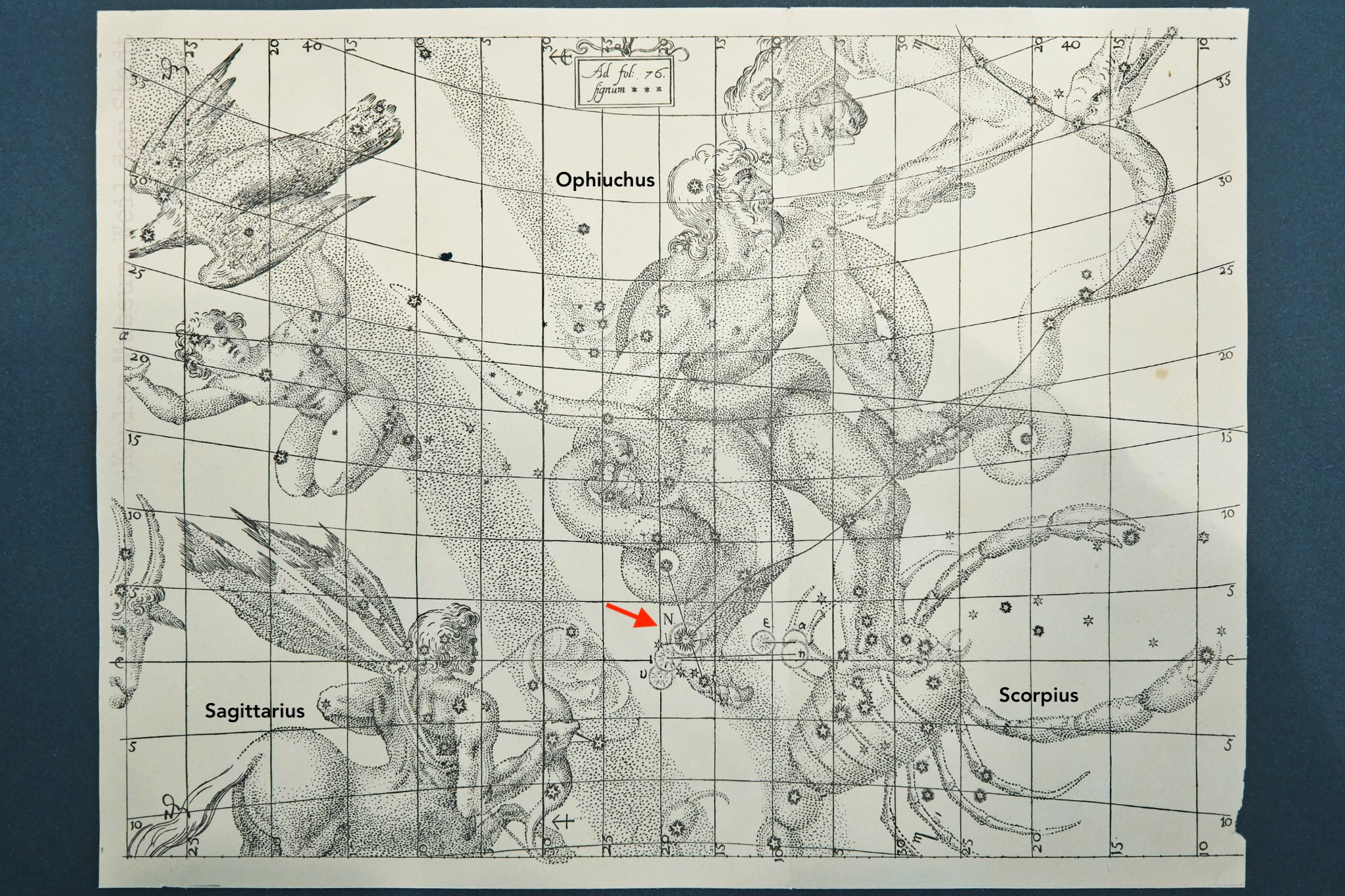
Display in Kepler Museum: sky chart of the stellar-constellations Ophiuchus, Sagittarius, and Scorpius from Kepler’s “De Stella Nova in pede serpentarii”. He denoted the appearance of the “nova” or new star with the letter “N”, which I’ve highlighted with a red arrow (X70).
Sources
• Astronomia nova (New astronomy), Johannes Kepler (Heidelberg, 1609); available at <https://hwastro.univie.ac.at/> [accessed Mar 2026].
• De Stella Nova in Pede Serpentarii (About a new star at the foot of the serpent-handler), Johannes Kepler (Prague, 1606); available at <https://hwastro.univie.ac.at> [accessed Mar 2026].
• Harmonices Mundi (The harmony of the world), Johannes Kepler (Linz, 1619); available at <https://library.si.edu/digital-library/book/ioanniskepplerih00kepl> [accessed Mar 2026].
Directions
An easy trip with the S-Bahn S6 train takes me from Stuttgart central station (Hauptbahnhof) to the route’s western terminus in Weil der Stadt in 40 minutes. From the latter train station, the walking distance is less than 1 km to the town’s Marktplatz, where the Kepler memorial and the Kepler Museum are located.
The Kepler Museum is open Saturdays from 2 to 4pm and Sundays from 2 to 5pm; admission for adults is 3 Euros. Most displays are in German; some have English translations. Their information flyer in English (2018) is available here.
I received neither pre-visit support nor post-visit compensation for this post. I made all images above on 21 Jul 2024 with a Fujifilm X70 fixed-lens prime (X70) and iPhone15 (P15). This post appears on Fotoeins Fotografie at fotoeins DOT com as https://wp.me/p1BIdT-xY9. Last edit: 21 Mar 2026.
 Fotoeins Fotografie
Please leave your comments below