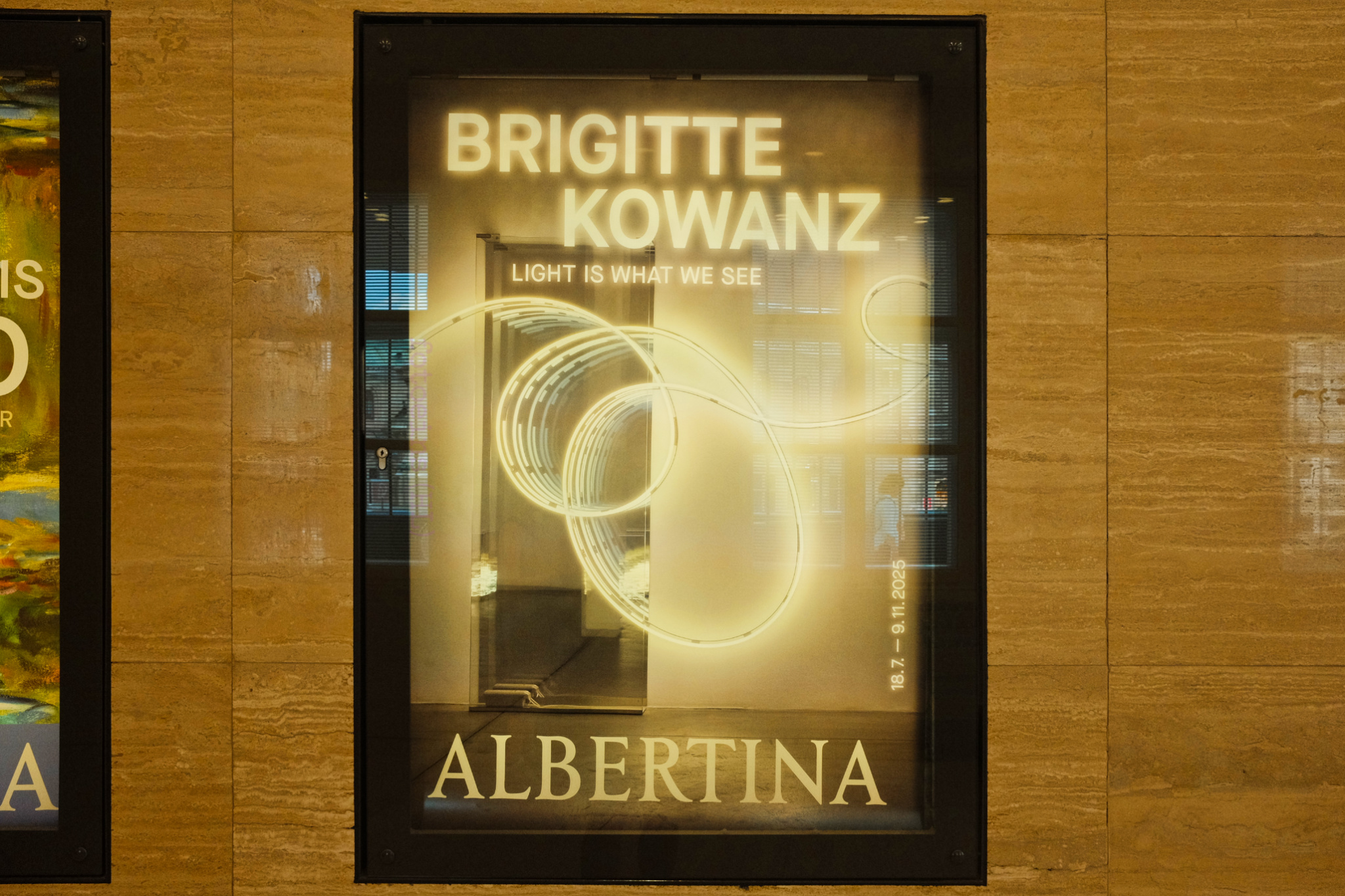
Vienna Albertina: Brigitte Kowanz, light is what she saw
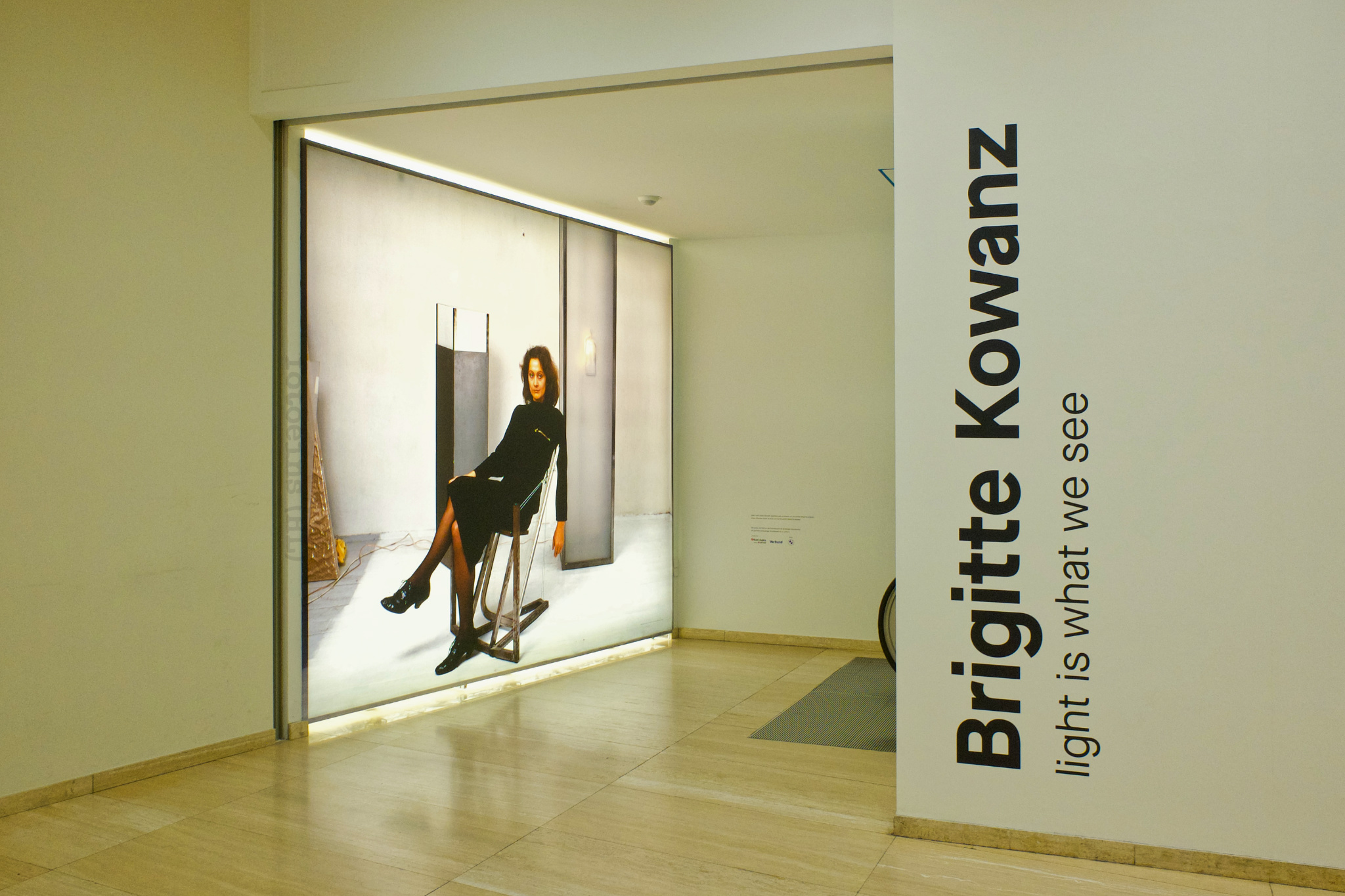
Above/featured: “Light is what we see”, 1994/2019. (A part of Speed of Light/4m with the digits 6-3 appears at the right edge.)
Austrian artist Brigitte Kowanz (1957–2022) held an enduring fascination for light. Light wasn’t simply the medium through which information propagated. Light itself was also a tool and mould for illumination, reflection, and even introspection. There’s something in her light-based artworks which allude not only to her philosophy and worldview, but also to her clear interest for science. Her works also anticipate and explore timely themes, including what it means to live in an information-rich society that fully embraces digital habitats and virtual spaces. There’s a spirit of fun and “lightness” mixed with a serious appreciation for the history of technology with her frequent use of Morse code. To me, Kowanz’s body of work is a wonderful manifestation of the 1964 statement by Canadian philosopher and media theorist Marshall McLuhan: “The medium is the message.”
I arranged my 2025 stay in Vienna to coincide with the final week of the Francesca Woodman exhibition and the beginning of an exhibition on Brigitte Kowanz, both held at the Albertina gallery-museum. Since Kowanz’s passing in 2022, the first major solo exhibition was a retrospective of her work titled “Light is what we see”. The Albertina has fast become a favourite, having seen an exhibition of photographer Gregory Crewdson’s work in the summer of 2024.
“Light is what we see” at the Albertina
From over 80 pieces on display, here are examples of Brigitte Kowanz’s artwork:
- Alphabet
- asap omw imo tbh bif afaik irl idc idk iow hth fyi omg
- Echo Hall Flow Nein
- Flashback Look Ahead, Light Steps
- Forward
- Light is what we see
- Morse Alphabet
- Rund um die Uhr
- Signature
- Speed of Light/4m ✯
- www 12.03.1989 06.08.1991
- 1×8
- 4×3
Licht ist expansiv und flüchtig, es bleibt nie bei sich – Licht ist eine Lebensmetapher.(Light is expansive and fleeting, it never remains the same – light is a metaphor for life.)
– B. Kowanz, 2017.
Alphabet
1998/2010: neon, mirror
First in alphabetical order and one of the first pieces to greet visitors in the exhibition, “Alphabet” is a big “circular” piece with letters A to Z all shown in Morse code. Letter ‘A’ (dot-dash) is at the 3 o’clock position with every subsequent letter represented clockwise; letters ‘N’ (dash-dot) and ‘O’ (triple-dash) are at the 9 o’clock position. For me, the overall appearance reminds me of an astrophysical accretion disk surrounding a “black hole”, as any and all information about the physical universe “hangs” at the lip or “horizon”, before gravity eventually takes over and grabs everything into the abyss.
… And it’s there in the ‘Loch’ where you’ll find me …
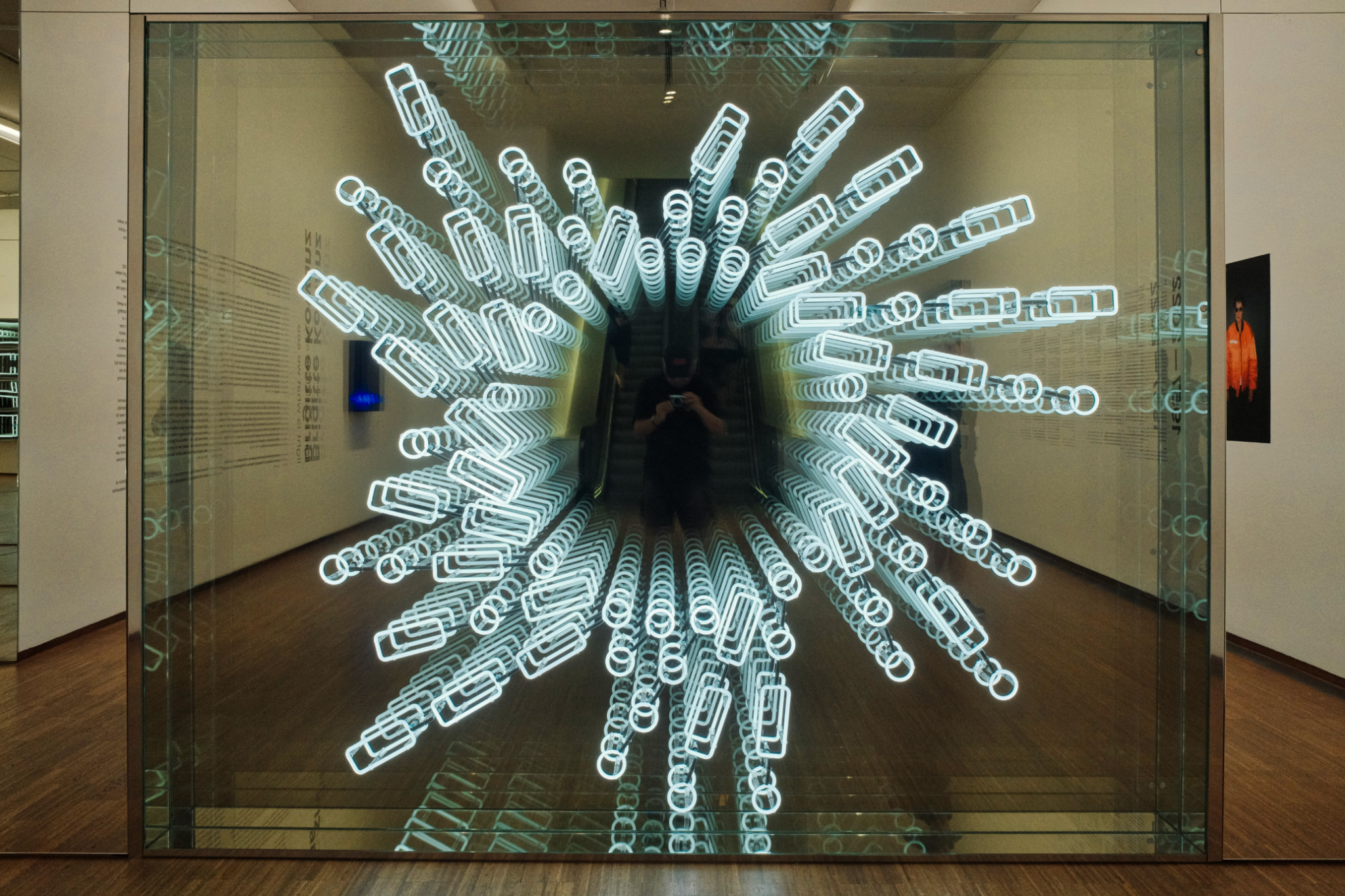
“Alphabet”, 1998/2010.
asap omw imo tbh bif afaik irl idc idk iow hth fyi omg
2021: neon, aluminum, enamel paint
Common vernacular isn’t likely meant to survive with the evolution of the English language, whose rapid changes have been driven by technology and a requirement to say more with less typing. However, construction of this sculpture and the illumination of each initialism suggest a physical “permanence” against the question about whether any or all of these terms will one day become obsolete. But N-G-L, I had to look up some of these abbreviations at the Urban Dictionary …
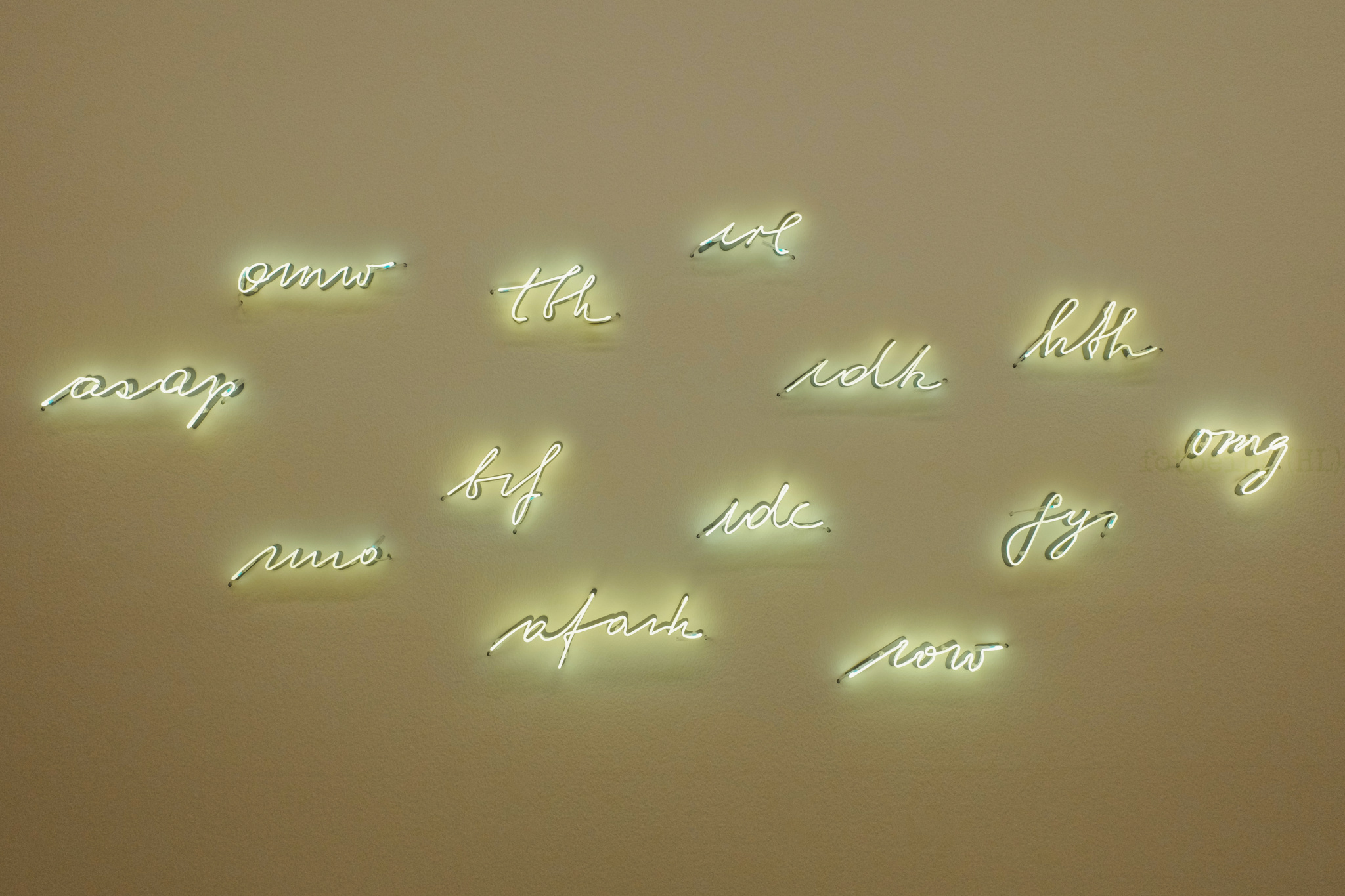
“asap omw imo tbh bif afaik irl idc idk iow hth fyi omg”, 2021.
Echo Hall Flow Nein
2003/2004: neon, mirror
Each word appears vertically from left to right. The large number of internal reflections is a hallmark of her work, asking questions about the placement of the original source and whether there is an apparent endless nature to the artwork.
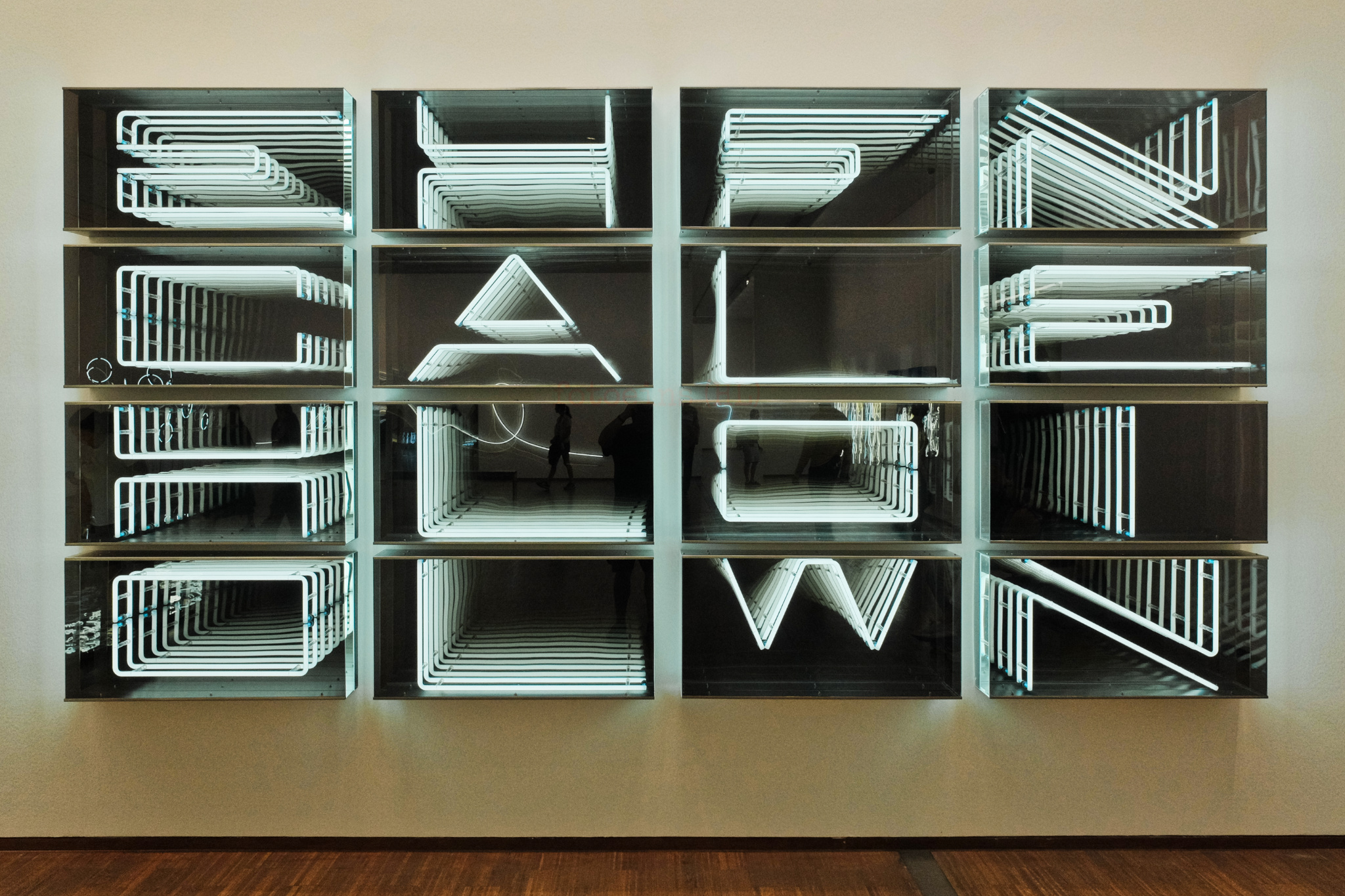
“Echo Hall Flow Nein”, 2003/2004.
Flashback Look Ahead, Light Steps
2021: fluorescent tubes, reflective fabric, cable, pigments, glass, aluminum.
1990: fluorescent tubes.
With suspended fluorescent tubes, Kowanz constructed a stairway “that goes nowhere”, but also creating a “subspace” or “a room within a room”. She had been thinking about “imaginary spaces”, but also about how light can fill a physical space. Interestingly, the description in the press document states that the artwork concept “… arose in 1990 when she was working primarily within the existing parameters of space and the orthogonal coordinate system.”
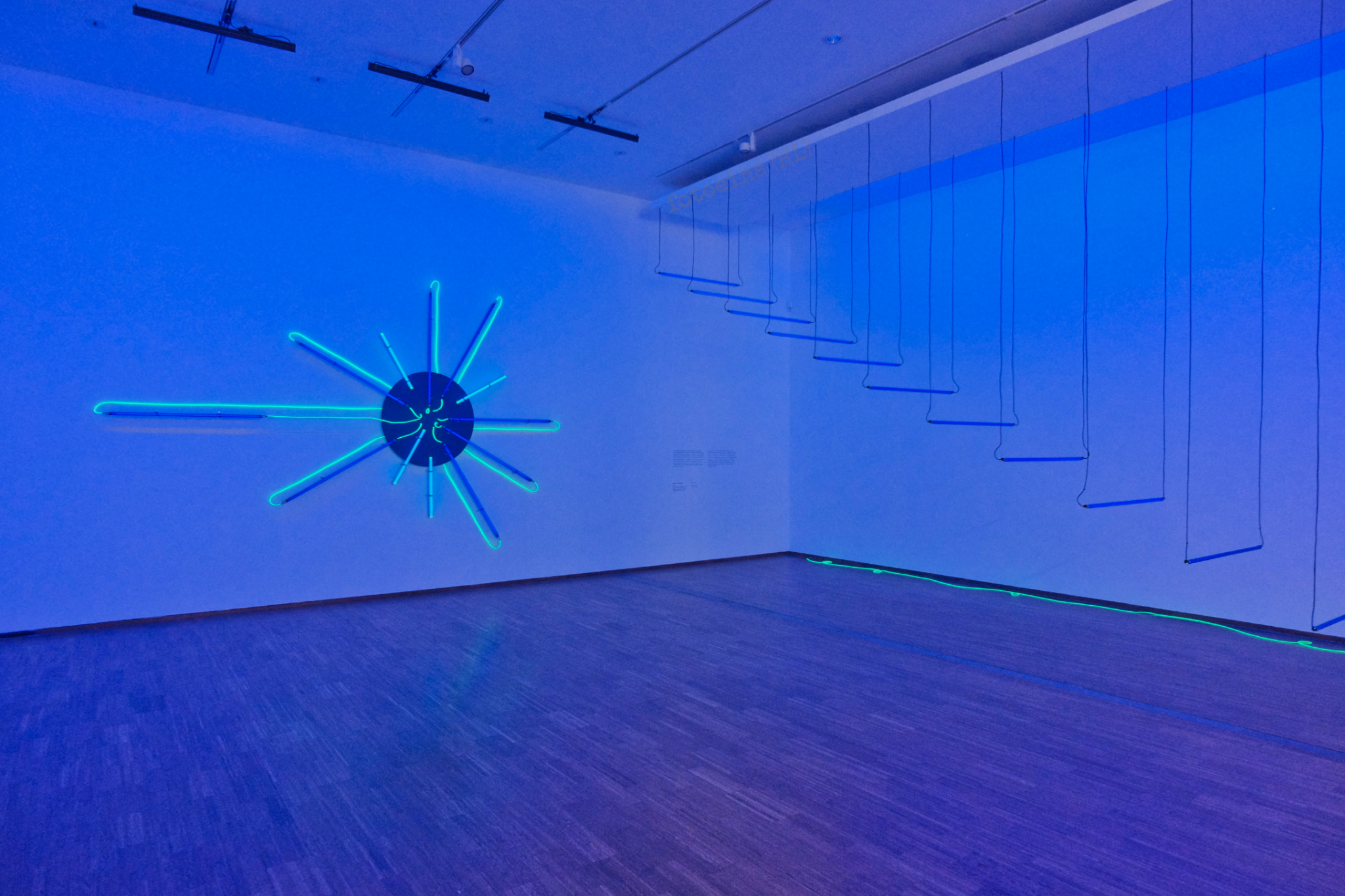
Left: “Flashback Look Ahead”, 2021; upper right: “Light Steps”, 1990.
Forward
2005: neon, stainless steel, enamel paint
Each letter in “forward” is represented by a vertical steel panel and a neon tube painted with the letter’s Morse code.
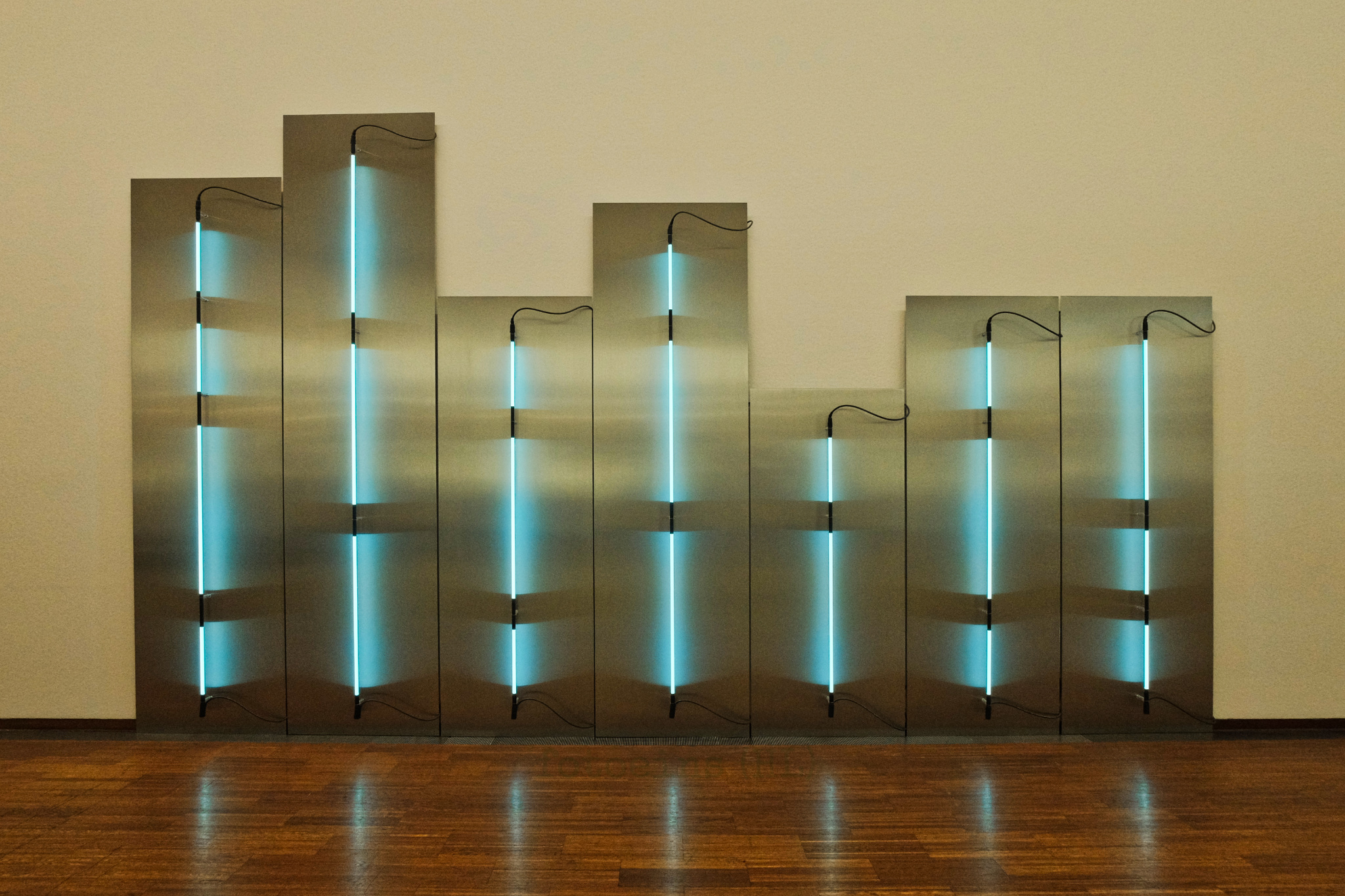
“Forward”, 2005.
Light is what we see
1994/2019: glow lamps, power strips, plexiglass, stainless steel
Nine languages are represented in the sculpture, from which I selected the following four: English, German, Spanish, Chinese in the simplified script. I really like this use of power strips connected in series with individual letter-lamps in their own plugs.
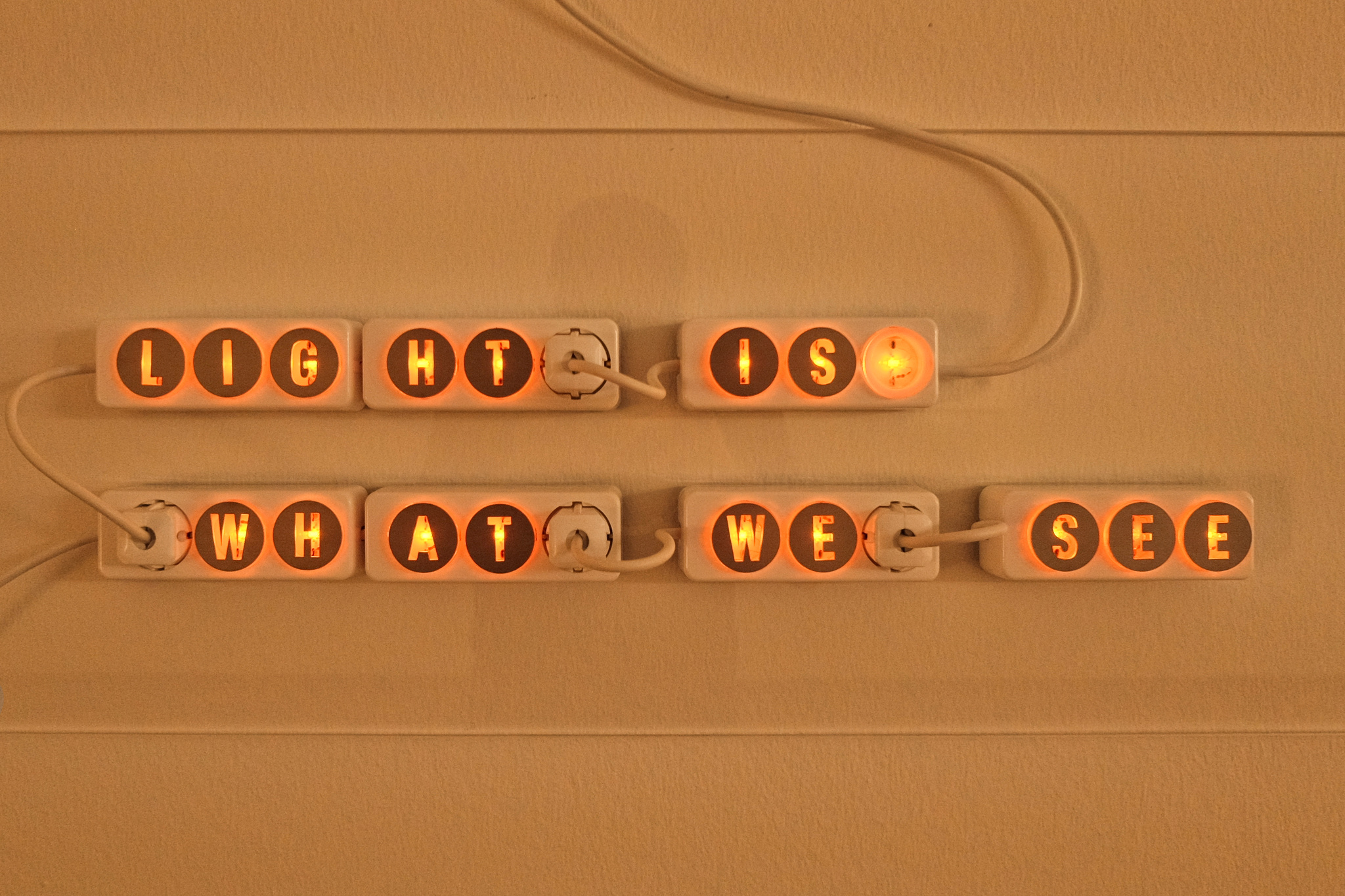
English: “Light is what we see”, 1994/2019.
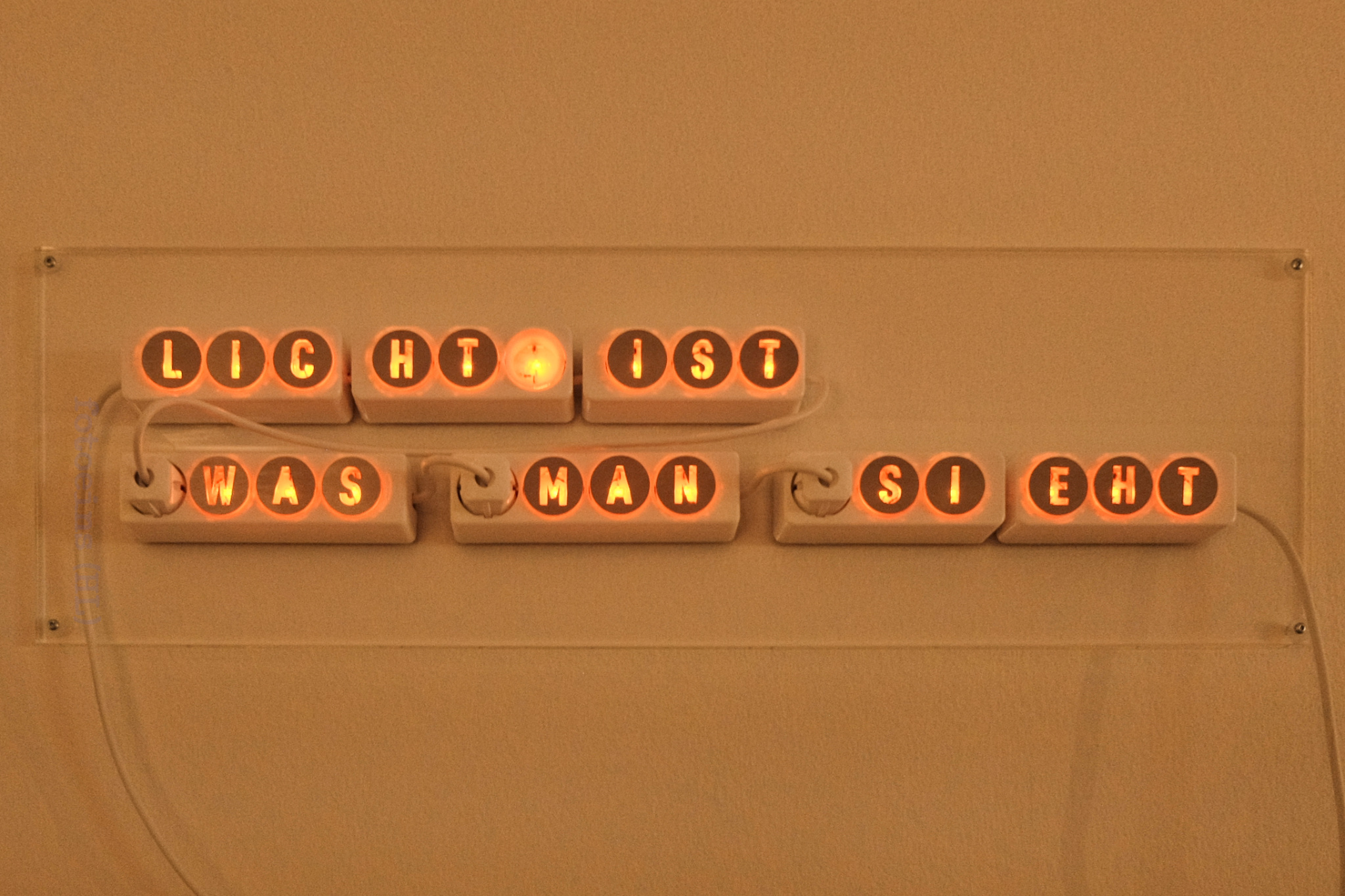
German: “Licht ist was man sieht”, 1994/2019.
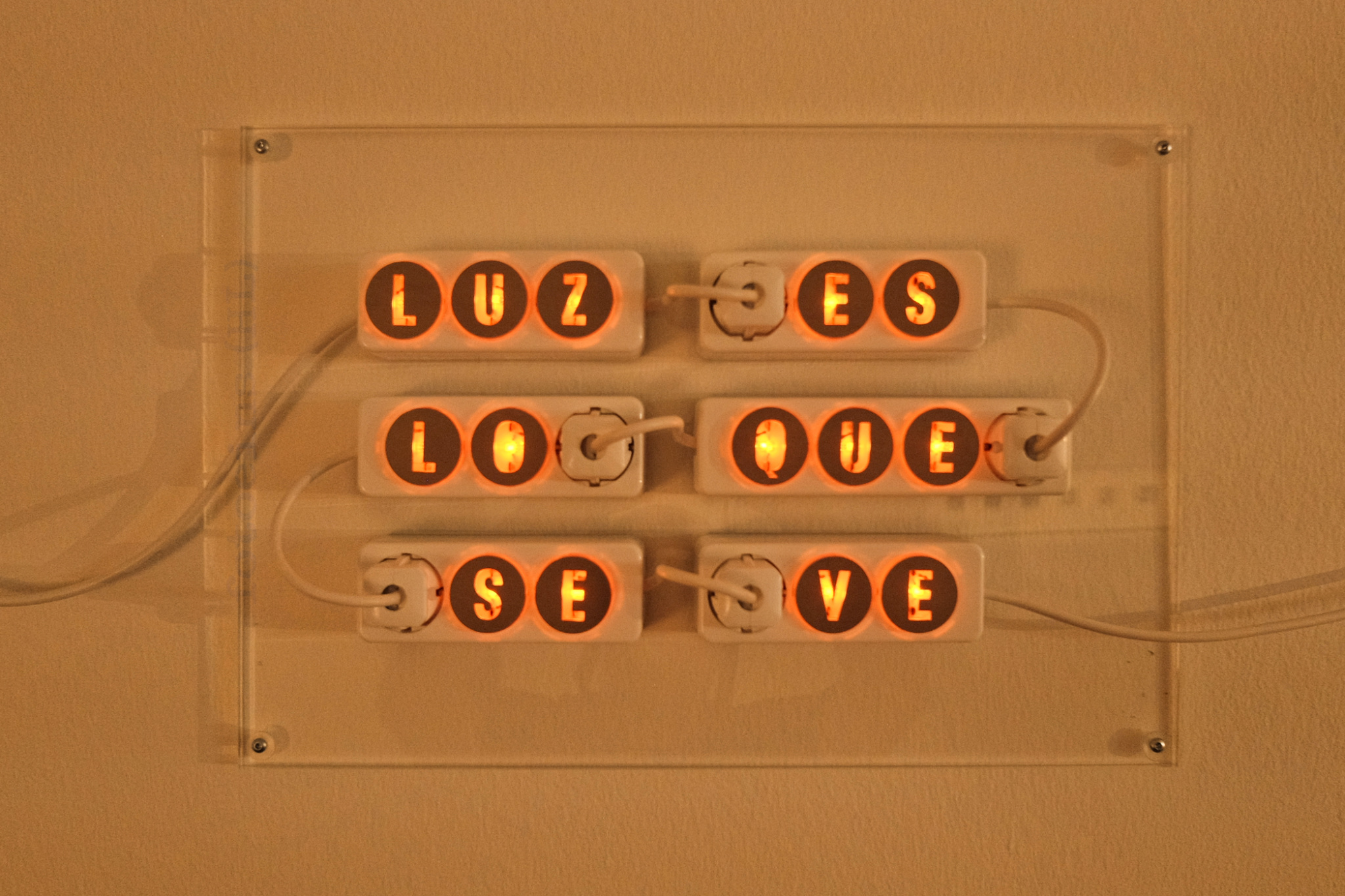
Spanish: “Luz es lo que se ve”, 1994/2019.
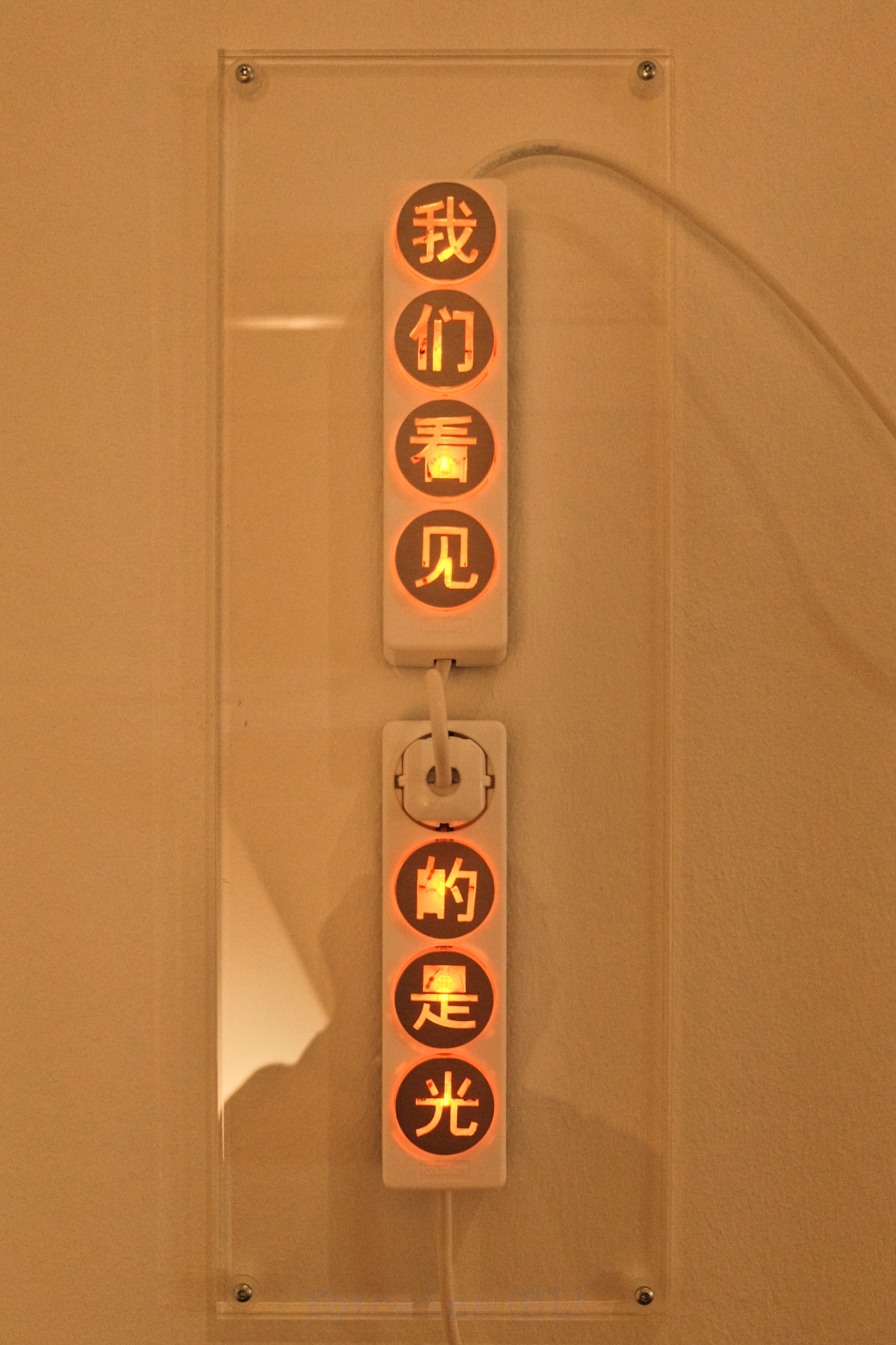
Chinese: “我们看见的是光” in simplified script, 1994/2019. I prefer the following (Cantonese) variant in traditional script: “我哋睇見嘅陽光”.
Morse Alphabet
1998: fluorescent tubes, plexiglass tubes, enamel paint
Each radial spoke represents a letter of the alphabet in Morse code; the letters ‘Z’ and ‘A’ are at the top of the circle in clockwise progression; ‘G’ and ‘T’ are at the 3- and 9 o’clock positions, respectively.
From the Albertina press release:
Systems of signs and notation both old and new—such as Morse code and the digital (i.e., binary) coding employed in computer technology—play a significant role in the oeuvre of Brigitte Kowanz. The Morse alphabet is a central motif with which Kowanz worked for multiple decades. It consists of rudimentary base units: on – off, short – long, dot – dash. These can be realized as light signals, acoustic signals, or graphic elements—and in the intermediate space formed by their presence and absence, information arises. Morse code is an early binary encoding method that made it possible for the first time to transmit information over long distances at the speed of light. Transmission and reception are effectively simultaneous. This sign system hence became a foundational element of our present-day digital society and the resulting acceleration of our lived reality.
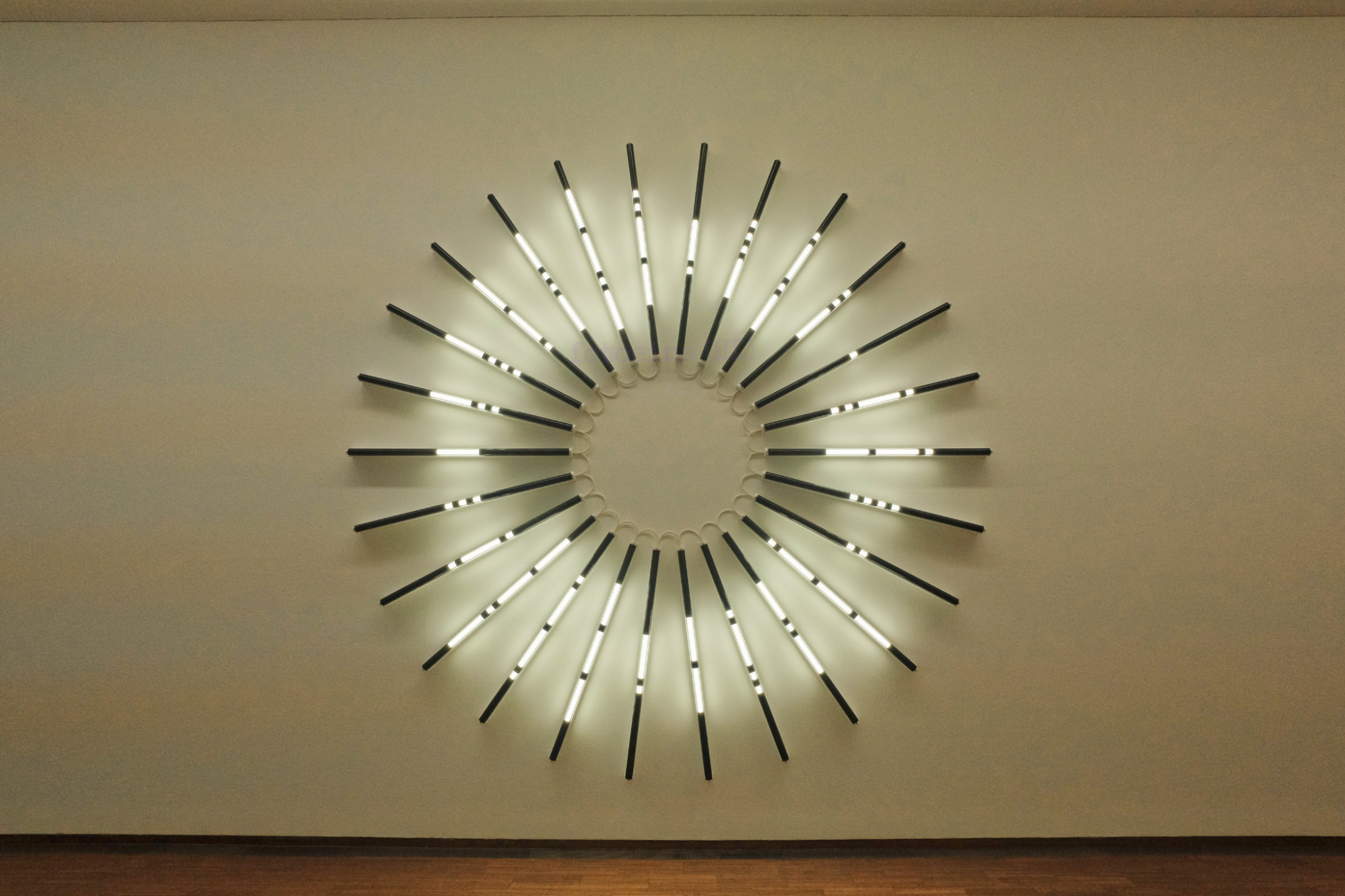
“Morse Alphabet”, 1998.
Rund um die Uhr (Around the clock)
1996/2011: neon, mirror
With these glowing cubes lying flat on the floor, multiple reflections of varying sizes appear within the mirrored box. As in “Echo Hall Flow Nein” above, the seeming endless repetitions implies the endless nature of time, and how as the viewer looking down into the cube, I’ve become a part of the sculpture itself, caught and trapped among the separate reflections in a time-loop.
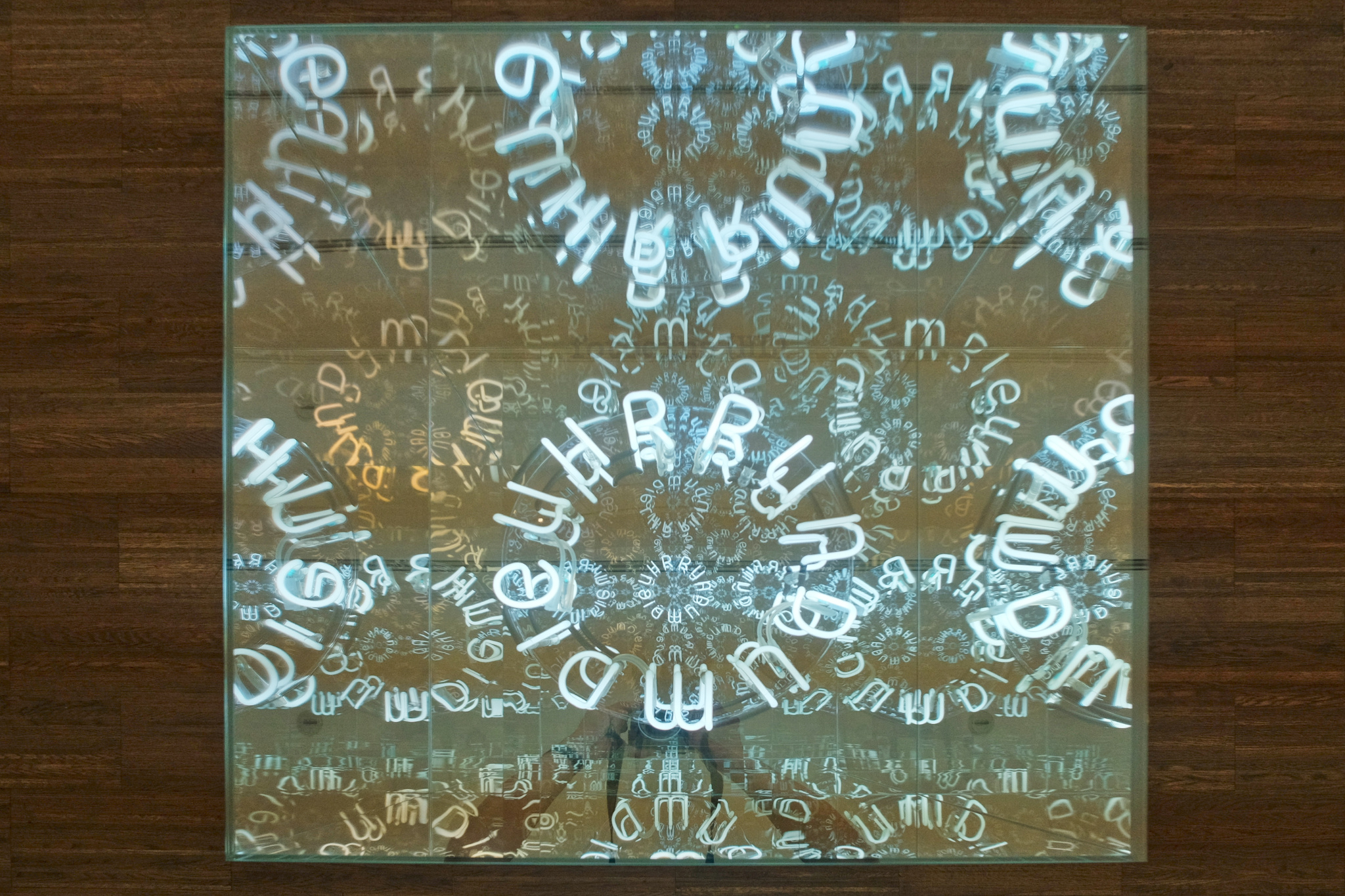
“Rund um die Uhr”, 1996/2011.
Signature
2015: neon, mirror
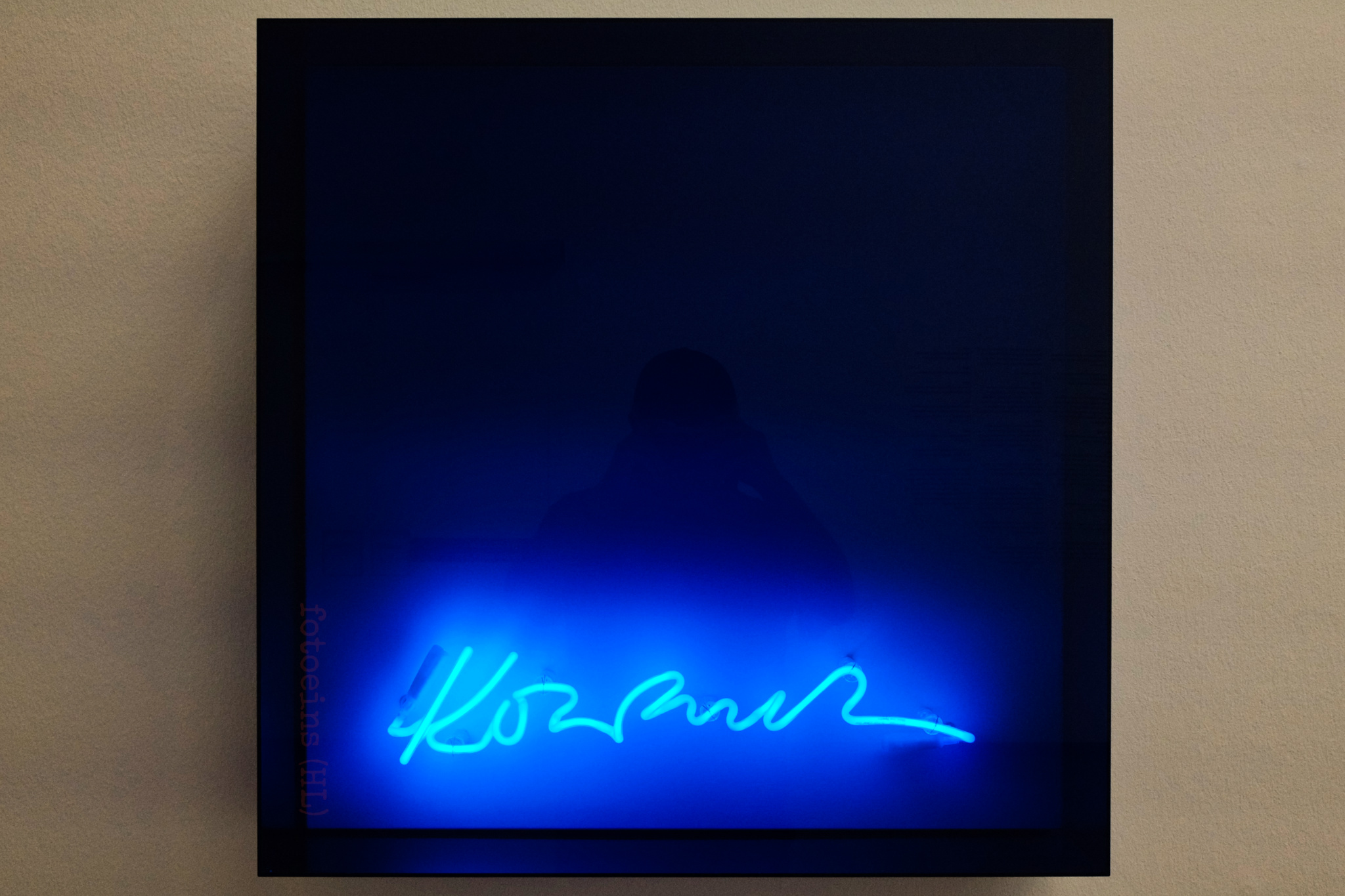
“Kowanz” in the cursive.
Speed of Light/4m
1989/2007: neon, chrome steel
At 4 metres (13.1 feet) in length, the art piece appears simply and directly as “0,000000013342563”. The numeric value represents 13.3 nanoseconds (1.33 × 10⁻⁸ sec), the time elapsed for light to traverse the length of the sculpture. The travel time can be calculated as the length divided by the speed of light, whose value is 299792458 metres per second. The resulting value of 13.3 nanoseconds is difficult to fathom at a human level, because this time interval is minuscule and the speed of light is very large.
What Kowanz achieves is a visual representation of a declaration, that the number exists as fact. The number visible as the sculpture itself is not only directly related to the physical length of the sculpture, but also to the brilliant neon light as a medium, conveying both information and meaning. This is my favourite artwork in the exhibition.
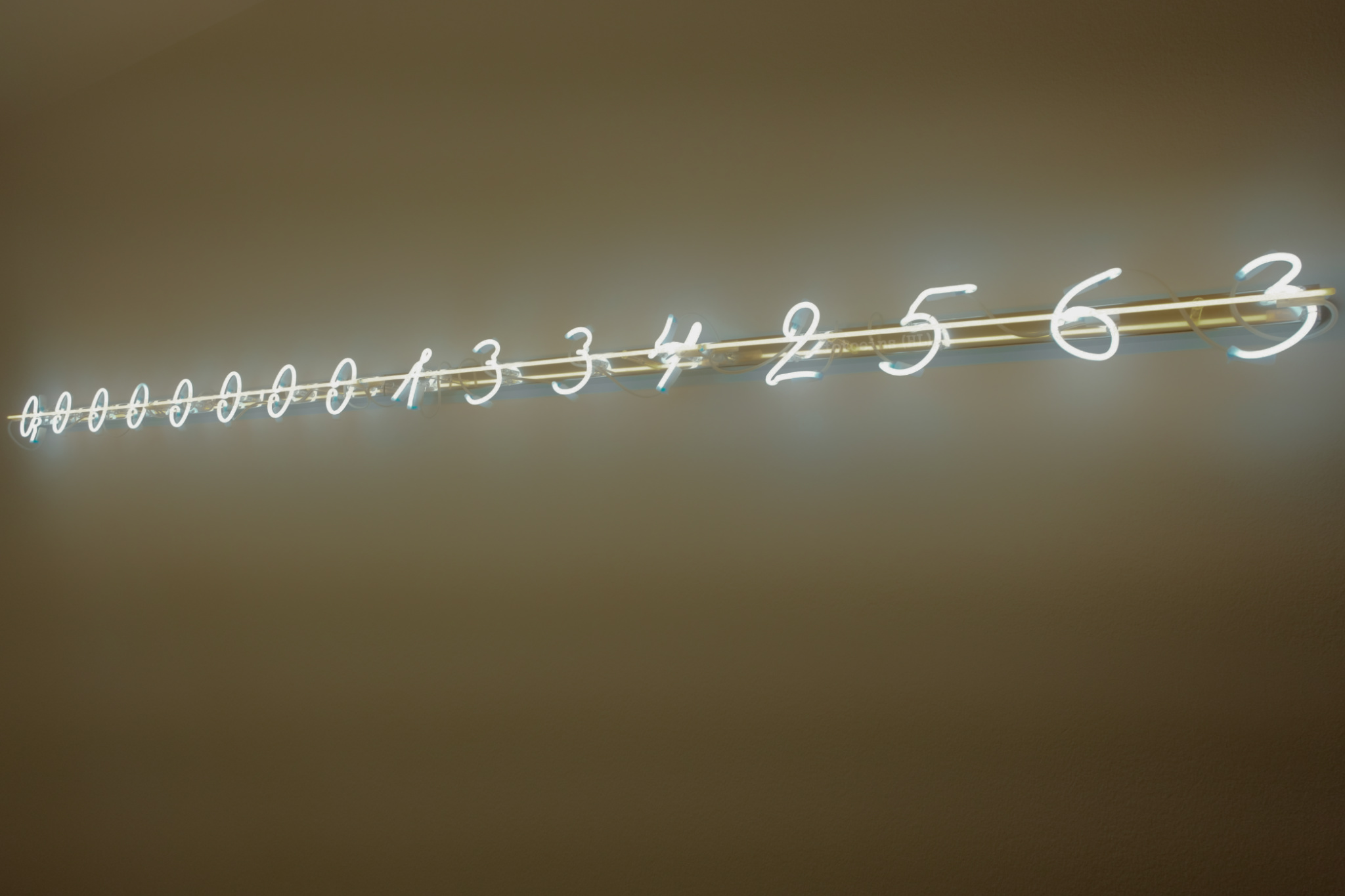
“Speed of Light sec/4m”, 1989/2007.
www 12.03.1989 06.08.1991
2017: neon, mirror, aluminum, enamel paint
From the Albertina press release:
Light, language, and mirrors are the basic elements of the installation www 12.03.1989 06.08.1991 , in which Kowanz devotes herself to the light speed of the Internet as a tool for communication. This work centers on a looping ribbon of light running atop two encoded series of numbers that refer to two key Internet milestones: the initial proposal for the World Wide Web (WWW) at the CERN physics facility on 12 March 1989 and global accessibility of the WWW beginning 6 August 1991. The numbers that represent these dates are visualized as Morse characters, which themselves were the earliest standardized mode of language transmission based on binary base units and light speed. They thus represent the basis of all post-analog, digitized communication systems such as the Internet. This work hence conveys something like a biography of the World Wide Web in an enciphered form that encapsulates its very origin.
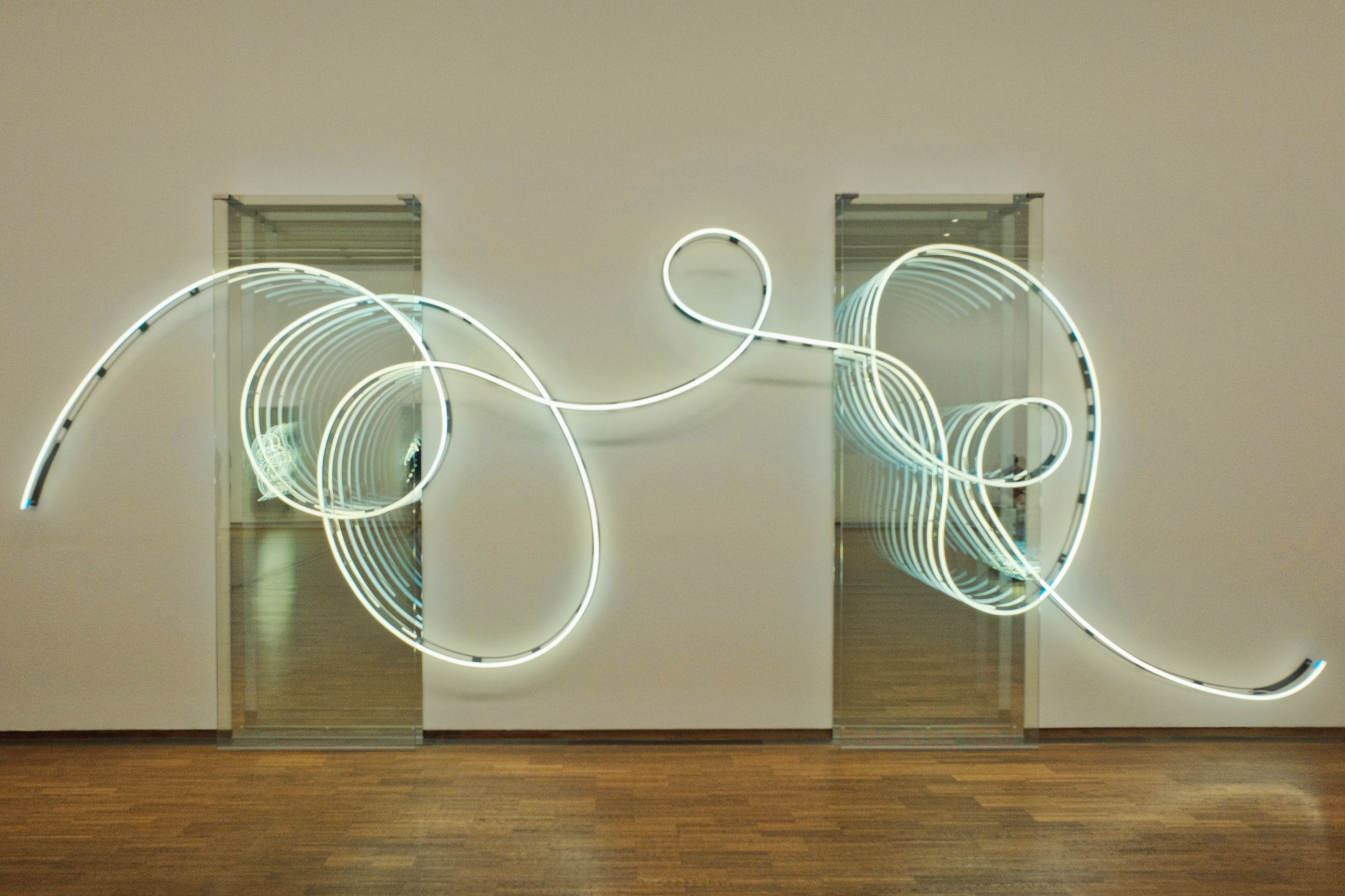
“www 12.03.1989 06.08.1991”, 2017.
1×8
1988/2019: neon, fluorescent paint, pigments, glass, wood
From the Albertina press release:
Tubes and bottles filled with colorful self-luminous substances populate Brigitte Kowanz’s efforts to advance painting’s spatialization and dematerialization. 1988 witnessed the creation of “1×8”, a square assemblage consisting of eight bottles, each filled with fluorescent and phosphorescent pigments and arranged at equal distances around an empty center. When exposed to a black light, they glow blue and red. These alienated, auratically charged everyday objects recall Marcel Duchamp’s famous ‘readymades’, especially his early 20th-century “Bottle Rack”. Installations like these testify to an analytical deconstruction of painting into its components of light, pigment, and support. This work appears sober and mundane in plain daylight, and its self-referential title lays out the mathematical definition of its formal configuration.
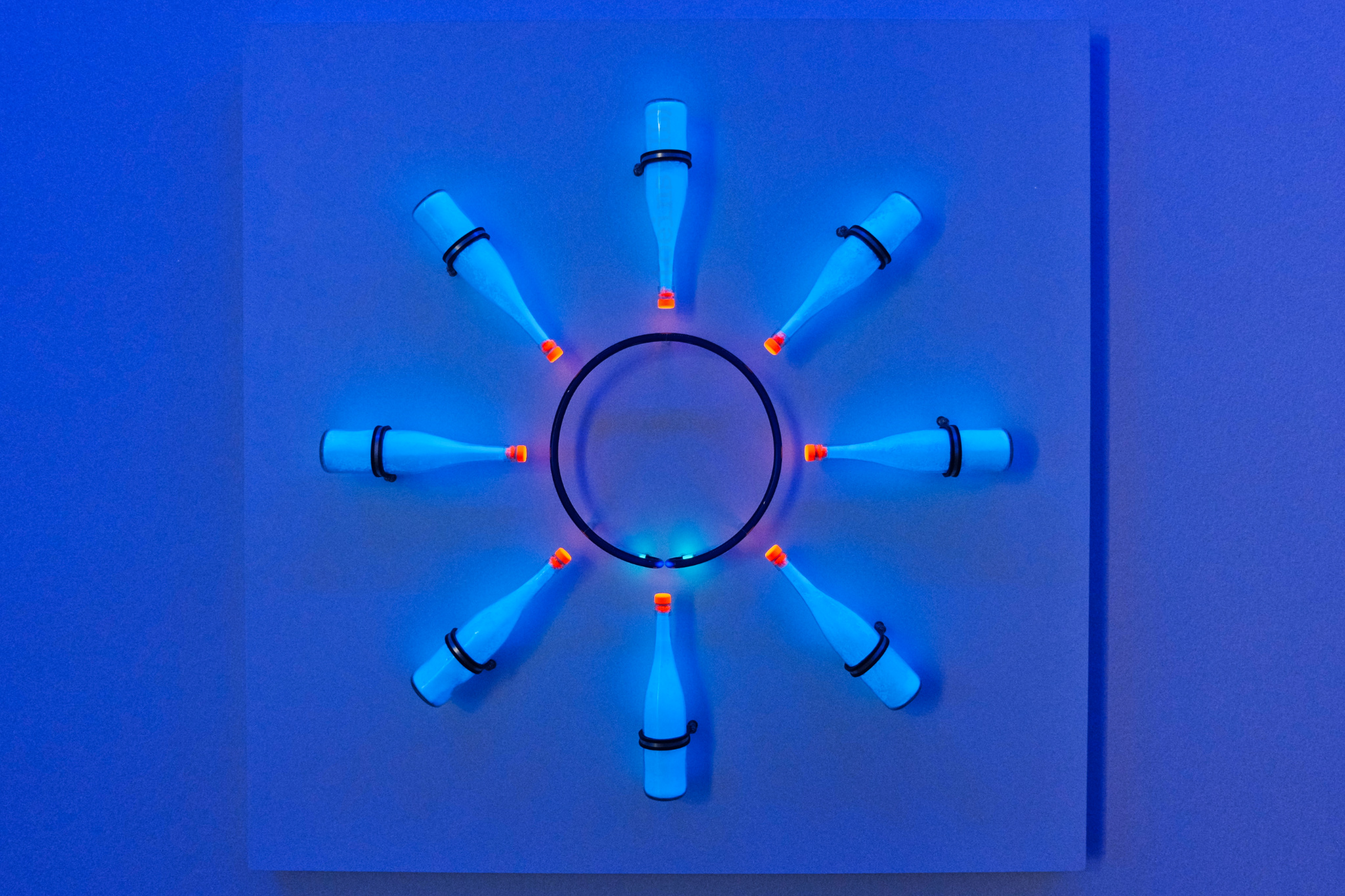
“1×8”, 1988.
4×3
1988/2021: fluorescent tubes, fluorescent paint, pigments, glass, wood
Not only is the sculpture more impactful visually under black light, both “glow and “symmetry” offer something of a “brutally rational perspective” about what it means to “paint an object.” But seriously, why does this remind me of intercontinental missiles?
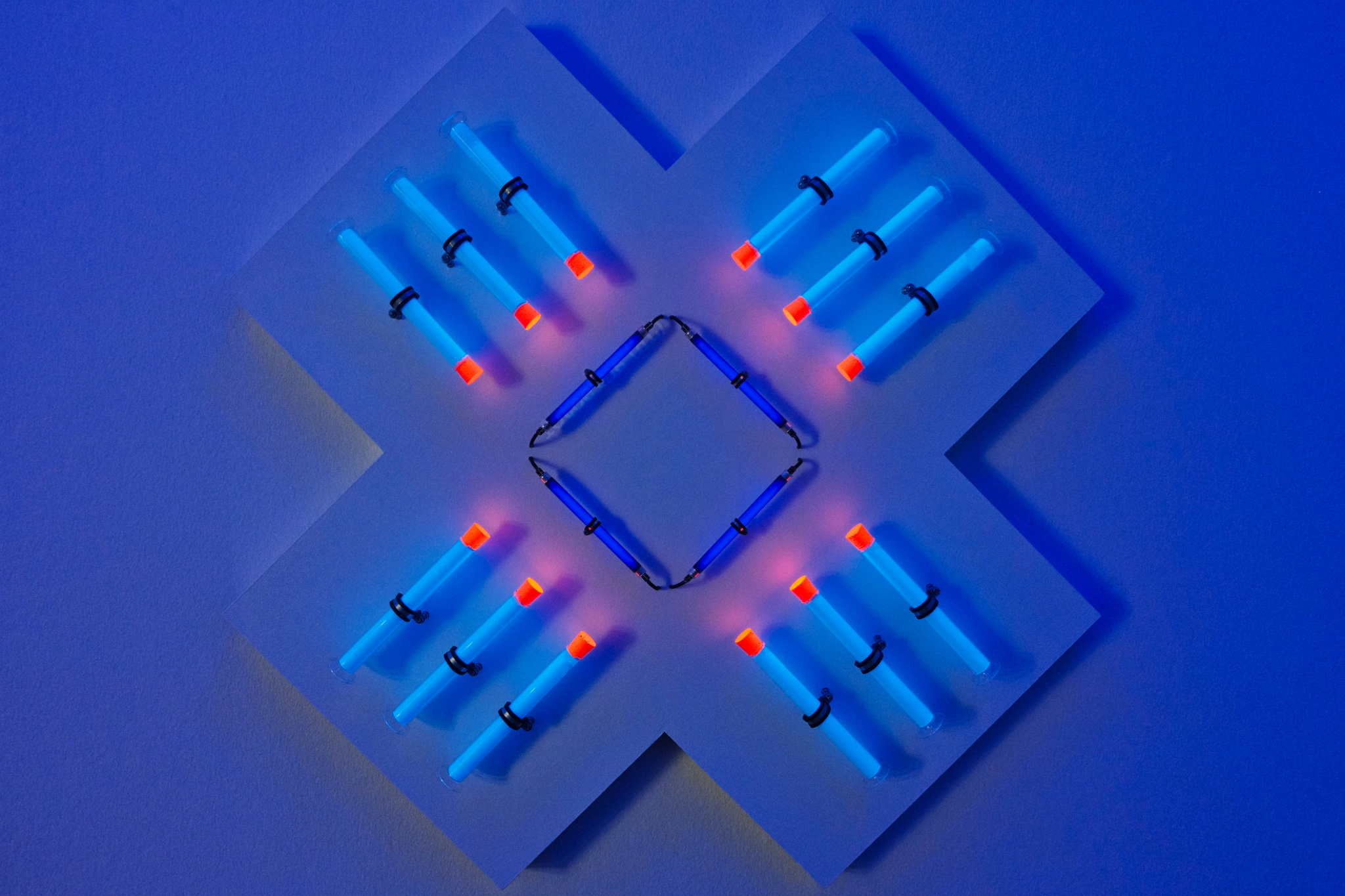
“4×3”, 1988/2021.
Albertina Wien
The rooms in which Kowanz’s works take up space and are filled with light.
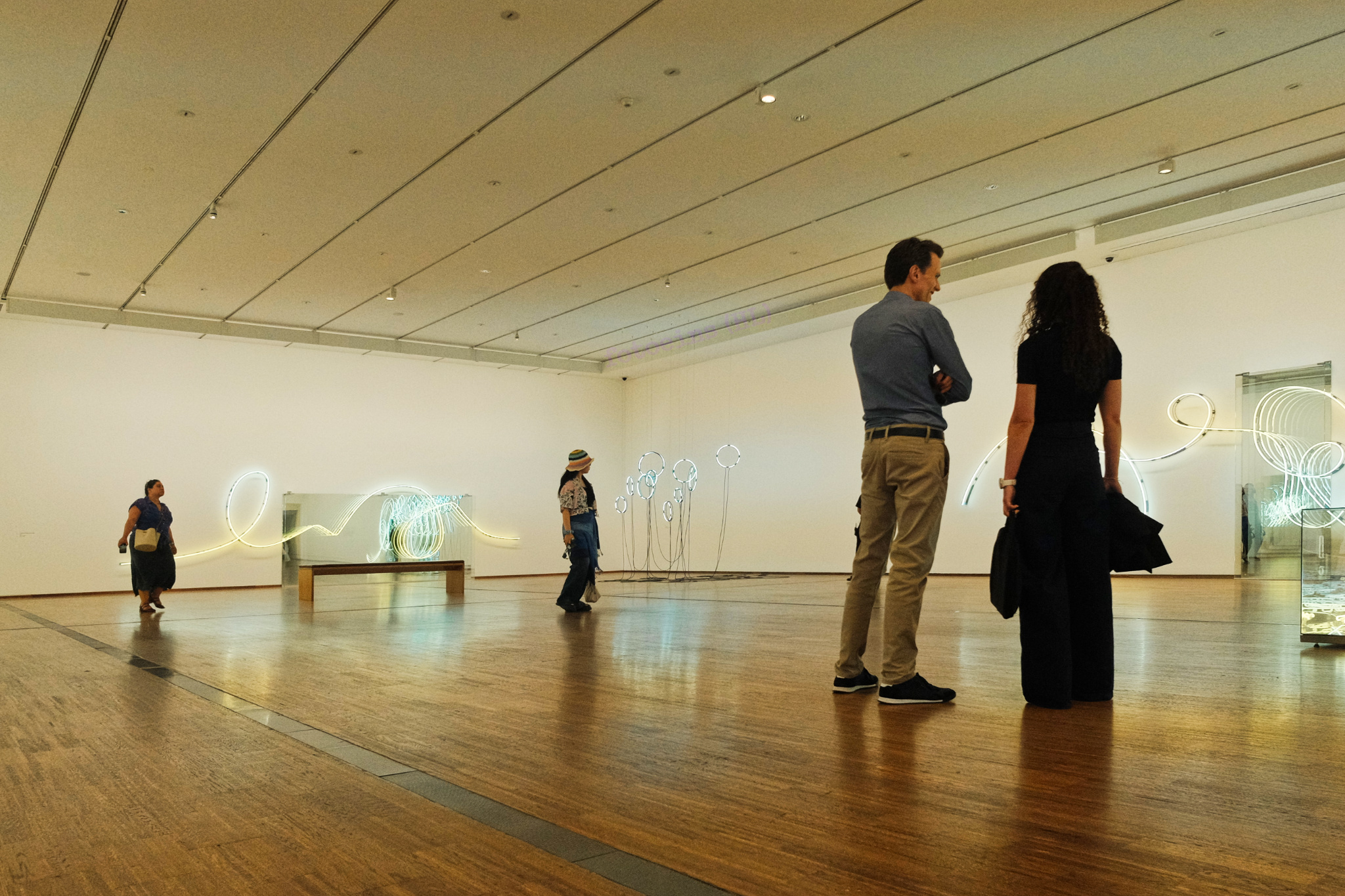
Bastion Hall, in the spacious basement of the Albertina.
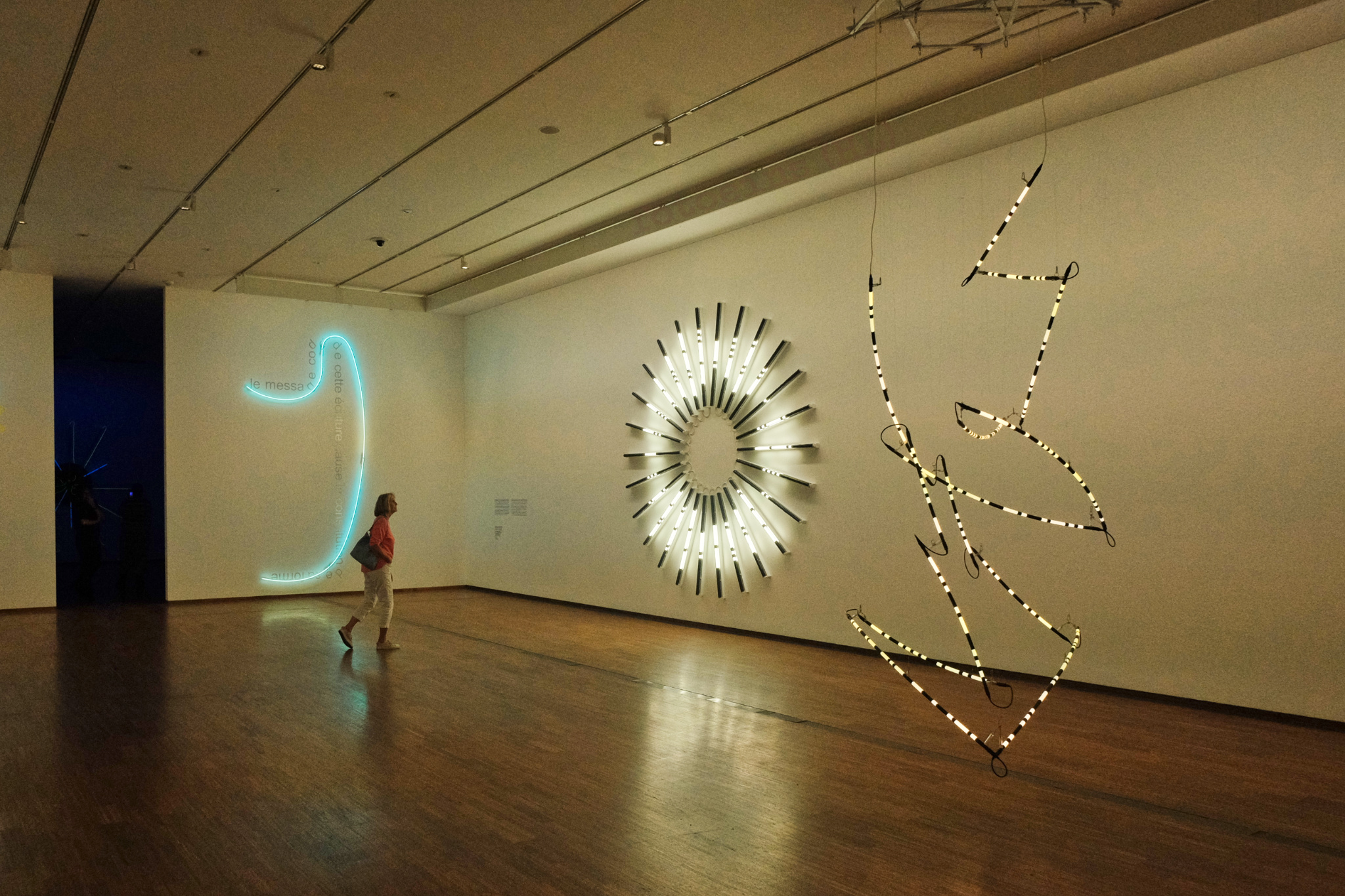
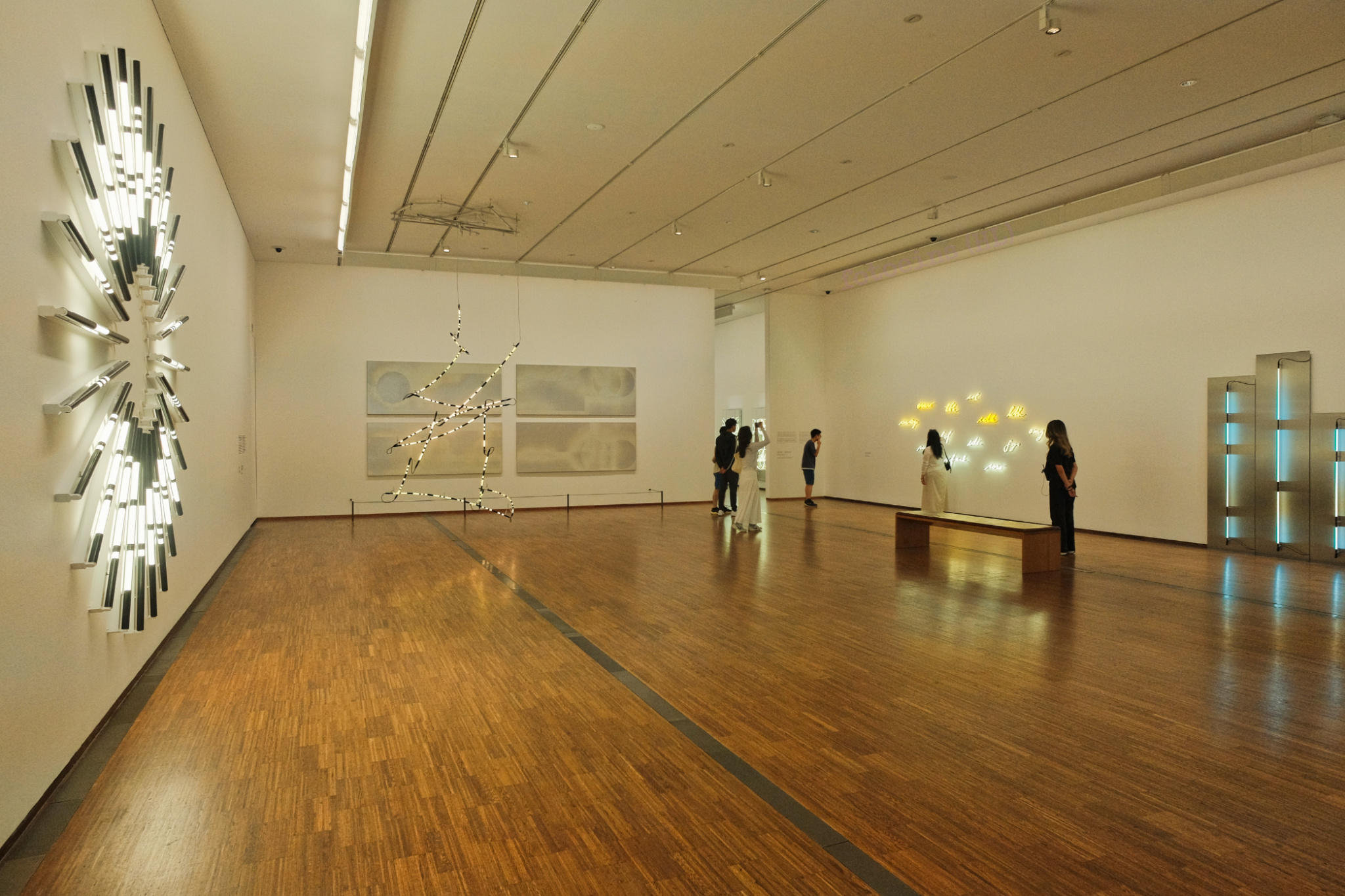
Location
The retrospective exhibition “Light Is What We See” was on display at the Albertina from 18 July 2025 to 9 November 2025. Generally, the Albertina Vienna museum-gallery is open daily from 10am to 6pm with extended hours to 9pm on both Wednesday and Friday.
( View this location also on OpenStreetMap. )
I received neither pre-visit support nor post-visit compensation for this post. I made all photos above at the Albertina Vienna on 23 July 2025 with a Fujifilm X70 fixed-lens prime. This post appears on Fotoeins Fotografie at fotoeins DOT com as https://wp.me/p1BIdT-wqv.
 Fotoeins Fotografie
Please leave your comments below