Berlin’s Hamburger Bhf: no trains, only transition
Above: Appearing in Raleway font is the additional line: This is not a train station.”
There is no meat or bread here.
There are also no trains here. No longer.
There is only art, and in this instance, there is a contemporary art piece that’s a historical nod.
The artwork “Transition” (2009–present) by Polish artist Robert Kuśmirowski is housed in the Hamburger Bahnhof – Nationalgalerie der Gegenwart, a museum of late-20th and 21st-century art in the German capital city of Berlin. Kuśmirowski’s piece refers to the building’s past and its present. “Transition” is a part of the ensemble “Unendliche Ausstellung” (Eternal Exhibition”) on permanent display throughout the Hamburger Bahnhof gallery-museum.
Hamburger Bahnhof (Hamburg Railway Station)
• In Berlin Mitte, the train station Hamburger Bahnhof opened in 1846 as terminus of the Berlin-Hamburg railway.
• In 1884, the train station closes with passenger- and freight-service diverted to nearby Lehrter station.
• In 1904, the building becomes the Museum of Transport and Construction (Verkehrs- und Baumuseum).
• The building suffers severe damage in the Second World War and lies dormant and derelict until 1984.
• In 1996, the building reopens as the Museum fü Gegenwart (Museum of Contemporary Art).
• In late-2022, both German federal- and Berlin state-governments secures joint-possession and -operation of the museum, becoming the Hamburger Bahnhof – Nationalgalerie der Gegenwart contemporary art museum as part of the Berlin National Gallery.
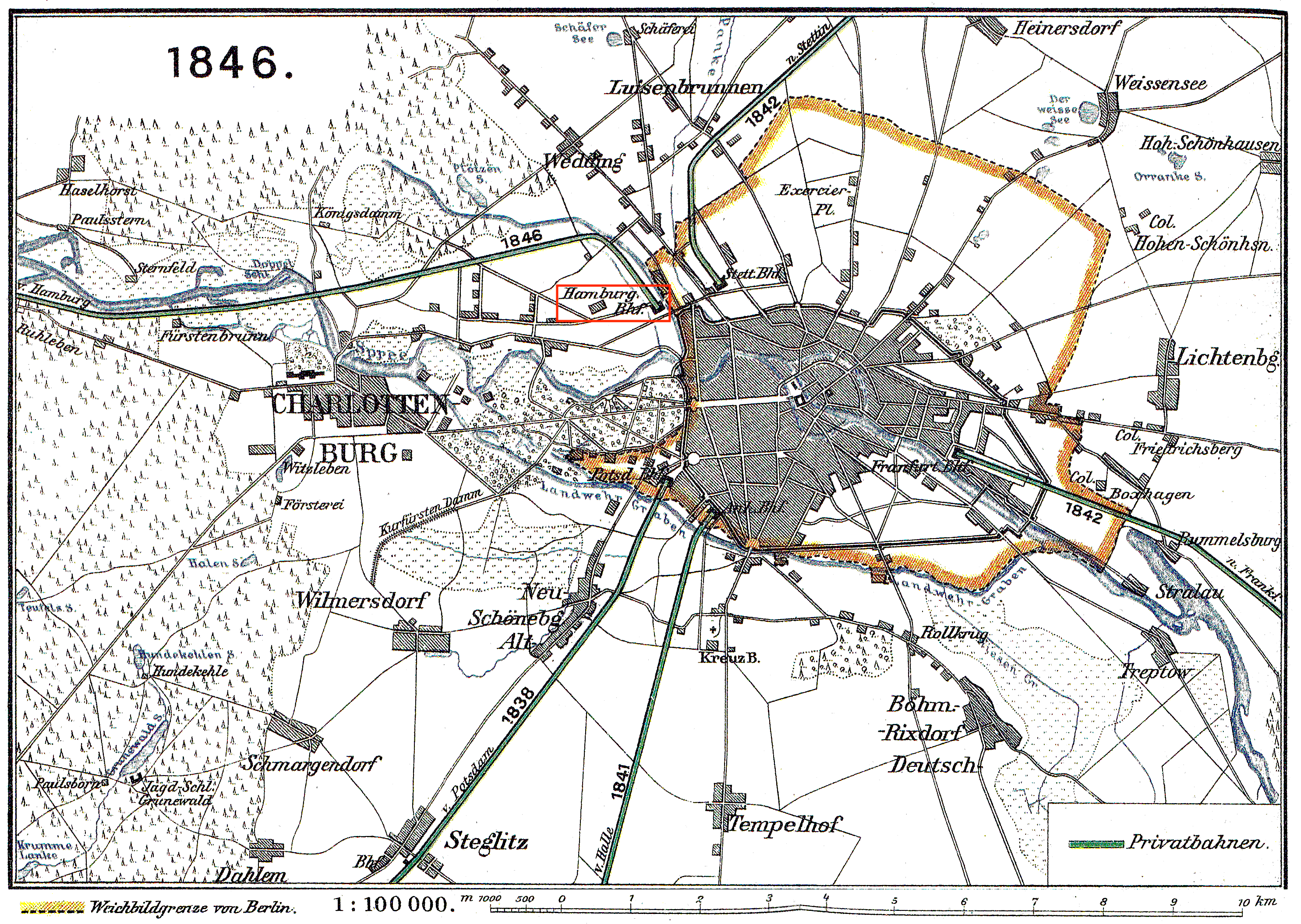
Berlin and its railways in 1846. A thick orange-brown line marks Berlin’s city limits (Weichbildgrenze). Thick green lines indicate private railway lines of the time. A red rectangle indicates the location of Hamburger Bahnhof. “Berlin und seine Eisenbahnen 1846-1896.” Herausgeber im Auftrag des Königlich-preußischen Ministers für Öffentliche Arbeiten. [dem Verein Deutscher Eisenbahnverwaltungen zur Feier seines Fünfzigjährigen Bestehens am 28. Juli 1896 überreicht] Berlin: Springer, 1896. Ministerium für Öffentliche Arbeiten, Königreich Preußen, edited by user:L.Willms on Wikipedia.
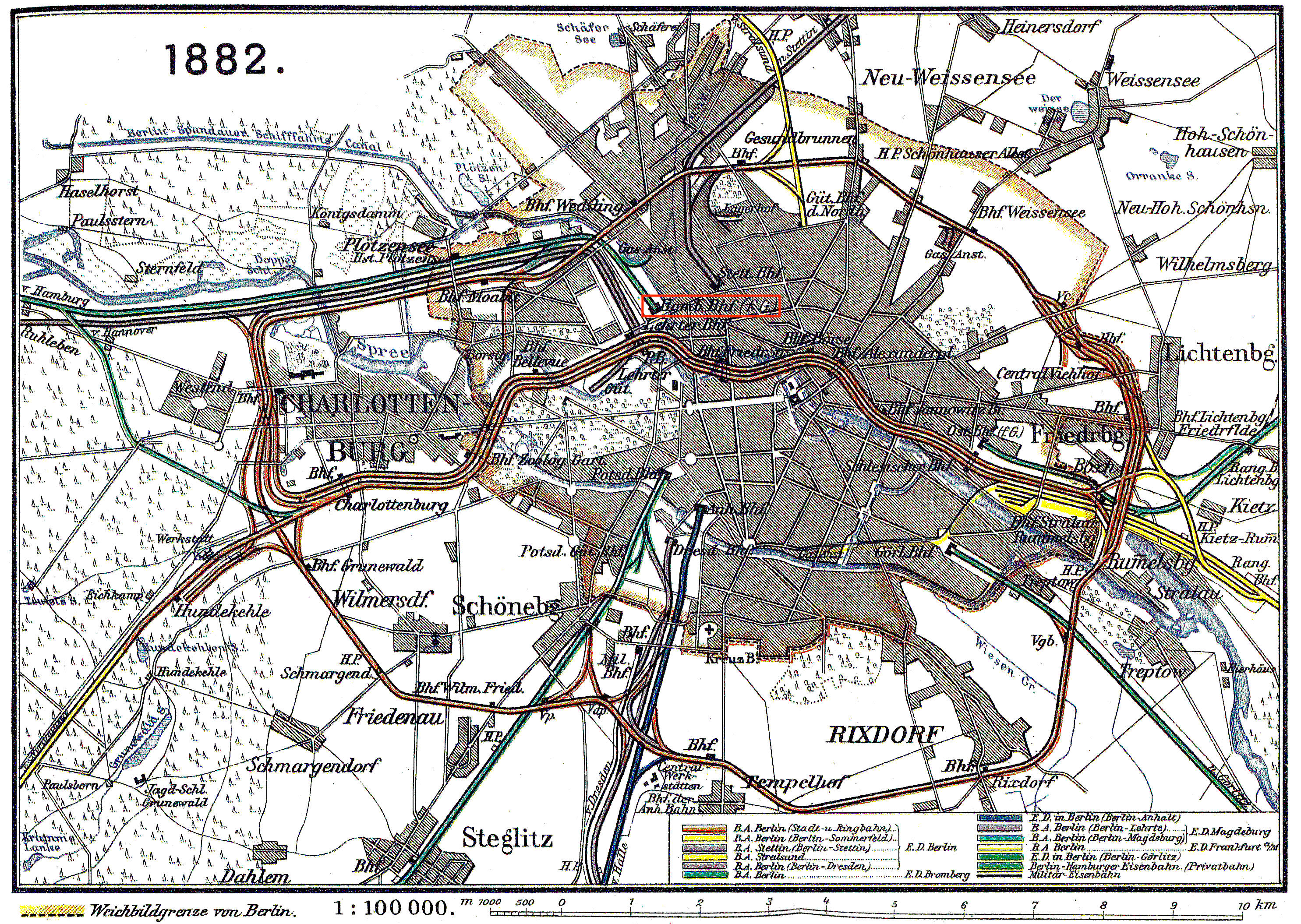
Berlin and its railways in 1882. A thick bronze-brown line marks Berlin’s expanded city linits (Weichbildgrenze). Orange lines indicate Berlin’s east-west Stadtbahn and Ringbahn circle-line railways. A red rectangle indicates the location of Hamburger Bahnhof. “Berlin und seine Eisenbahnen 1846-1896.” Herausgeber im Auftrag des Königlich-preußischen Ministers für Öffentliche Arbeiten. [dem Verein Deutscher Eisenbahnverwaltungen zur Feier seines Fünfzigjährigen Bestehens am 28. Juli 1896 überreicht] Berlin: Springer, 1896. Ministerium für Öffentliche Arbeiten, Königreich Preußen, edited by user:L.Willms on Wikipedia.
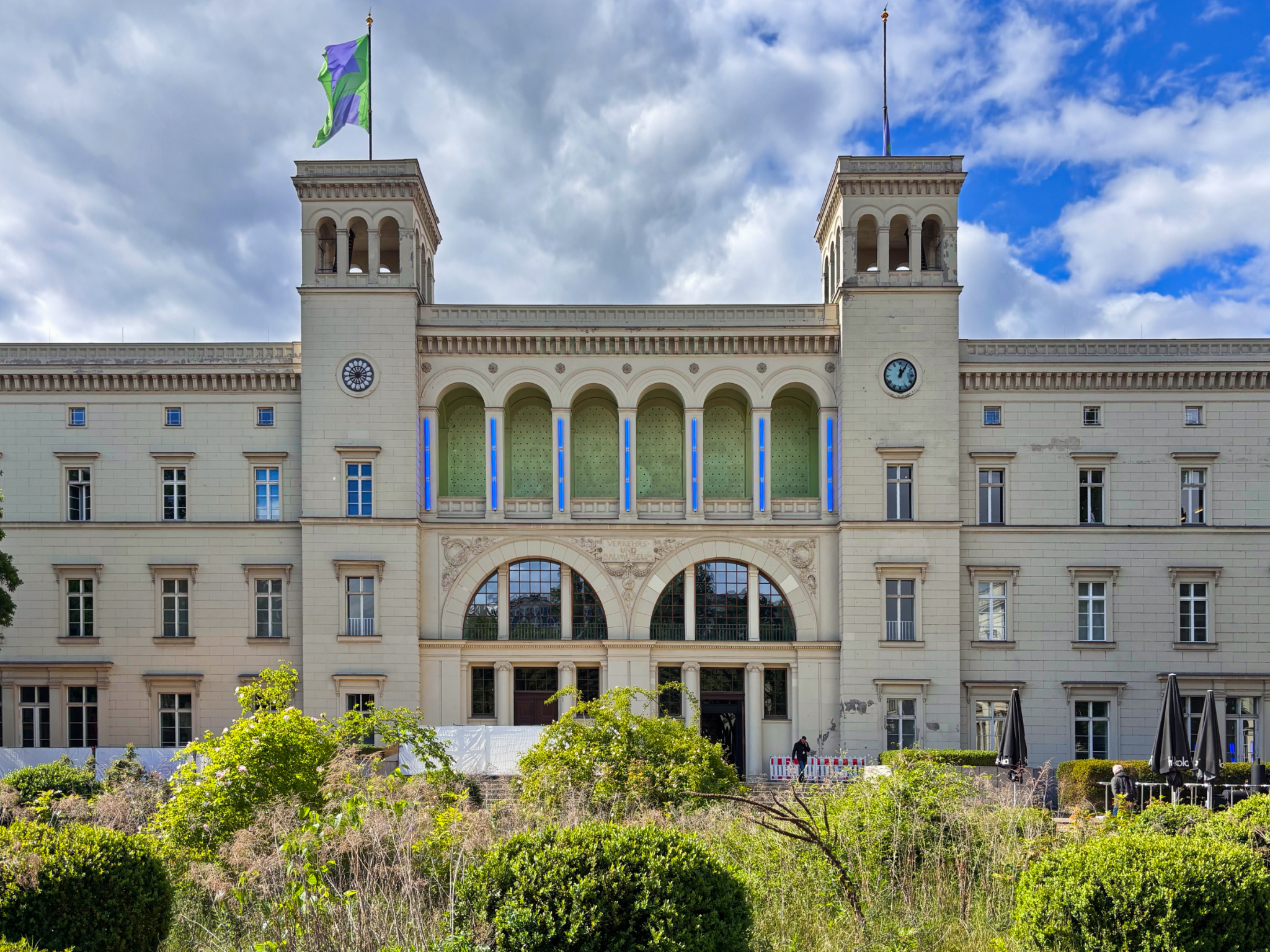
Front facade of Hamburger Bahnhof – Nationalgalerie der Gegenwart. The structure is the only former railway station building in Berlin to have survived from the late 19th-century. Photo, 27 May 2025 (P15).
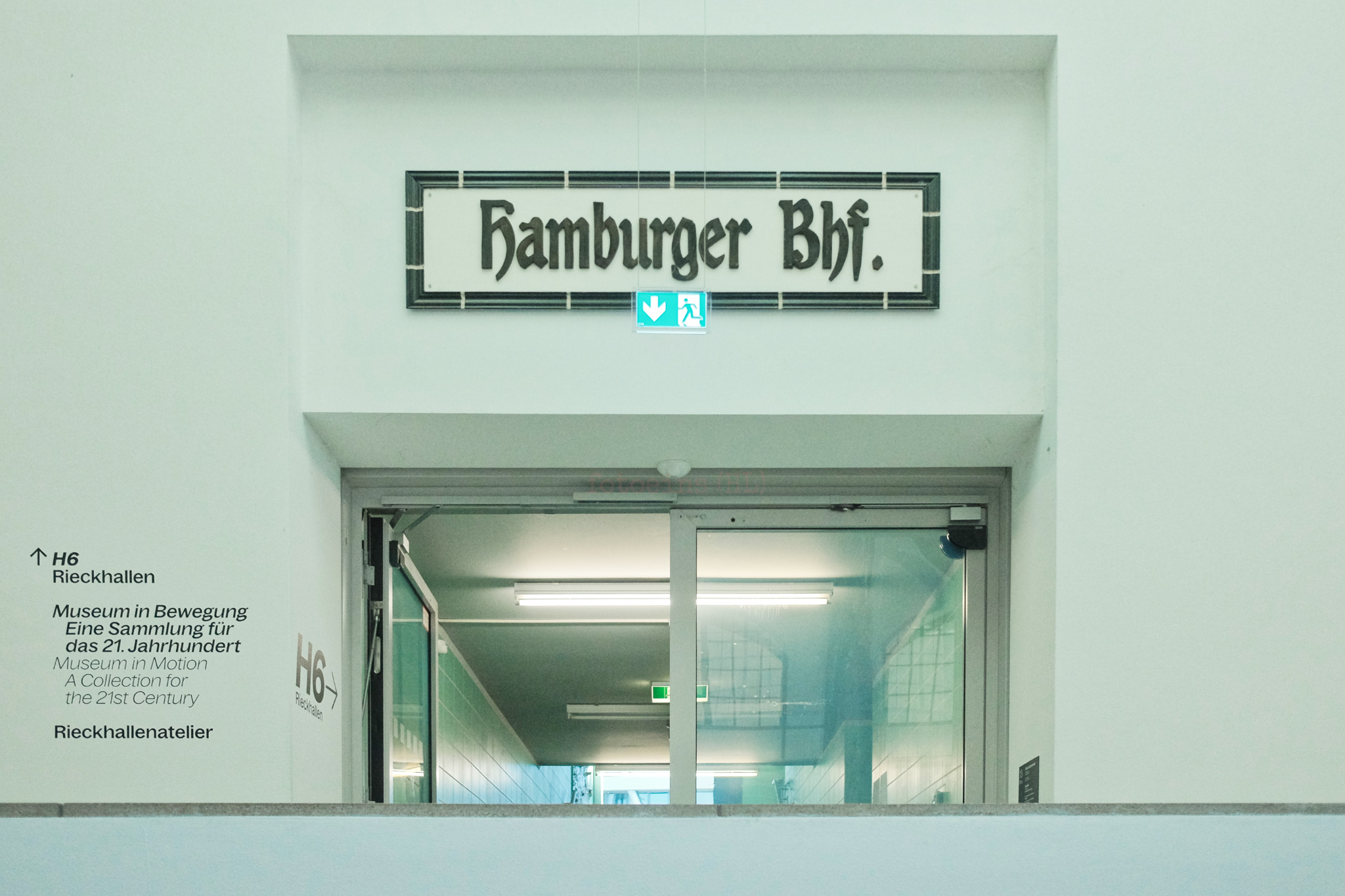
Appearing above the entrance to a passageway between the main building and an additional building (Rieckhallen) is the beginning of the artwork “Transition” by Robert Kuśmirowski. Hamburger Bahnhof Nationalgalerie der Gegenwart, 13 Jun 2025 (X70).
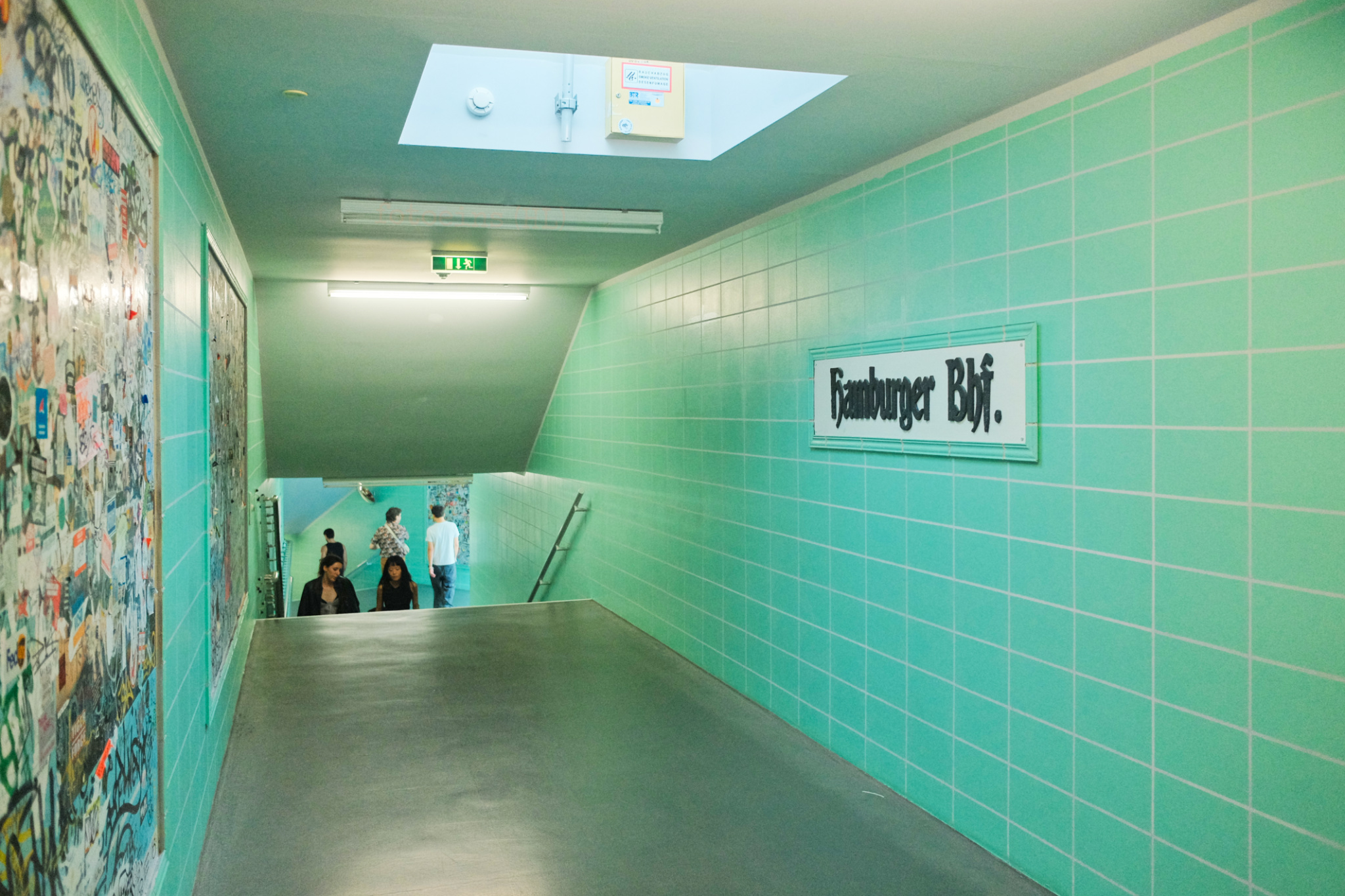
In the passageway is the rest of “Transition” by Robert Kuśmirowski. Hamburger Bahnhof Nationalgalerie der Gegenwart, 13 Jun 2025 (X70).
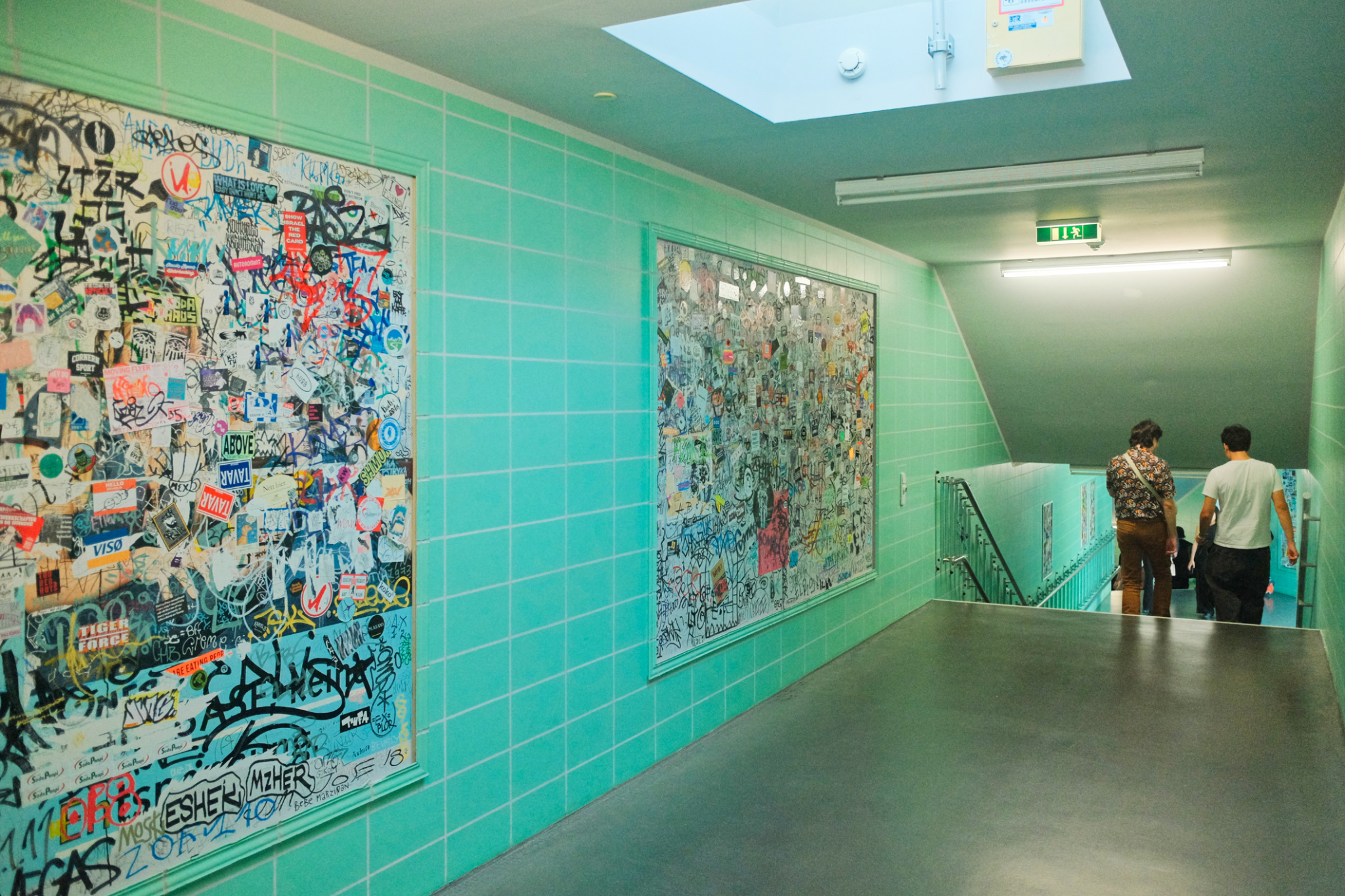
In the passageway is the rest of “Transition” by Robert Kuśmirowski. Hamburger Bahnhof Nationalgalerie der Gegenwart, 13 Jun 2025 (X70).
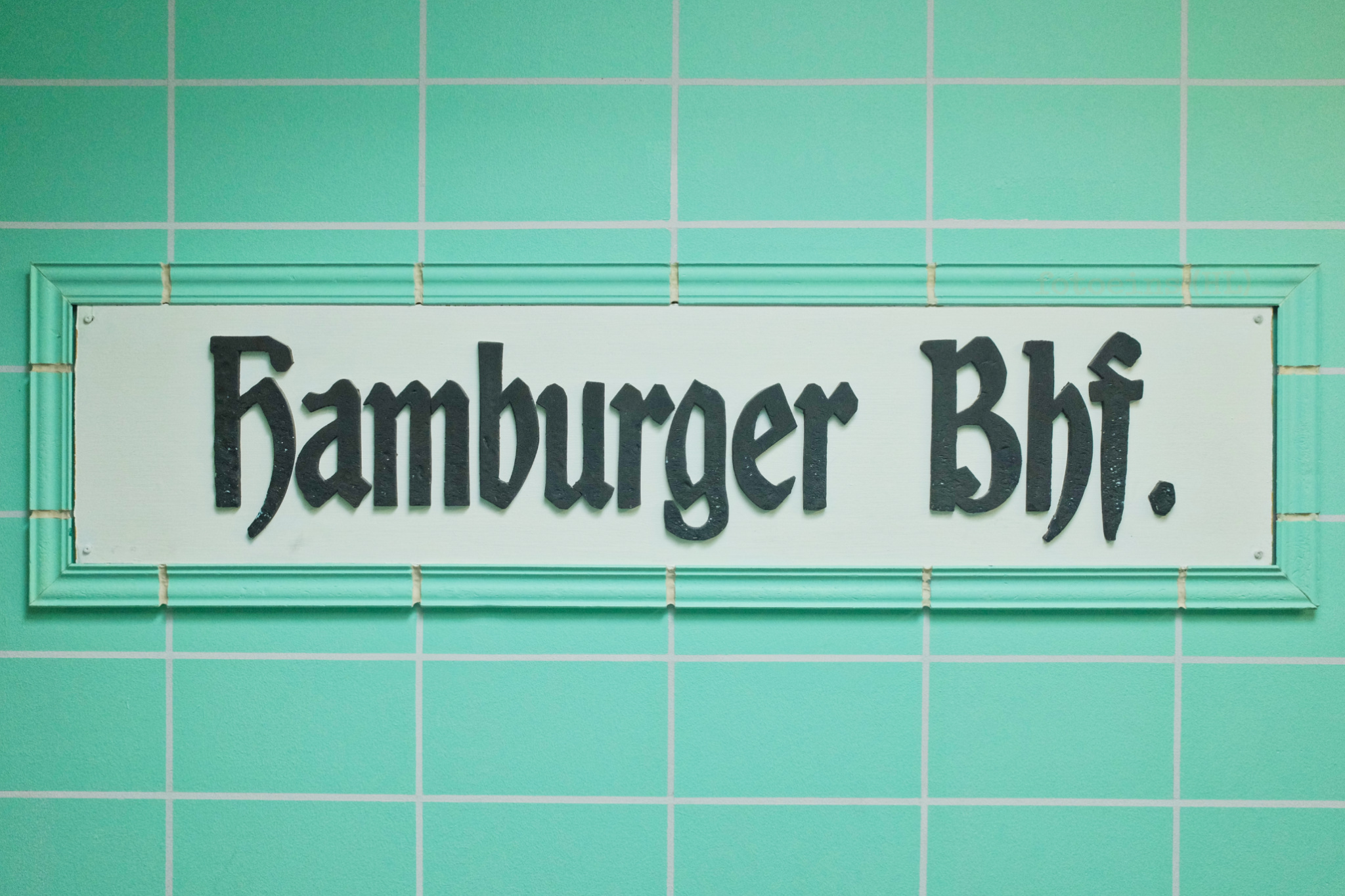
It’s almost like being inside one of Berlin’s train stations, a physical manifestation of a past memory of this very building in the present. The sign and wall-tiling are a part of the artwork “Transition” (2009–present) by Robert Kuśmirowski at the Hamburger Bahnhof Nationalgalerie der Gegenwart in Berlin. Photo, 13 Jun 2025 (X70).
Green tiles
Kuśmirowski’s piece refers to the colour and motif seen in some of Berlin’s oldest train stations. Below is an image of the S-Bahn station Brandenburger Tor at track level. The station is in active operation with north-south trains on S-Bahn Berlin lines S1, S2, S25, and S26. The station opened in 1936 with the name “Unter den Linden”, and had its name changed in 2009 to accommodate the U-Bahn U5 extension between Alexanderplatz and the city’s central station Hauptbahnhof. On the wall are black-and-white photographs of Brandenburg Gate: at left is an overhead view from Pariser Platz, facing west; and at right is a closeup of the Quadriga on top of the portal.
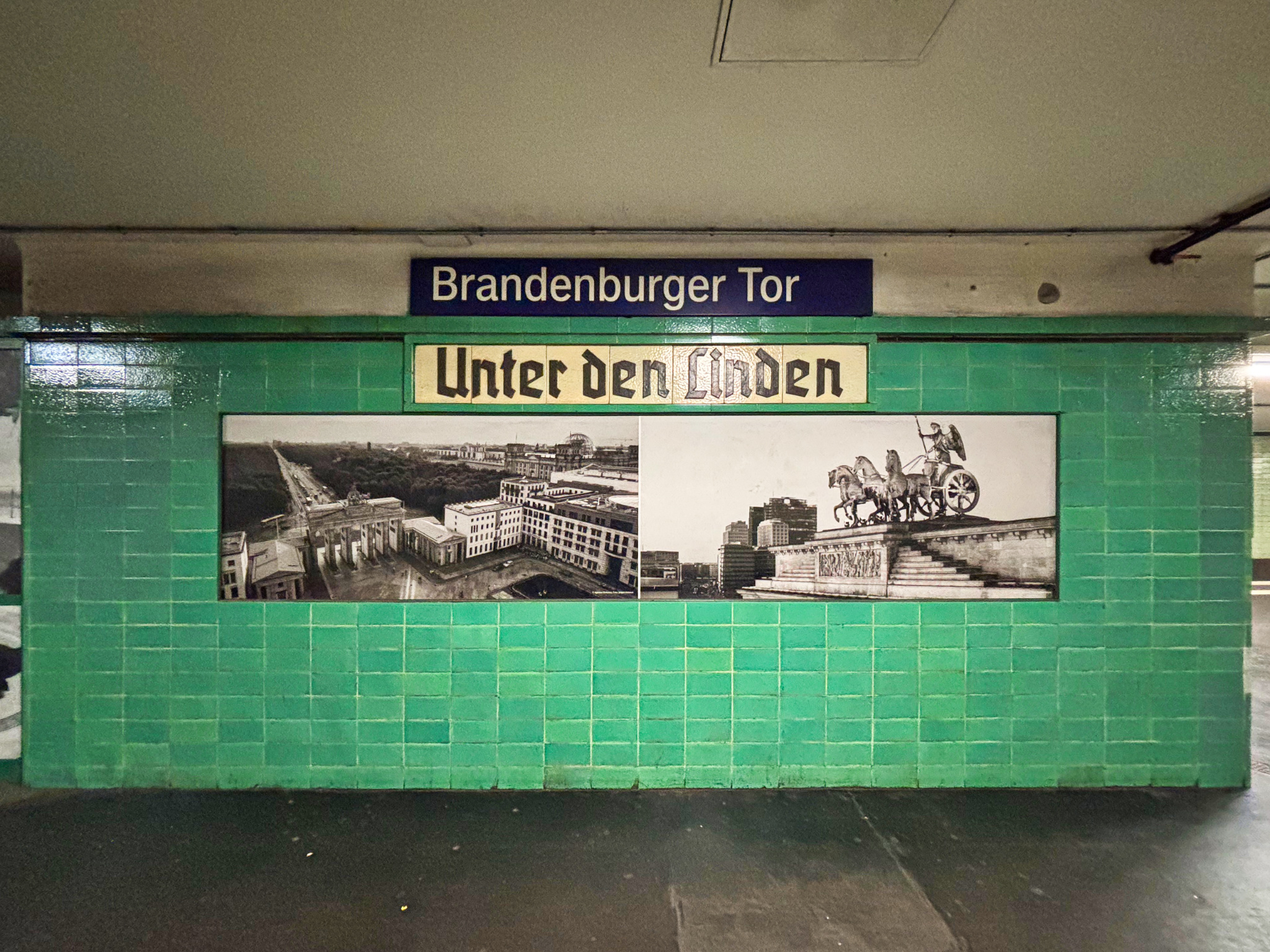
Track level at the active S-Bahn Berlin train station Brandenburger Tor (Brandenburg Gate). Photo, 27 May 2025 (P15).
Directions
BVG public transport: bus, tram, or train to Berlin Hauptbahnhof (central station), followed by 400-metre (1300 feet) walk east; check the museum website for information on hours and tickets.
( View the museum-gallery location on OpenStreetMap )
I received neither prior support nor post-visit compensation for this post. Aside from the two Wikimedia images, I made remaining photos above on 27 May and 13 June 2025 with a Fujifilm X70 fixed-lens prime (X70) and an iPhone15 (P15). This post appears on Fotoeins Fotografie at fotoeins DOT com as https://wp.me/p1BIdT-x62.
 Fotoeins Fotografie
Please leave your comments below